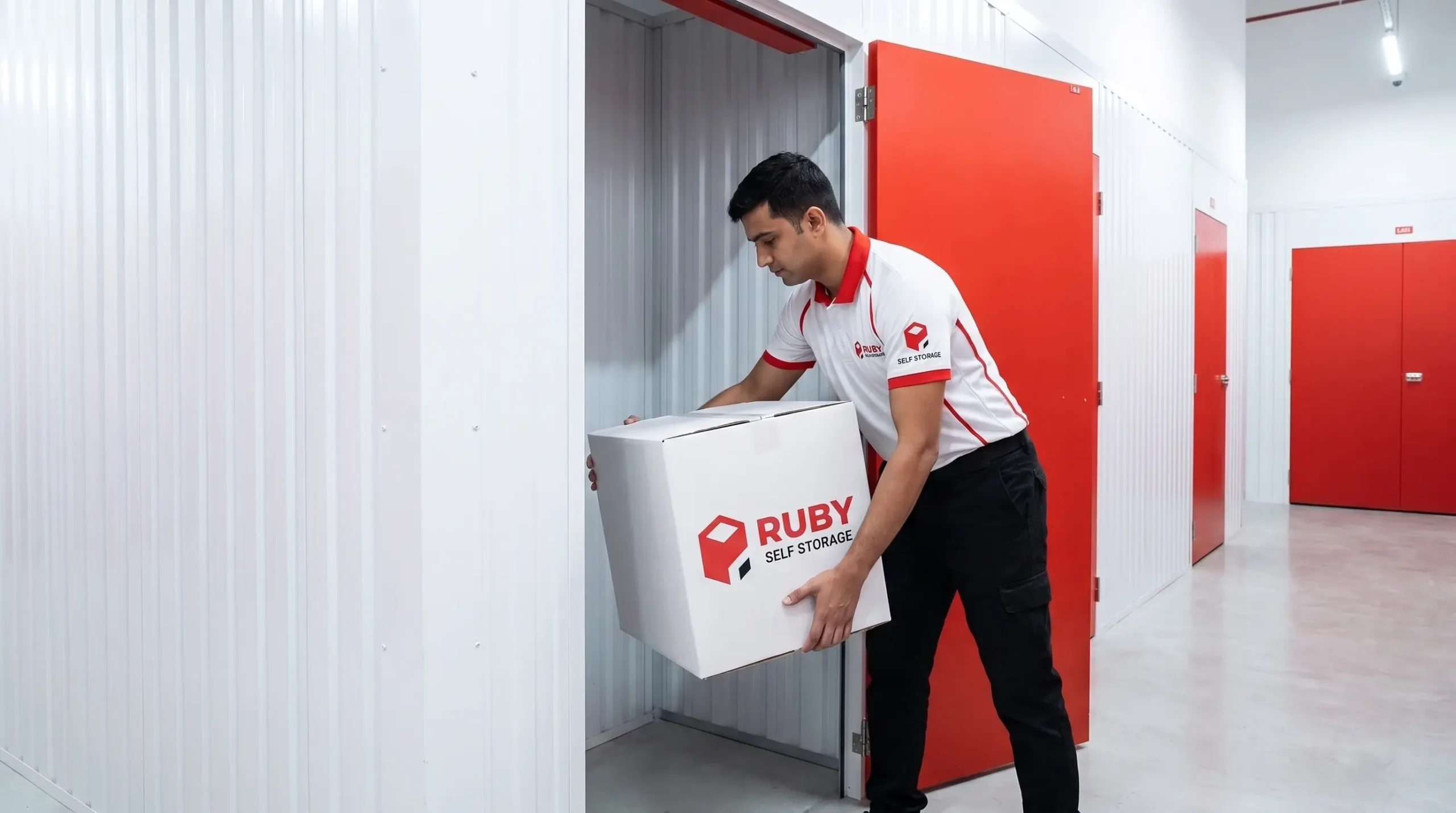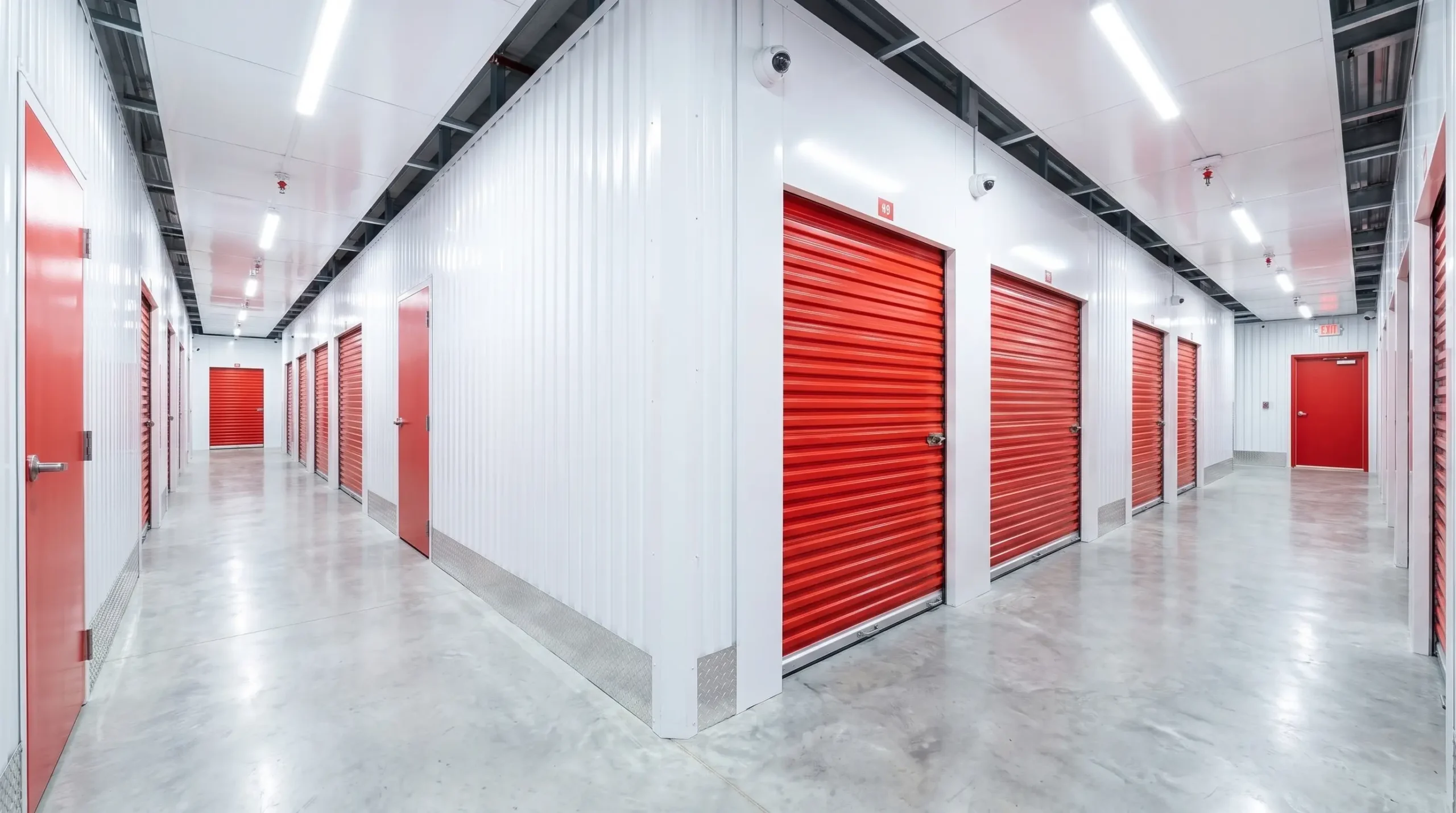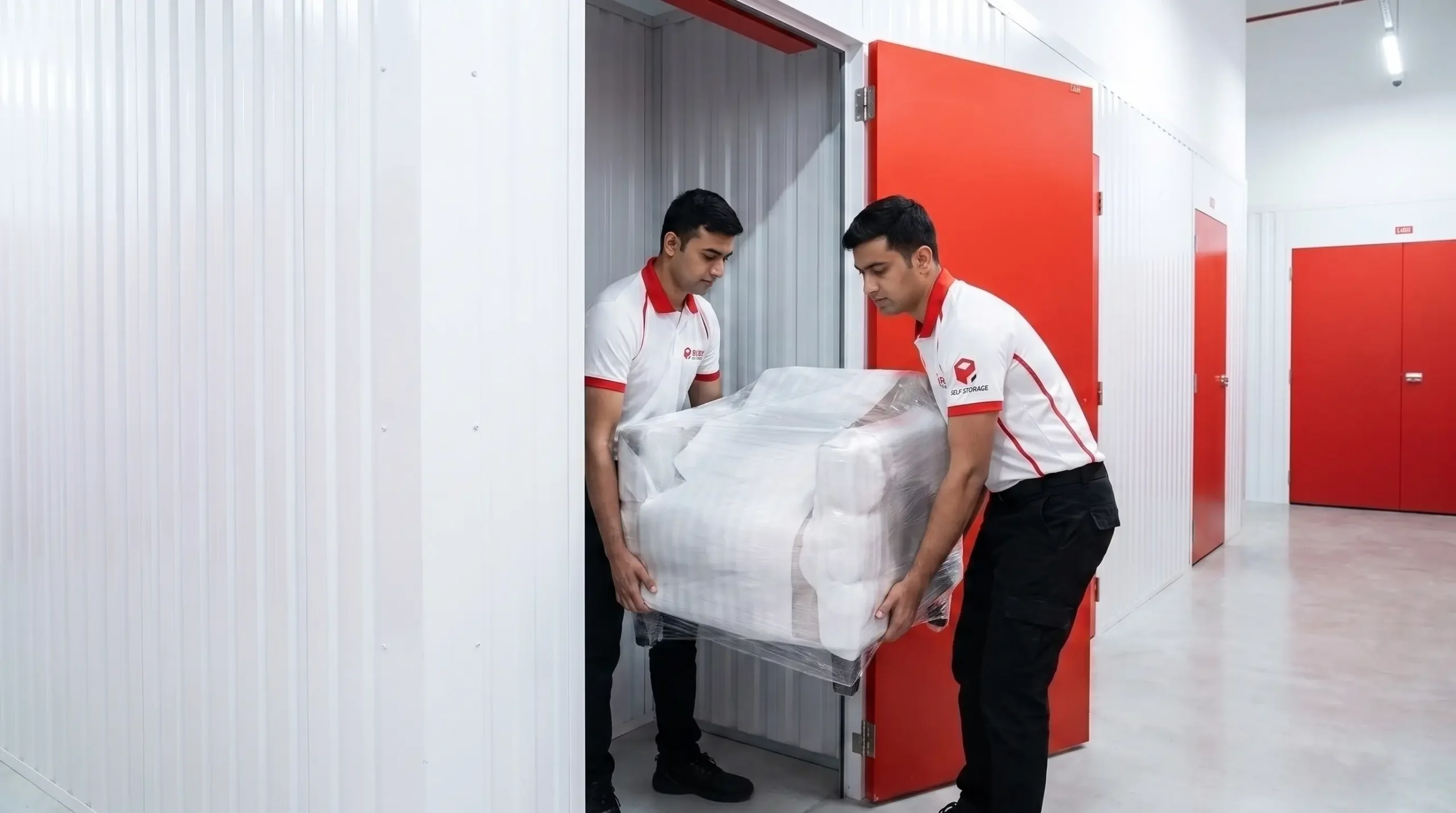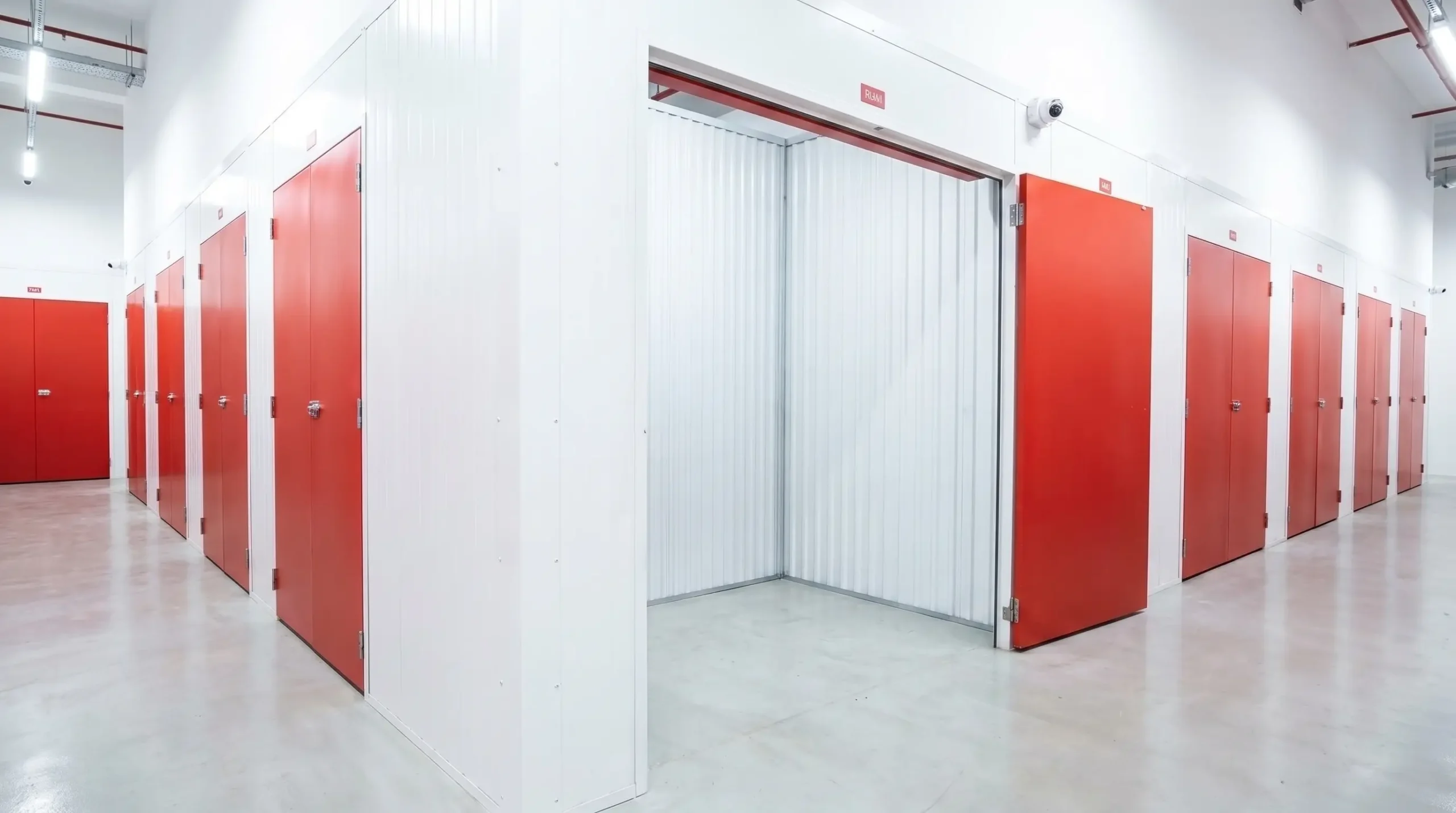
Choosing self-storage in Ras Al Khaimah is not just about finding extra space. For remote workers, it affects device safety, document control, and home office flexibility. For villa owners, it affects furniture protection, seasonal storage, and damage risk during refurbishment or relocation. In a market shaped by heat, humidity, mixed-use inventories, and varying access needs, the wrong unit can create mold, warping, security gaps, and hidden contract costs.
This article explains how to evaluate self-storage in Ras Al Khaimah using a practical 12-point unit selection checklist. It covers climate control, humidity bands, cleanliness, pest management, security, access logistics, sizing, handling, contract terms, claims evidence, audit trails, and data custody, so you can compare facilities with clear criteria instead of relying on price alone.
What is self-storage?
The self-service storage business is the rental of commercial real estate. The facility operator is a landlord, and the customer is a tenant. The self-storage operator does not store the tenant’s personal property. The storage operator rents a space suitable for storage purposes to the tenant. All storage activity is conducted by the tenant.
Unlike a warehouse operator, a self-storage facility operator has no direct relationship with the tenant’s stored property. The self-storage operator is not a bailee and does not have care, custody, or control of the tenant’s stored property.
What does self-storage in Ras Al Khaimah mean for remote workers and villa owners?
Self-storage in Ras Al Khaimah means rented storage space with tenant-controlled access, evaluated as a managed risk environment rather than a simple space rental.
Procurement framing
- Asset scope: Devices, documents, furniture, décor, seasonal inventory
- Risk scope: Humidity, mold, theft, access errors, claims disputes
- Evidence scope: Logs, contracts, condition reports, and access to the records
Remote work exists in the UAE federal employment systems under a defined remote work framework and documented procedures, including electronic attendance documentation.
What Ras Al Khaimah facts directly influence storage demand and storage risk?
Ras Al Khaimah combines coastal areas and humidity exposure with villa-scale inventories, so storage Ras Al Khaimah decisions often center on moisture control, handling quality, and security traceability rather than unit rent alone.
Ras Al Khaimah shows a mixed resident profile and a business footprint that supports recurring relocation, refurbishment, and asset storage cycles. Ras Al Khaimah is home to a diverse population of 0.4 million people, hailing from more than 150 countries, with 32% being UAE nationals and 68% expatriates, and the GDP is about USD 12 billion.
Economy and operating entities that shape inventory types
- Businesses: More than 50,000 businesses from 100+ countries.
- Manufacturing share: Manufacturing accounts for about 27% of GDP.
- Tourism share: Tourism is about 5% of GDP.
- Industrial example: Julphar production at about 1 million boxes of medicine a day, with distribution to 40+ countries.
Climate is a storage control variable, not a background context. At Ras Al Khaimah International Airport, the summers are long, sweltering, muggy, and arid; the winters are short, comfortable, and dry; and it is mostly clear year-round. Over the course of the year, the temperature typically varies from 53°F to 111°F and is rarely below 47°F or above 116°F.
| Month | High Temp | Humidity | Dew point | Practical storage implication |
|---|---|---|---|---|
| Month | High Temp | Humidity | Dew point | Practical storage implication |
| January | 78°F | 63% | 52°F | Mold risk rises if the unit RH stays high |
| August | 110°F | 41% | 69°F | Heat exposure risk for devices and adhesives |
| October | 99°F | 52% | 64°F | RH control matters for wood and textiles |
What data supports remote work as a driver for storage Ras Al Khaimah decisions?
Remote work increases demand for space control because devices, files, and home-office layouts compete with household inventory. In the UAE, figures from research company YouGov show that around 46% of the working population currently works remotely in some form.
Policy and governance around telework shape storage behavior. OECD survey evidence shows 87% telework in firms that consult employees on teleworking, compared to 61% in firms with no consulting policy.
Remote work occurs at scale in modern labor markets. The ILO estimated 557 million workers were working from home in Q2 2020, representing 17.4% of world employment during that period.
Remote worker storage assets
- Devices: Laptops, monitors, routers, UPS units
- Media: External drives, backup media, archive boxes
- Records: Contracts, invoices, identity documents
How does a procurement mindset improve the self-storage in Ras Al Khaimah selection?
A procurement mindset improves selection by converting storage Ras Al Khaimah into a documented service scope with measurable acceptance criteria, evidence packs, and audit trail retention.
Self-storage market reporting treats storage as operational real estate with measurable occupancy and rent dynamics, so a selection process that ignores quality controls increases hidden costs through damage, disputes, and time loss.
Procurement deliverables
- Deliverable: Facility control checklist with pass fail thresholds
- Deliverable: Contract schedule review with fee triggers
- Deliverable: Evidence pack template for intake and retrieval
- Deliverable: Output for vendor comparison
What is the 12-point unit selection checklist for self-storage in Ras Al Khaimah?
The 12-point checklist is a scored method for selecting self-storage in Ras Al Khaimah using measurable controls and an evidence pack. It uses quantified thresholds for humidity, temperature, stability, and access traceability.
1) How does climate control get defined in self-storage in Ras Al Khaimah?
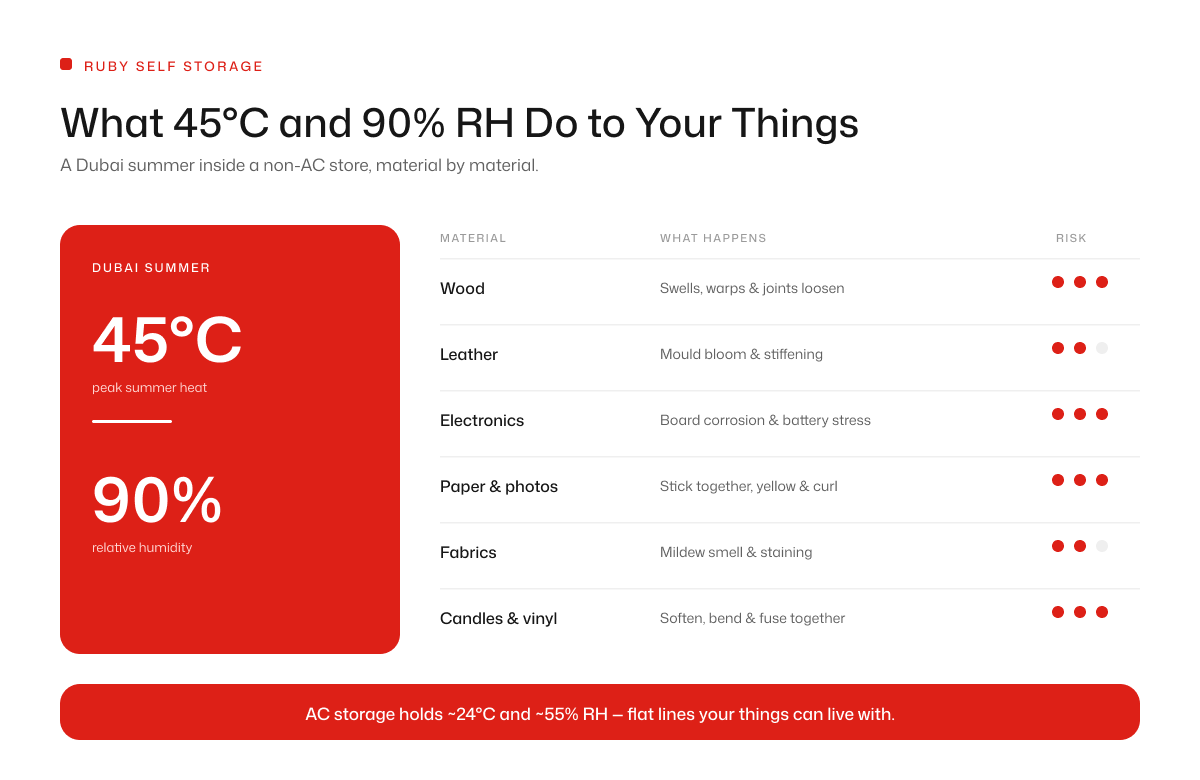
Climate control refers to a storage environment with controlled temperature and humidity that reduces deterioration mechanisms compared with unmanaged ambient storage.
Choose lighting technologies that do not generate heat or dissipate the heat generated from lamps or their housings so that holdings are not exposed to temperatures above 75°F.
Remote workers store devices, paper files, and backup media that react to heat and humidity, while villa owners store wood furniture, textiles, and leather items that respond to RH cycling.
Evidence requests
- Evidence: Written climate control specification, stated temperature band, and stated RH band
- Evidence: Sensor placement map or monitoring approach
- Evidence: Log retention duration and export method
2) What humidity band reduces mold and material stress for mixed villa and home office assets?
A mixed storage band between 30% and 50% RH aligns with preservation guidance for photographs and mixed collections and reduces moisture-driven deterioration risk.
The EPA describes indoor humidity below 60% RH as a practical mold control target, with an ideal 30% to 50% band when feasible.
For humidity-sensitive items such as wood, leather, and fibrous components, aim for RH between 40 and 60%, with sensitivity tied to wood content, joints, coatings, and condition.
Risk segmentation by material
- Paper and photos: 30% to 50% RH
- Wood furniture: 40% to 60% RH
- Leather and textiles: 40% to 60% RH
Evidence requests
- Evidence: RH readings over 30 days with min, max, and variance per day
- Evidence: daily RH swing target under 10 percentage points for sensitive items
- Evidence: response protocol for high RH excursions
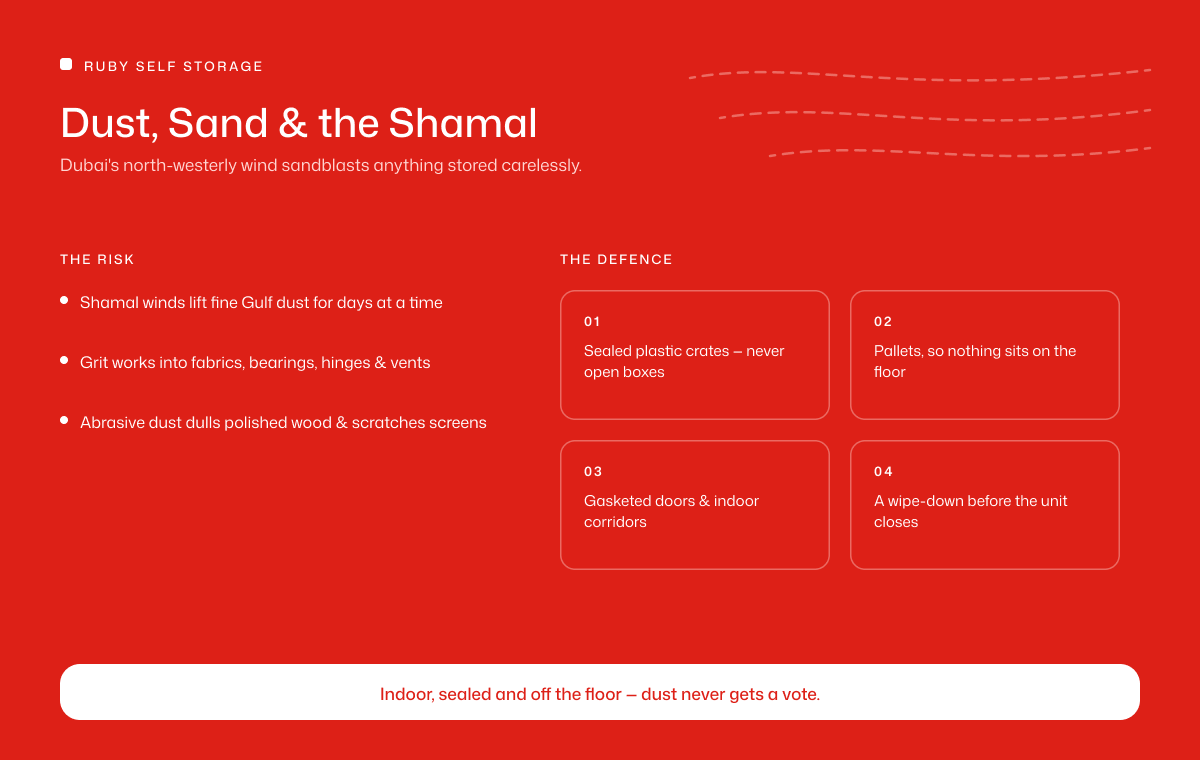
3) What cleanliness and dust controls protect stored assets in storage in Ras Al Khaimah?
Cleanliness controls reduce particulate abrasion, pest attraction, and moisture retention on porous surfaces such as paper, textiles, and uncoated wood.
Preservation guidance emphasizes filtered air, ventilation, and reduced pollutant exposure for stored photographs and paper-based materials.
Evidence requests
- Evidence: Cleaning schedule and inspection checklist per unit row
- Evidence: Packaging rules that limit direct floor contact
- Evidence: Rack availability and pallet policy
Operational examples
- Surfaces: Rugs, curtains, sofa fabrics
- Substrates: Cardboard boxes, archival boxes
4) What pest management evidence supports the selection of self-storage in Ras Al Khaimah?
Pest management reduces insect activity and contamination risk, which preservation authorities link to temperature control, humidity control, and regular inspection.
NARA guidance links cooler temperatures and controlled humidity with reduced insect activity for stored materials.

Evidence requests
- Evidence: licensed pest control contract and service cadence
- Evidence: bait station layout and inspection records
- Evidence: incident reporting method and corrective action log
5) What security gate controls reduce loss risk in self-storage in Ras Al Khaimah?
Security gate controls reduce unauthorized access risk through layered controls such as perimeter barriers, controlled entry, monitoring, and response.
NIST physical security guidance describes common physical and environmental controls that protect systems and information through secure areas and monitoring.
Evidence requests
- Evidence: Access credential types and issuance policy
- Evidence: CCTV coverage map and retention duration
- Evidence: Access log availability and retrieval process
Risk segmentation
- High-value items: Jewelry boxes, artwork crates, premium watches
- Sensitive items: Passports, contracts, backup drives
6) What access operations and loading logistics matter for remote workers and villa owners?
Access operations matter because retrieval frequency varies by persona, with remote workers retrieving devices and files more frequently and villa owners retrieving seasonal assets less frequently.
A procurement view treats access as a measurable cost driver through time spent, booking friction, and loading bay constraints.
Evidence requests
- Evidence: Access hours, appointment policy, and peak time limits
- Evidence: Loading bay dimensions and trolley availability
- Evidence: Parking rules and on-site turn radius
Timeline examples
- Weekly retrieval: Archived invoices, client files
- Quarterly retrieval: Outdoor furniture, seasonal décor
7) How does unit sizing reduce cost escalation in storage in Ras Al Khaimah?
Sizing reduces cost escalation by matching cubic volume and access paths to inventory, then controlling air gaps and stacking limits through racking and standardized cartons.
Market reporting shows rent movement and pricing shifts over time, so unit oversizing converts into persistent monthly spend.
Sizing method
- Inventory by category
- Volume estimate per category
- Access frequency tag per category
- Fragility band per category
8) What handling engineering reduces damage events for villa items and work equipment?
Handling engineering reduces damage by controlling compression, vibration, edge impact, and surface abrasion through packaging layers, stable stacking, and controlled movement tools.
Preservation guidance for photographs emphasizes limiting environmental fluctuations, which aligns with reducing exposure to uncontrolled heat and humidity during intake and retrieval handling.
Evidence requests
- Evidence: Permitted packaging materials and prohibited materials list
- Evidence: Pallet policy, racking policy, and stack height limits
- Evidence: Staff handling SOP for tenant assist moves
9) What contract terms drive cost escalation in self-storage in Ras Al Khaimah?
Cost escalation terms include rate review cadence, admin fees, lockout fees, late payment penalties, and paid add-ons tied to access and packaging.
Market reporting provides examples of rent movement and transaction volumes, so contract clarity reduces disputes when advertised rates and billed rates diverge.
Evidence requests
- Evidence: Full schedule of fees and triggers
- Evidence: Rate change notice period language
- Evidence: Cancellation notice terms and deposit terms
10) What liability and claims evidence reduces dispute risk for storage in Ras Al Khaimah?
Dispute risk drops when both parties rely on documented condition evidence, inventory manifests, and traceable access logs that support a chain of custody.
NIST guidance on digital evidence preservation emphasizes documentation and controlled handling as drivers of credible evidence records.
Evidence pack components
- Evidence: Intake photos with date stamp
- Evidence: Condition report per large item
- Evidence: Inventory manifest with unique IDs
- Evidence: Retrieval sign off and discrepancy log
11) What quality assurance and audit trail features support repeatable outcomes?
Quality assurance relies on documented processes, logged inspections, and retained records that allow review after an incident or a claim.
NIST security controls emphasize audit and accountability concepts, including event logging and review, which translate into facility access and inventory audit trails.
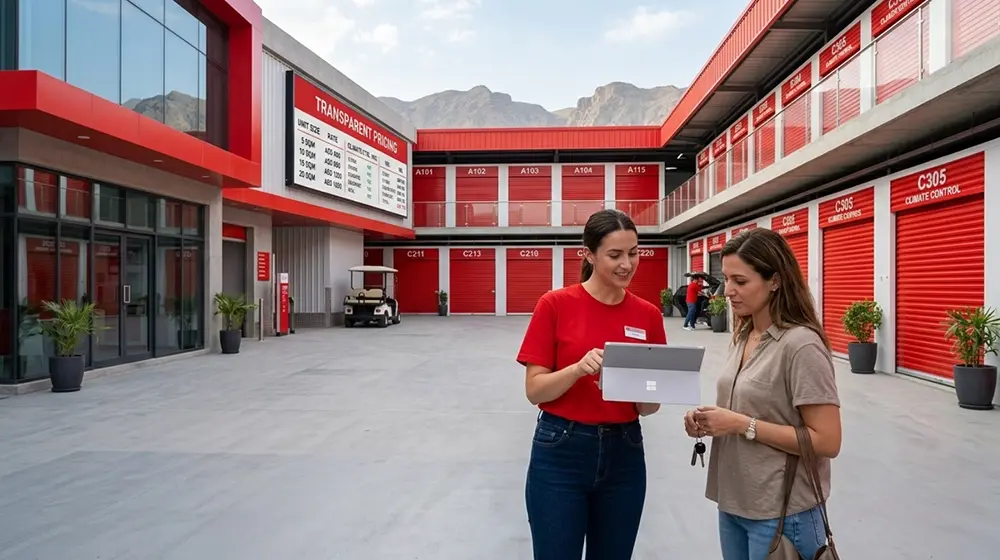
QA evidence
- Evidence: Inspection log frequency and scope
- Evidence: Incident log taxonomy and closure time metrics
- Evidence: Staff training record on handling SOP
12) What IT and data custody controls matter for remote workers using self-storage in Ras Al Khaimah?
Data custody controls protect confidentiality by controlling who accesses devices and paper records, and by supporting documented storage and retrieval events.
The UAE official platform references a personal data protection framework, which raises expectations for controlled handling of personal data in business processes.
Data custody controls
- Evidence: Locked containers for media and files
- Evidence: Access segregation for shared keys and codes
- Evidence: Inventory labels that avoid personal data exposure
What evidence pack supports handover and dispute readiness in storage Ras Al Khaimah?
An evidence pack supports dispute readiness by preserving item condition, storage conditions, and access events in a repeatable record format with identifiers and timestamps.
Archival storage standards emphasize documented programs and risk management, which aligns with an evidence pack that records inspection, maintenance, and incident response.
NIST security guidance centers accountability through audit and monitoring concepts, which translates into access logs, visitor records, and CCTV retention policies in self-storage in Ras Al Khaimah.
Evidence pack
- Record: Customer ID and unit ID
- Record: Item ID, category, and declared value band
- Record: Intake date and retrieval date
- Record: Intake photos, 4 angles per large item
- Record: Condition notes, scratches, dents, fabric stains
- Record: Packaging notes, carton type, wrap layers
- Record: Climate notes, temperature, and RH snapshot at intake
- Record: Access log export, date, time, credential ID
- Record: Incident log, ticket number, closure date
| Evidence field | Format | Example value | Risk supported |
|---|---|---|---|
| Item ID | Alphanumeric | SOFA-012 | Misidentification |
| Photo set | 4 images | IMG-012A to IMG-012D | Damage disputes |
| RH snapshot | Percent | 48% RH | Moisture disputes |
| Access event | Timestamp | 2026-03-05 11:10 | Unauthorized access |
What 30, 60, 90-day timeline fits storage Ras Al Khaimah cycles for remote workers and villa owners?
A 30 60 90-day timeline improves outcomes by aligning packing, intake documentation, retrieval cadence, and contract reviews with a predictable audit rhythm.
30-day actions
- Action: Complete the intake evidence pack and labeling taxonomy
- Action: Capture baseline RH and temperature snapshot
- Action: Validate access credentials and access log availability
60-day actions
- Action: Review invoice for fee triggers and rate changes
- Action: Review the condition of high-value items via spot inspection
- Action: Review packing integrity for cartons with compression risk
90-day actions
- Action: Compare scorecard values with observed facility performance
- Action: Refresh device custody records for remote work assets
- Action: Update inventory manifest for add or remove events
What cost model explains pricing for storage Ras Al Khaimah without relying on anecdotal rates?
A cost model isolates total monthly cost into unit rent, climate control premium, insurance premium, access-related costs, and fee triggers defined in the contract schedule.
Global self-storage market reporting values segments and growth rates, which supports a view of storage as a priced asset class with variable premiums for climate-controlled product types.
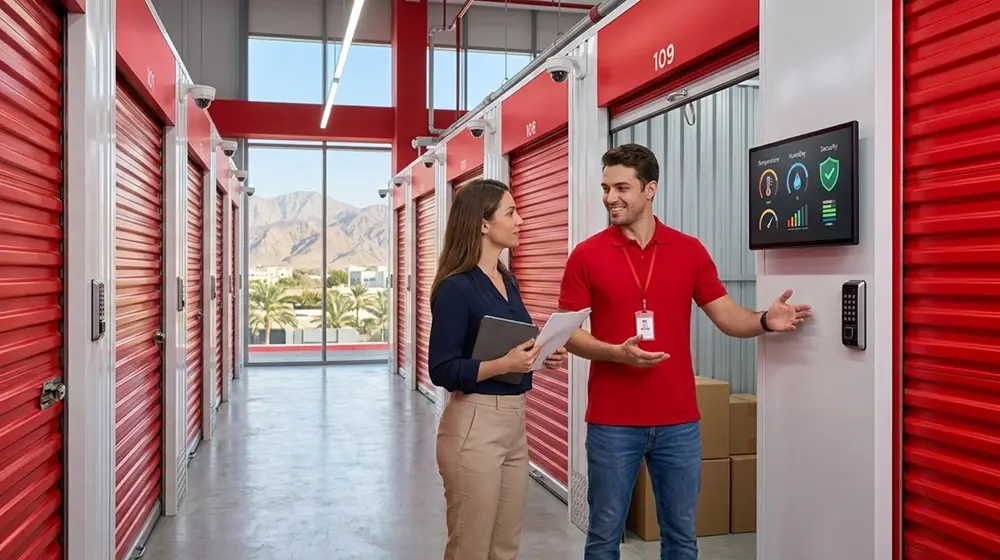
Cost drivers
- Area, square meters or square feet
- Duration, months
- Access frequency, visits per month
- Climate class, unmanaged vs. climate-controlled
- Add-ons, packaging, lock type, logistics assist
What myth vs reality clarifies common selection errors in self-storage in Ras Al Khaimah?
Myth versus reality clarifies selection errors by contrasting marketing claims with measurable controls such as RH logs, CCTV retention, and documented condition reports.
Myths
- Myth: Climate control equals cool air only
- Myth: Security equals cameras only
- Myth: Insurance equals full liability coverage
- Myth: Unit size equals floor area only
Reality
- Reality: Climate control includes RH stability bands and variance control
- Reality: Security includes access control, logs, monitoring, and response
- Reality: Liability depends on documented terms and evidence packs
- Reality: Sizing includes cubic volume and access pathways
Closing Perspective: Why the Right Storage Unit in Ras Al Khaimah Is a Risk Decision, Not Just a Space Decision
The best self-storage in Ras Al Khaimah is not the unit with the lowest advertised rate. It is the unit that protects your assets, documents access, controls moisture, and reduces the chance of avoidable disputes. For remote workers, that means safer custody for devices, files, and records. For villa owners, it means better protection for furniture, textiles, decor, and seasonal items exposed to heat, humidity, and handling risk. A 12-point checklist turns storage selection into a practical decision process with measurable standards, evidence requests, and contract clarity. That is what separates a cheap unit from a reliable storage solution. In Ras Al Khaimah, good storage is not just extra room. It is controlled protection with proof.
FAQs
What is the biggest mistake people make when choosing self-storage in Ras Al Khaimah?
The biggest mistake is comparing units by rent alone instead of checking humidity control, access logs, handling quality, and contract terms.
Why does humidity matter more than many customers expect?
Humidity affects paper, wood, leather, fabrics, and electronics, so poor RH control can cause mold, warping, corrosion, and odor retention.
Is a cool unit always a climate-controlled unit?
No, true climate control requires both temperature management and humidity stability, not just cooler air.
How can remote workers use storage without risking data exposure?
They should store devices and files in locked containers, use neutral labels, and keep retrieval events documented.
Why should villa owners care about daily RH swings, not just average humidity?
Daily swings stress wood joints, finishes, leather, and textiles, even when the monthly average looks acceptable.
What kind of evidence should a storage provider be able to show before move-in?
They should be able to show climate specs, inspection logs, pest-control records, CCTV coverage details, and fee schedules.
How does the wrong unit size increase long-term cost?
An oversized unit creates recurring monthly waste, while a poorly planned small unit increases damage risk and retrieval friction.
What makes access operations important in practical storage use?
Access hours, loading space, trolley availability, and booking rules directly affect retrieval time, labor effort, and convenience.
Why is an intake evidence pack worth the effort?
It creates proof of condition, packaging, and custody at handover, which makes claims and disputes easier to resolve.
When should a stored inventory be reviewed after move-in?
A structured 30-, 60-, and 90-day review cycle helps catch fee issues, packing failures, moisture risk, and inventory changes early.
Rakan Al-Juraid is a logistics specialist with a focus on commercial storage systems and high-security asset management. With extensive experience in industrial warehousing, he specializes in inventory tracking technology and transit safety. Rakan’s expertise lies in streamlining the storage process for both businesses and homeowners through strategic planning. His writing offers data-driven advice on insurance for stored goods, fire-safe environments, and heavy-duty logistics. He is committed to ensuring that every square foot of storage is utilized with maximum security and efficiency. Rakan aims to provide professional-grade storage standards to every reader navigating the moving process.
Layali Al-Samer is a seasoned storage and organization expert with over 12 years of experience in the logistics industry. She holds a degree in Spatial Design, specializing in high-density residential storage and climate-control solutions. Layali focuses on inventory management for luxury goods and long-term preservation techniques for sensitive heirlooms. Her articles provide expert guidance on maximizing unit efficiency and protecting valuables from environmental damage. She is dedicated to helping readers declutter their lives through strategic and organized spatial planning. Layali’s goal is to ensure every possession is stored with the highest level of care and precision.