Choosing between storage facilities in Dubai based on monthly price alone can hide expensive problems. A unit may look clean during a ten-minute visit but still have weak CCTV coverage, poor humidity control, difficult loading access, unclear insurance, or missing fire-safety evidence.
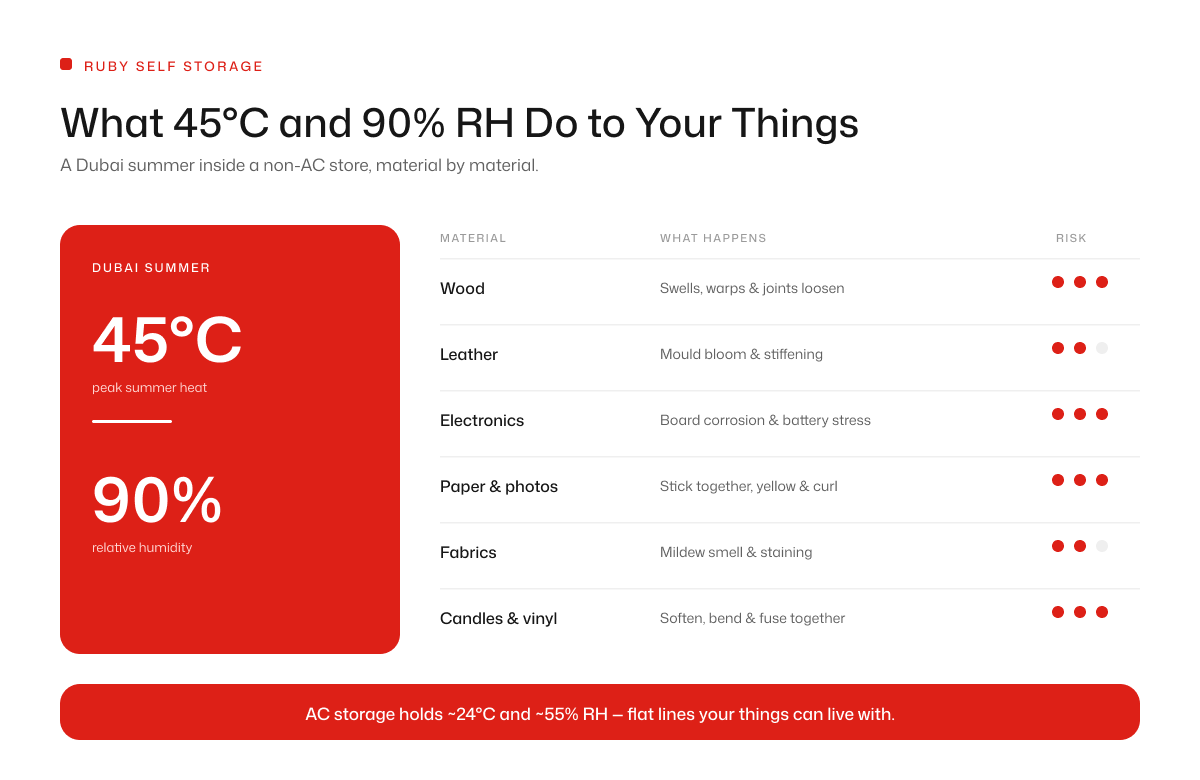
Dubai’s climate adds another layer to the decision. The Dubai Data and Statistics Establishment recorded a mean daily maximum temperature of 42.9°C in August 2025. Mean daily maximum relative humidity reached 74% in June and October. Storage conditions matter when furniture, documents, electronics, business stock, or personal belongings stay inside for weeks or months.
This guide gives a practical 12-point inspection checklist for self storage facilities in Dubai. It covers:
- Unit construction
- Climate control
- CCTV retention
- Access
- Loading bays
- Pest control
- Fire documentation
- Insurance
- Cleanliness
- Staffing
- Contracts
- Pricing
Each check uses a measurable threshold, helping you compare storage services in Dubai on evidence.
What is a self storage facility in Dubai?
A self storage facility in Dubai is a commercial site where individuals or companies rent storage space and retain controlled access to stored goods for an agreed period.
The Security Industry Regulatory Agency (SIRA) defines self-storage as storing goods or materials for individuals or companies, manually or automatically. SIRA’s 2025 Preventive Systems Manual sets requirements covering CCTV retention, access systems, backup power, alarms, tenant contracts, and security staffing.
That makes self storage different from temporary goods-in-transit handling. The unit, building systems, access rules, and contract all matter.
The 12-point inspection checklist
Use measurable evidence rather than descriptions such as “secure,” “controlled,” or “premium.” The table separates official requirements from buyer inspection benchmarks, where Dubai authorities do not publish a universal numerical standard.
| Check | Measurable inspection threshold |
|---|---|
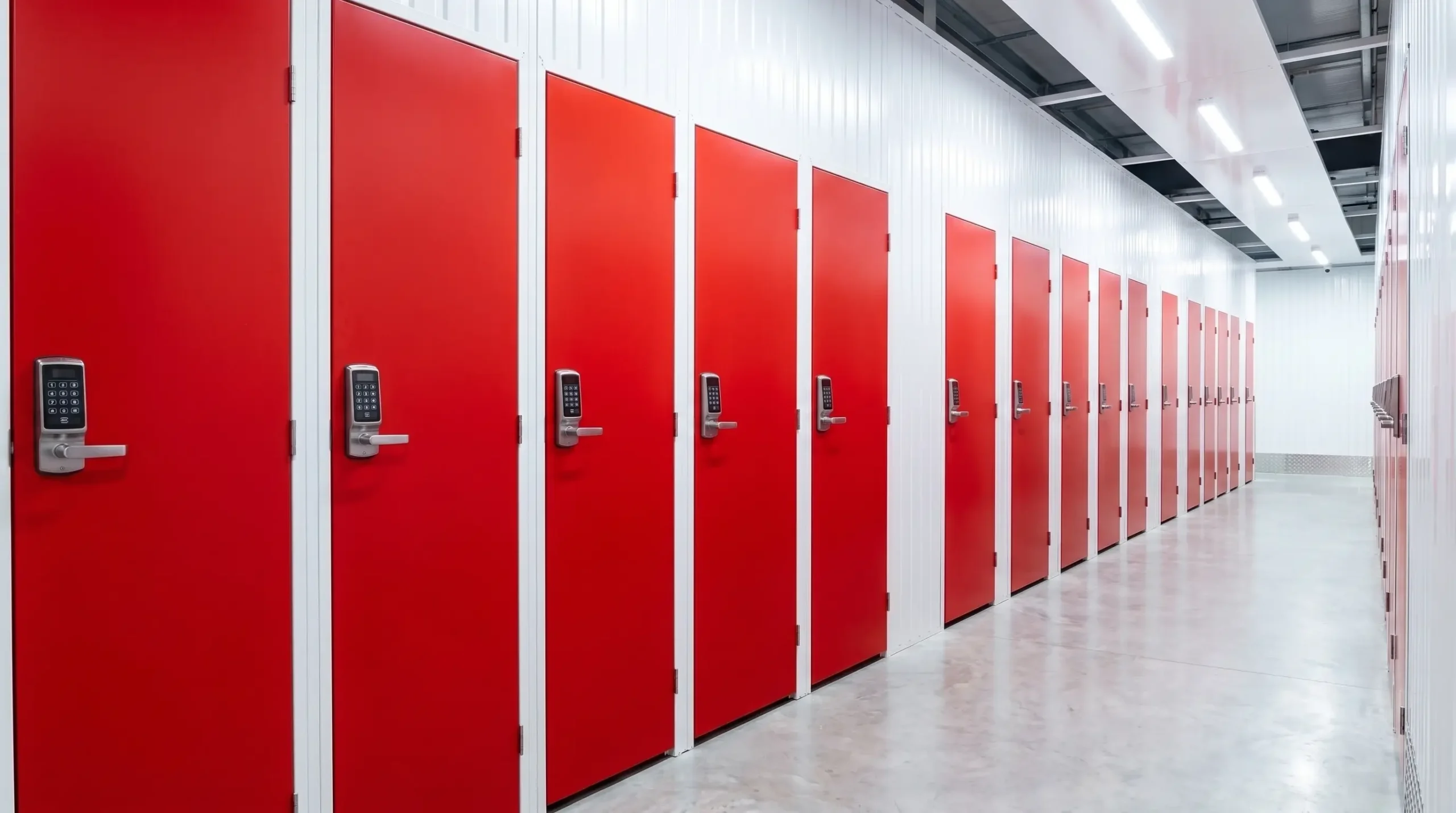
| Unit construction | 0 unsecured openings into neighboring units; any ceiling gap physically secured; hard, dry floor |
| Climate control | RH preferably below 60% for moisture-sensitive mixed goods; reading within ±2°C of the declared set-point as an inspection benchmark |
| Security | Required areas covered; CCTV retained at least 90 days; security systems receive 8 hours of backup power |
| Access | Written access hours; 168 hours/week if 24/7 access is advertised; powered access operational during inspection |
| Loading | At least 1 usable loading position; vehicle limit stated; 50 meters or less bay-to-unit route for frequent stock handling as a buyer benchmark |
| Pest control | Dubai Municipality-approved provider; service evidence dated within 90 days as a buyer benchmark; 0 visible active-pest signs |
| Fire | Current Dubai Civil Defence documentation plus current maintenance evidence; 0 expired documents presented for inspection |
| Insurance | The sum insured at least equals your declared replacement value; deductible and policy dates stated |
| Cleanliness | 0 active leaks, standing-water areas, fresh water marks, or visible mould in the inspected route and unit |
| Staffing | 24-hour guard coverage where the SIRA self-storage requirement applies, equal to 168 hours/week |
| Contract | All essential commercial terms plus SIRA prohibited-storage clauses appear in writing |
| Tariff | Base rate, VAT status, deposit, insurance, extra charges, renewal rate, and total payable amount stated in AED |
These thresholds give every site visit the same comparison basis. A failure against an editorial benchmark does not automatically mean regulatory non-compliance. Requirements can vary by licensed activity, building size, stored goods, and approved fire design.
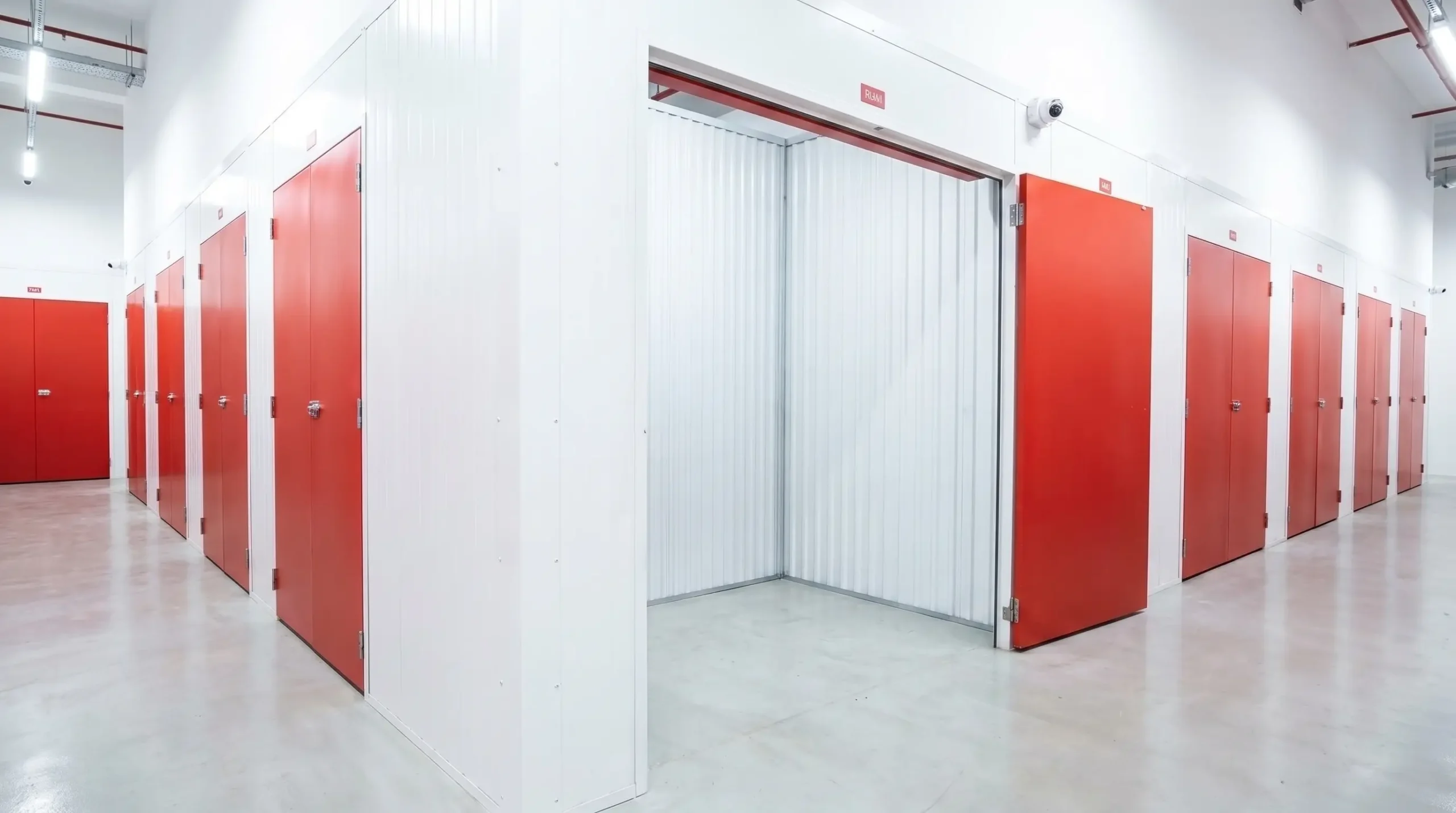
- Unit construction — partition height, ceiling gap, floor type
The Dubai Municipality consumer-product storage guideline states that stores must reach at least 2.70 meters in height. Stored cartons require 20 centimeters above the floor, 50 centimeters below the ceiling, and 30 centimeters from walls or other stacks.
Dubai Municipality does not publish one universal partition-height figure for every household self-storage unit in the source reviewed. The guideline does require fire-resistant dividers for large warehouse areas. It also calls for smooth, cleanable surfaces and slip-resistant floors in good condition. Warehouse or store renting and sharing providers fall within the guideline’s stated requirements.
Measure any ceiling gap yourself. Use zero reachable openings into a neighboring unit as the security benchmark.
- Climate control — set-point, humidity range, monitoring
Climate control means measurable temperature and relative humidity, not simply an air-conditioned corridor.
Ask for the temperature set-point and inspect a digital reading. Use ±2°C from the stated set-point as a practical site-visit tolerance. Ask whether temperature and humidity records continue outside staffed hours.
For moisture-sensitive goods, treat 60% relative humidity as an upper screening limit. The Library of Congress reports that mold tends to grow on photographic materials above 60% RH when temperatures exceed about 24°C to 27°C. Mixed photographic collections are commonly kept around 30% to 50% RH.
- Security — camera count, coverage, retention, alarm type
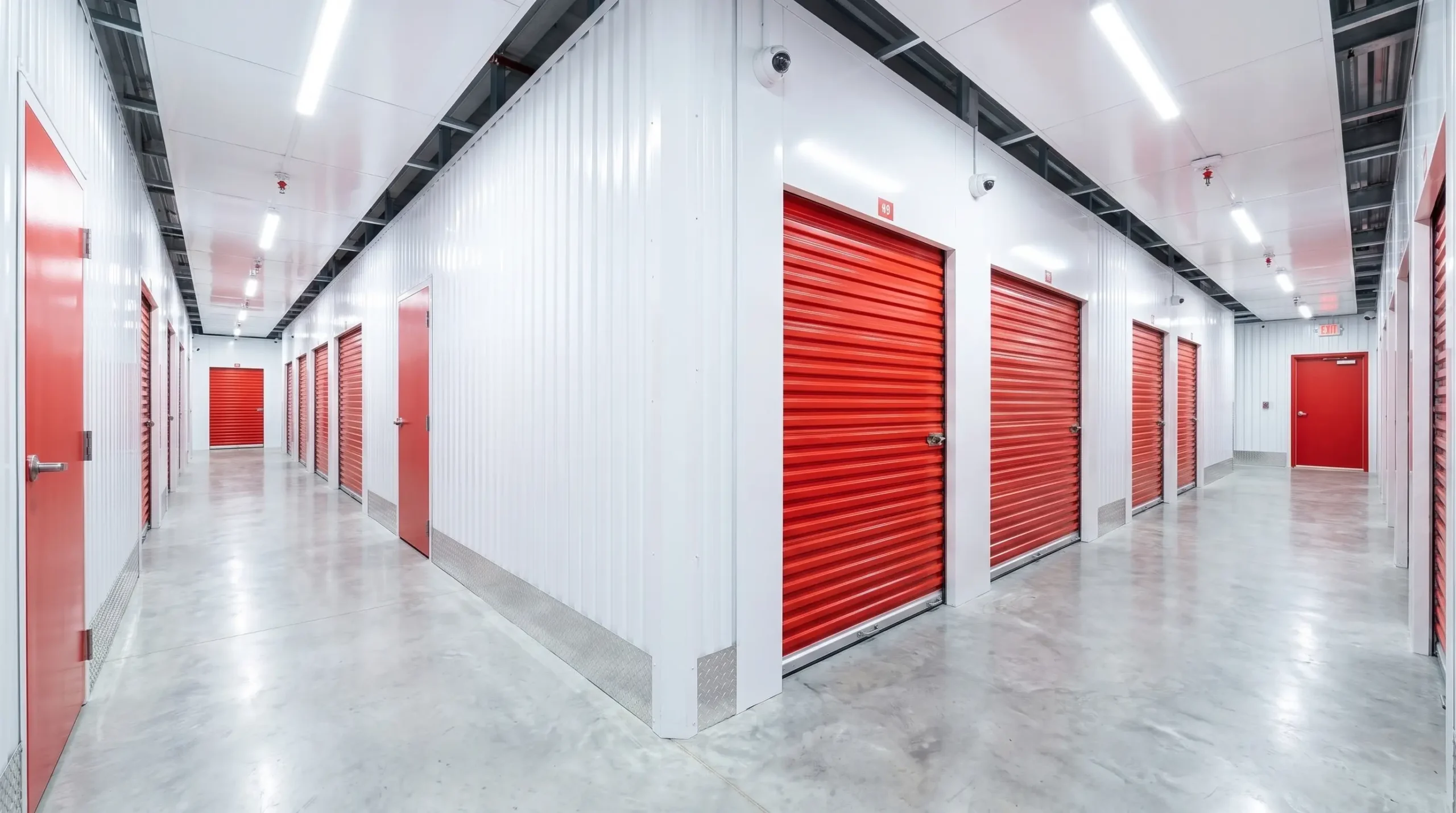
Compare CCTV by coverage, not camera count. The SIRA Preventive Systems Manual lists surveillance areas, including entrances, reception desks, the main lobby, waiting areas, securing areas, protected storage areas, and viewing areas.
SIRA requires recordings from required cameras to remain available for at least 90 days. SIRA also specifies 8 hours of backup power for alarm, video surveillance, and door systems. Alarm components require SIRA certification.
Pass this check with required-area coverage, 90-day retention, and documented 8-hour backup.
- Access — hours, entry method, lift capacity, trolleys
A facility advertising 24/7 access advertises 168 customer-access hours each week. The written contract needs to match the advertised access period.
SIRA requires electrically operated door locks within its self-storage specification. The same manual specifies 8 hours of backup power for door systems during a power interruption.
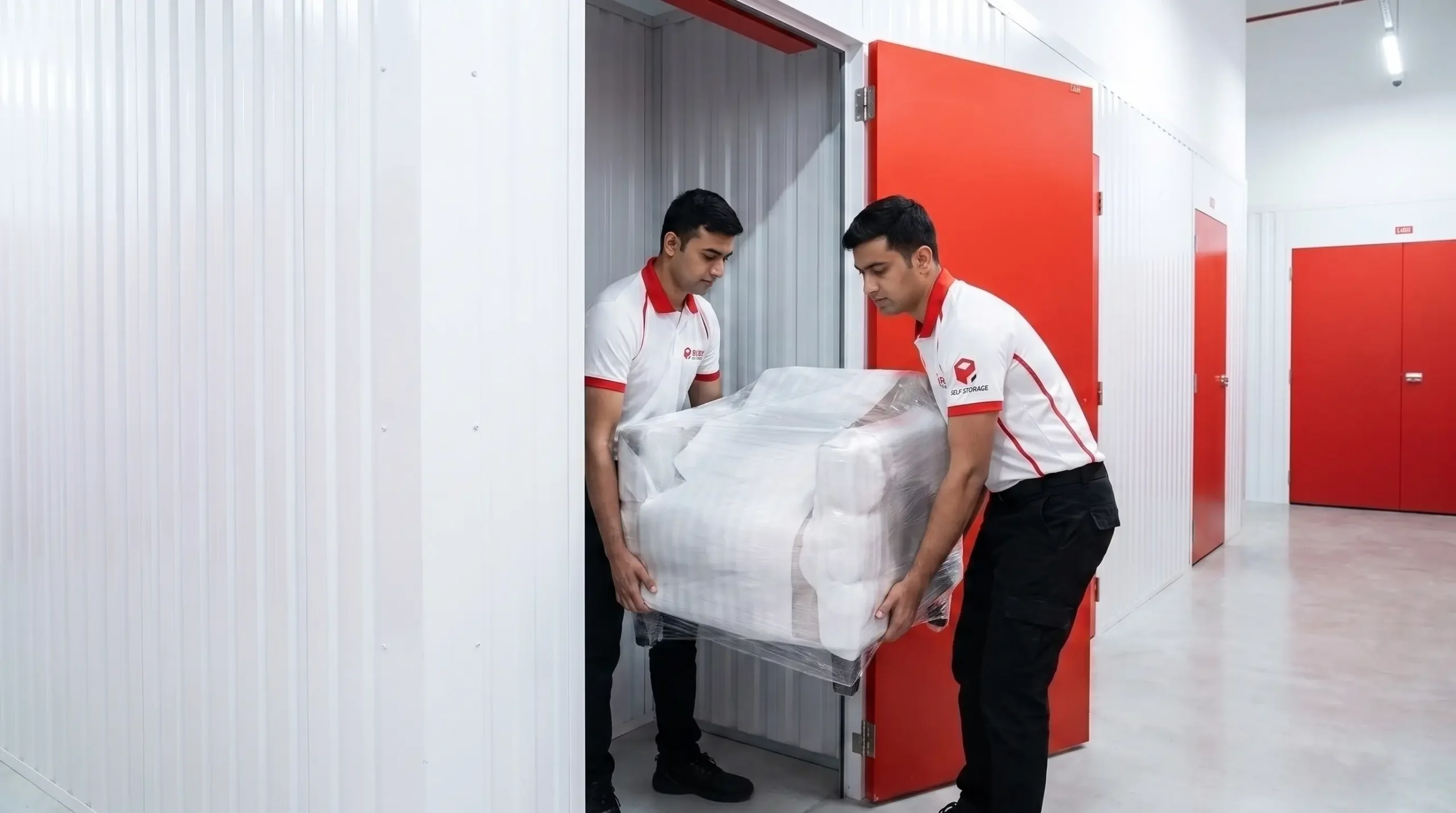
For upper floors, keep the loaded trolley below the lift’s posted rated capacity. Confirm a usable trolley exists when the provider advertises trolley access.
- Loading — bay count, vehicle limit, bay-to-unit distance
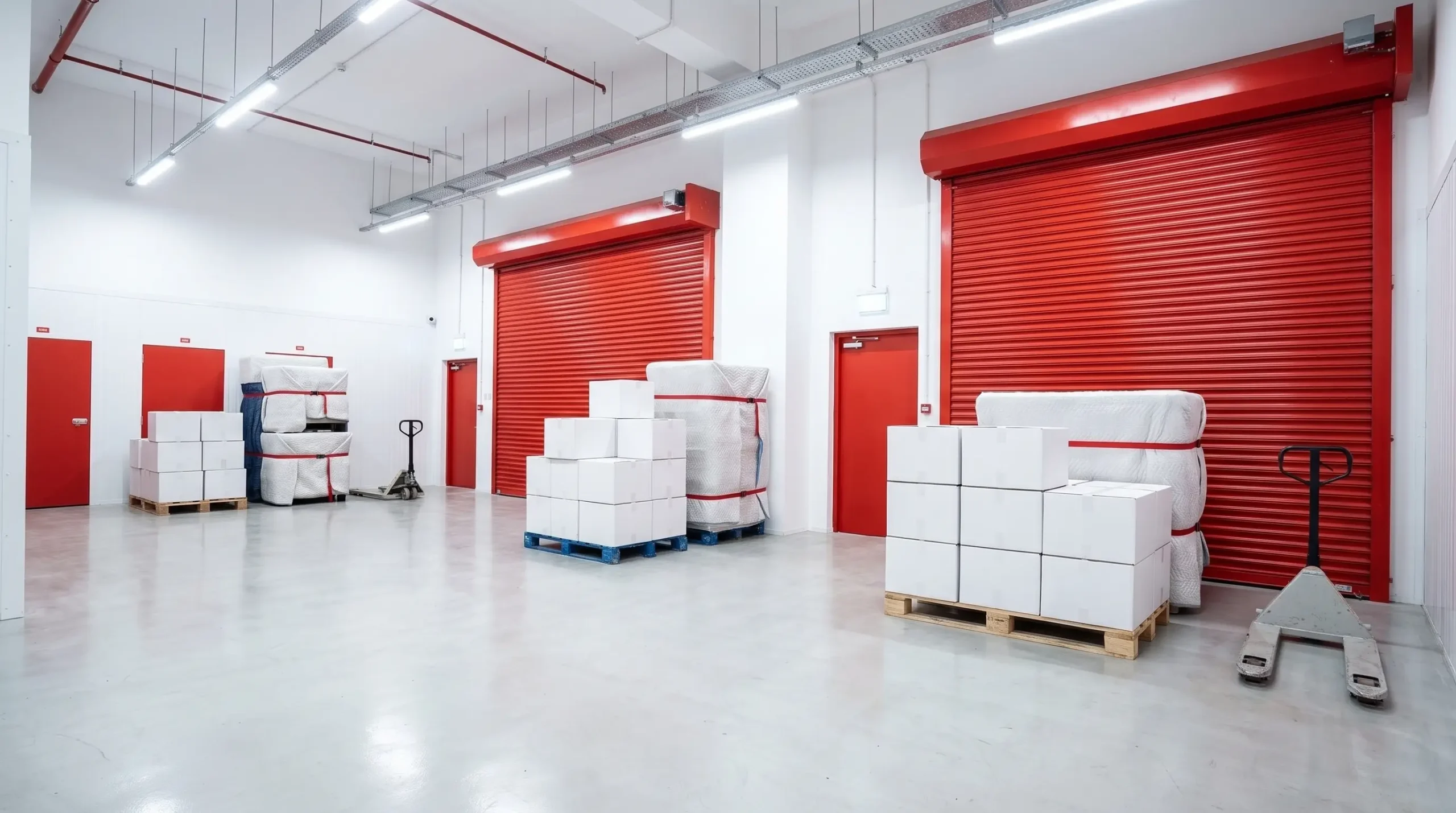
Dubai provides unusually specific loading figures. Under Dubai Local Order No. 2 of 1999, warehouse-type buildings between 5,000 and 10,000 sq ft require at least one 10 ft by 25 ft loading bay. Buildings from 10,001 to 25,000 sq ft require two.
The requirement reaches three 10 ft by 50 ft bays for buildings from 40,001 to 100,000 sq ft. Buildings from 100,001 to 250,000 sq ft require four 10 ft by 50 ft bays. Loading areas also require hard surfacing and adequate vertical clearance.
Record your vehicle height and actual bay-to-unit walking distance. Dubai does not publish one universal self-storage walking-distance limit in the sources reviewed.
- Pest control — frequency and last inspection date
The Dubai Municipality storage guideline requires proper pest-control procedures, a valid pest-control contract, regular treatment, and maintained treatment records.
Dubai Municipality also regulates and qualifies pest-control companies through its Public Health Pest Control Section. During the first half of 2024, Dubai Municipality reported 2,962 inspection visits covering abattoirs, veterinary organizations, and public-health pest-control companies.
Dubai publishes no single treatment interval for every self storage facility. Pass the check when the latest treatment falls inside the contractor’s written interval and you find zero fresh pest evidence.
- Fire — detection, suppression, Civil Defence certificate
Fire inspection starts with current Dubai Civil Defence documentation and continues with the systems installed for that specific building.
Dubai Civil Defence uses building size, configuration, hazard, and installed systems when classifying premises. Its guidance includes warehouses below 5,000 sq ft and a separate category above 5,000 and below 15,000 sq ft. Larger facilities carry different monitoring requirements.
Ask for current fire-safety or completion evidence and the maintenance documentation covering installed systems. Treat any expired document presented as current as a failed inspection point. Do not assume every warehouse requires an identical suppression configuration.
- Insurance — facility cover versus your own policy
Facility insurance and contents insurance are different forms of cover. A building policy does not automatically prove that your stored property has insurance protection.
Ask for the policy wording or insurance certificate that applies to your goods. The Central Bank of the UAE insurance rules require electronic policies to state policy terms, coverage limits, commencement date, and expiry date.
Your inspection threshold is numerical: the applicable sum insured equals or exceeds your estimated replacement value. Record the deductible in AED and check exclusions before signing.
- Cleanliness and water ingress evidence
Pass the unit only with zero active leaks, zero standing water, zero visible mold, and zero fresh water marks. Inspect corners, wall-floor joints, air-conditioning outlets, roof lines, and the loading route.
The Dubai Municipality storage guideline requires storage floors, walls, and ceilings to remain clean and in good repair. It also requires procedures and equipment for spills or leakage.
For vulnerable cartons, the official 20-centimeter floor clearance provides added separation from floor-level moisture.
- Staffing hours and on-site presence
Ask who is physically present after office hours. Remote support and an on-site guard are different controls.
The SIRA 2025 Preventive Systems Manual specifies 24-hour security guards within the covered self-storage requirements. That equals 168 guard hours across seven days.
Check the guard post and ask how overnight incidents reach management. Verify any round-the-clock staffing claim on site.
- Contract transparency
The SIRA Preventive Systems Manual requires tenant contracts to prohibit harmful or prohibited materials, flammable or explosive materials, and property stolen or obtained through crime.
UAE Federal Law No. 15 of 2020 on Consumer Protection prohibits misleading service-price advertising. The law also requires a detailed invoice containing the service type, price, and relevant details.
Use zero blank commercial fields as the threshold. Confirm unit size, term, payment, access, liability, insurance, cancellation, prohibited goods, and mandatory charges.
- Published tariff or quote-only
A quote-only facility can still pass when you can audit the written price.
The Federal Tax Authority (FTA) states that the UAE standard Value Added Tax rate is 5%, unless zero-rating or exemption applies. A base storage charge of AED 1,000 becomes AED 1,050 when 5% VAT applies.
Require six clear entries before comparing storage services in Dubai:
- Base monthly rent
- VAT status
- Deposit
- Insurance charge
- Compulsory extras
- Renewal price
A public tariff helps comparison, but UAE consumer law does not make a website tariff the only route to price transparency. A complete written quote can provide the necessary price evidence.
Questions to ask on the site visit
Ask questions that force a number, document, or demonstration:
- How many days of CCTV footage can you retrieve today?
- What temperature and humidity does this unit record now?
- What is the last pest-control service date?
- Which Dubai Civil Defence documents cover this building?
- Is the Hassantuk connection active?
- What access hours appear in the contract?
- What is the lift’s rated load?
- How many loading bays serve this building?
- What is the insured limit for my contents?
- What is the monthly amount after VAT and mandatory charges?
- What price applies after any introductory period?
- Which clause controls cancellation and access suspension?
A useful answer produces evidence. “We have strong security” does not answer a 90-day CCTV-retention question.
Red flags that should end the visit
End the visit when the operator cannot resolve a material safety or contract issue:
- CCTV retention falls below the applicable SIRA requirement.
- Climate control has no readable set-point or records.
- Fire documents appear expired or unavailable.
- You see active leaks, mould, standing water, or fresh pest evidence.
- Staff cannot identify insurance limits or exclusions.
- The contract contains blank price, liability, or cancellation fields.
- Mandatory fees appear only after you agree to rent.
- Advertised 24/7 access differs from written terms.
Missing security, fire, water, insurance, or contract evidence changes the risk attached to the unit.
Ruby Self Storage against the same checklist
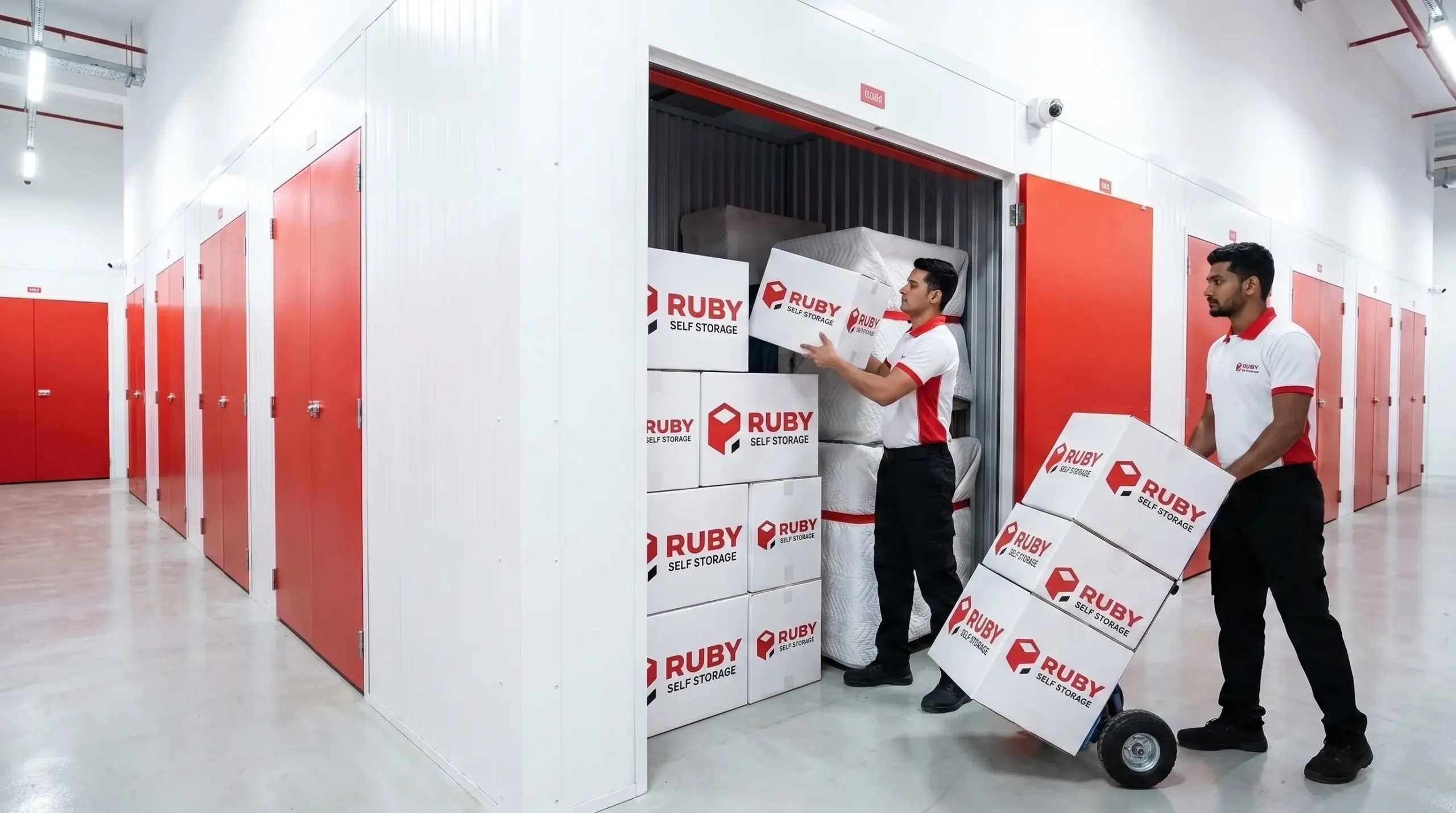
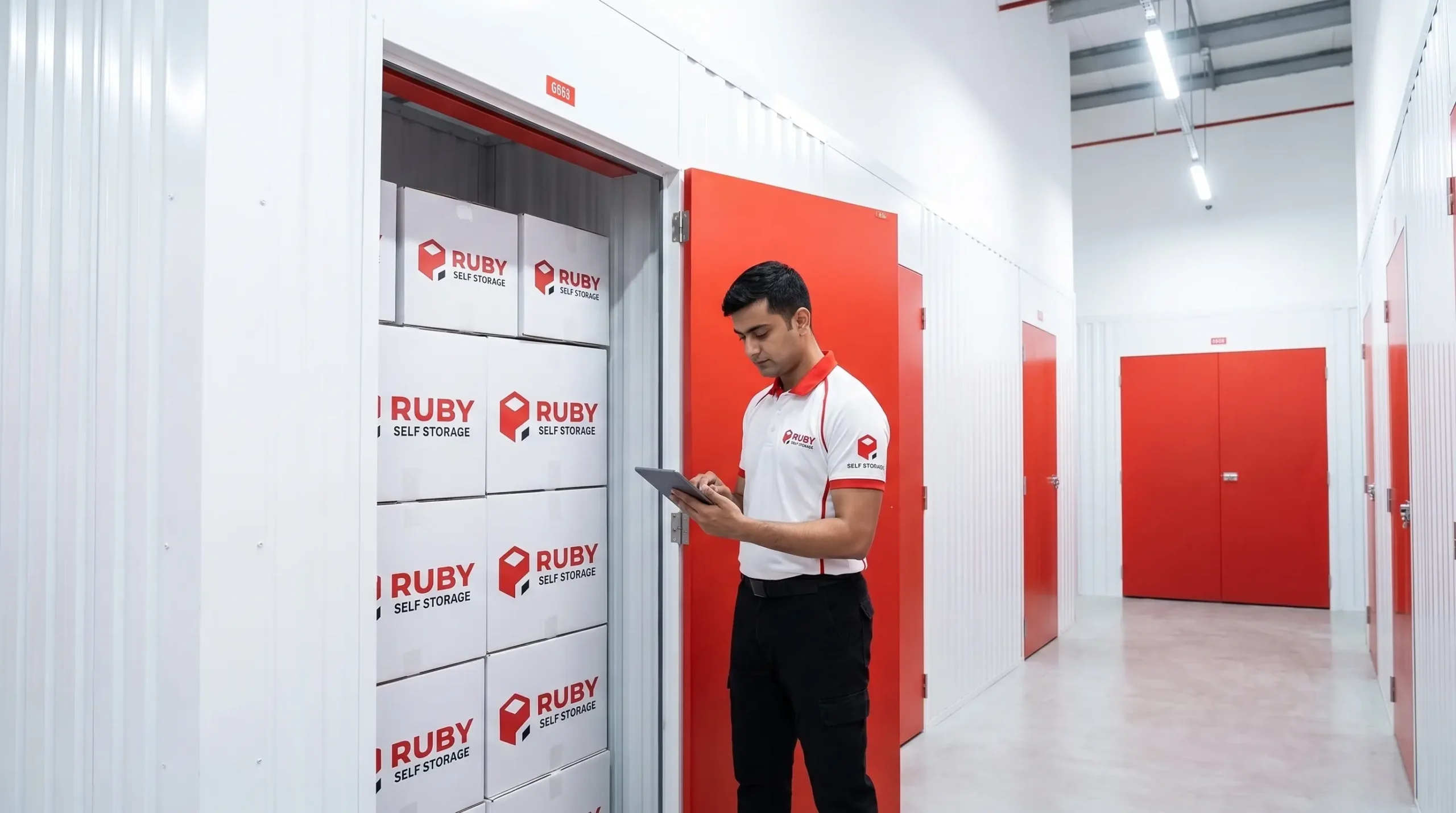
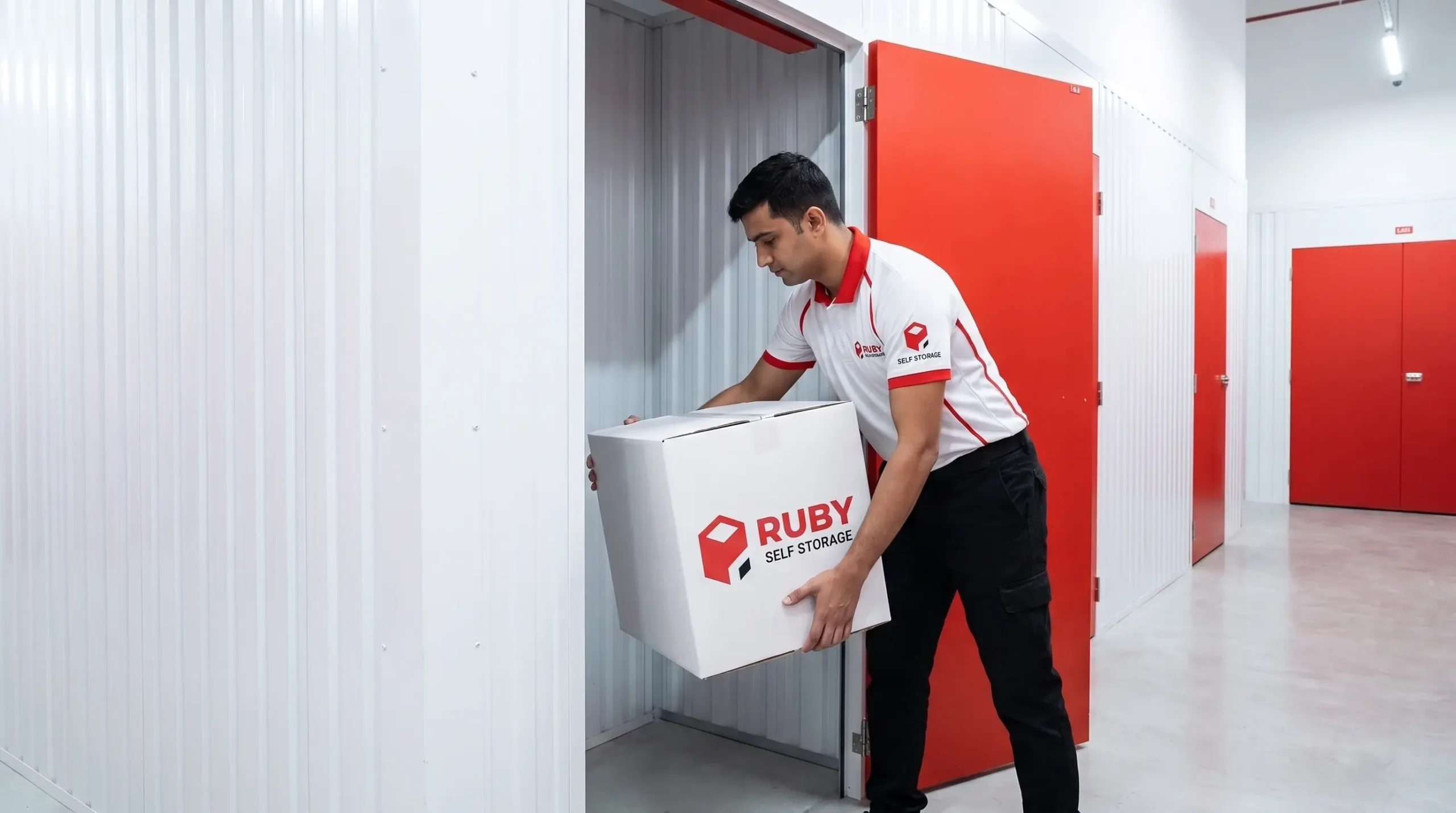
Ruby Self Storage can be tested against the same 12 points. Its website shows published claims, not independent proof of compliance.
Ruby Self Storage publishes 24/7 access, CCTV surveillance, biometric access control, climate-controlled units, and periodic pest treatment. Other Ruby pages publish alarm systems, security personnel, controlled access, and optional insurance.
Ruby also publishes a typical climate-controlled range of 18°C to 24°C and 40% to 55% relative humidity.
| Check | Published position | Site verification |
|---|---|---|
| Unit construction | Detailed partition and ceiling-gap data not published | Measure construction and clearances |
| Climate control | 18°C to 24°C; 40% to 55% RH | Check live reading and logs |
| Security | CCTV, controlled access, alarms | Confirm 90-day retention and 8-hour backup |
| Access | 24/7 access | Confirm contract, lift, and trolley access |
| Loading | Detailed bay count not published | Compare bay count with building area |
| Pest control | Periodic or frequent treatment | Check valid contract and last service |
| Fire | Complete DCD document set not published on pages reviewed | Inspect certificates and Hassantuk status |
| Insurance | Optional insurance published | Read limit, deductible, and exclusions |
| Cleanliness | Controlled-environment claims | Inspect exact unit for leaks and mould |
| Staffing | On-site or round-the-clock security claims | Confirm overnight presence |
| Contract | Flexible rental claims | Read price, cancellation, and liability terms |
| Published tariff | Pricing ranges and examples published | Obtain final written AED quote |
Ruby’s August 2026 pricing guide gives quantified climate-control examples. It lists AED 300 versus AED 350 for 25 sq ft, AED 900 versus AED 1,100 for 50 sq ft, and AED 1,600 versus AED 2,000 for 100 sq ft for regular versus climate-controlled examples.
Those differences equal 16.7%, 22.2%, and 25%. Compare the quote against the facility specification.
Choose the facility by evidence, not the monthly rate
A low monthly price means little if the facility cannot protect what goes inside the unit. The better comparison starts with evidence: measurable climate conditions, documented CCTV retention, controlled access, fire-safety records, pest-control history, insurance limits, and clear contract terms.
Dubai’s storage market gives customers many options, but the specifications behind those options vary. A site visit turns marketing claims into facts. Check the readings. Ask for the documents. Measure the loading route. Read the contract before paying a deposit.
The 12-point checklist gives every self storage facility in Dubai the same test. That makes it easier to compare storage services by security, operating standards, access, condition, and total cost rather than price alone.
The final choice is simple: select the storage facility in Dubai that can prove its claims with numbers, records, and written terms. Evidence is a stronger buying signal than a polished sales pitch.
FAQs
How do I compare storage facilities in Dubai?
Compare storage facilities in Dubai using the same 12 measurable checks for construction, climate, security, access, loading, pests, fire, insurance, cleanliness, staffing, contracts, and price.
How long must self-storage CCTV recordings be retained in Dubai?
SIRA’s 2025 self-storage specification requires recordings from required cameras to remain available for at least 90 days.
What humidity level is suitable for storage in Dubai?
Dubai Municipality specifies 60% RH or less for consumer products labeled for moisture protection and requires humidity records for the storage area.
Is 24/7 self-storage the same as 24-hour security?
No. Twenty-four-hour customer access describes when you can enter. SIRA’s covered self-storage specification separately requires 24-hour security guards.
What temperature range can I use when checking climate-controlled storage?
For consumer products without specific label instructions, Dubai Municipality gives 21°C to 25°C as the controlled-storage range. Product-specific storage instructions take priority.
Does a self storage facility in Dubai need a public price list?
UAE consumer law requires non-misleading service pricing and detailed invoices. A quote-only model can still provide transparent pricing when every charge appears in writing.
Rakan Al-Juraid is a logistics specialist with a focus on commercial storage systems and high-security asset management. With extensive experience in industrial warehousing, he specializes in inventory tracking technology and transit safety. Rakan’s expertise lies in streamlining the storage process for both businesses and homeowners through strategic planning. His writing offers data-driven advice on insurance for stored goods, fire-safe environments, and heavy-duty logistics. He is committed to ensuring that every square foot of storage is utilized with maximum security and efficiency. Rakan aims to provide professional-grade storage standards to every reader navigating the moving process.
- Rakan Al-Juraid
- Rakan Al-Juraid