How Box Storage in Ajman Became a Quiet Necessity and How Families and Expats Can Choose the Best Provider

Box storage in Ajman is becoming a quiet necessity because of a fast-growing population, a high expatriate share, compact apartments, and rising e-commerce activity, which compresses personal space into very small floor areas. Boxes absorb overflow items without a full unit upgrade.
Ajman city recorded about 565,767 residents in 2024, while the wider emirate reached around 582,852 people, after decades of rapid urbanisation on only about 259 square kilometres of land. Some nationwide demographic snapshots use a narrower method and put Ajman’s population at around 504,846 residents; whichever estimate you take, it confirms a dense urban environment within a small emirate. At the federal level, the UAE counted roughly 9.97 million residents in 2023, and expatriates accounted for about 88 % of that total. This means that most households in Ajman are mobile expatriate families and single professionals who change leases and emirates more often than long-term owner-occupiers.
Inside this context, box storage in Ajman serves three linked roles:
- It protects belongings during frequent moves.
- It reduces clutter inside small apartments without forcing rent jumps.
- It supports micro businesses and side projects that store inventory at home.
The rest of this guide explains these drivers in detail and provides a structured method to choose the best provider.
What is box storage in Ajman, and how does it work in practice?
Box storage in Ajman is a collection-based self-storage format where a company delivers empty boxes, collects packed boxes from homes, stores them in a managed facility, and returns individual boxes on demand. It replaces fixed room units with modular volume.
Typical operational steps include:
- Delivery of boxes
The provider sends a set number of standard cartons or plastic crates to apartments in areas such as Al Nuaimiya, Al Rashidiya, Ajman Downtown, or Al Jurf.
- Packing by the customer
Families and expats pack clothes, books, exam notes, children’s items, small appliances, or business inventory into the boxes, then seal and label them.
- Collection and transport
A driver scans barcodes, records each box in an inventory system, and moves the consignment to a central warehouse in Ajman or nearby Sharjah logistics zones.
- Storage in a controlled facility
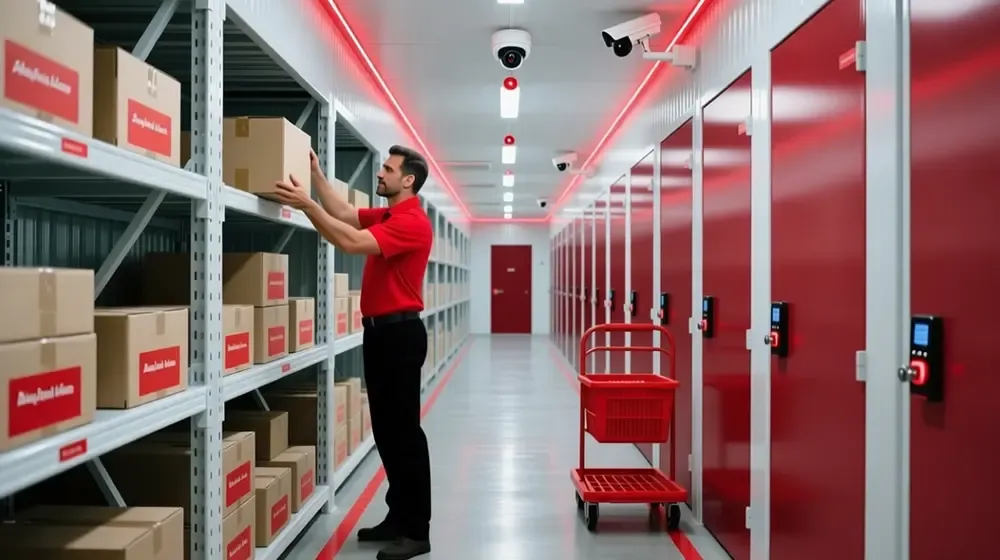
Boxes sit on racks inside a monitored environment with CCTV, access control, and climate management, where available.
- On-demand returns
Customers log into a portal or app, view photos or labels for each box, and request single box returns to their apartment when needed.
The service, therefore, links transport, digital inventory, and warehouse capacity into a single service. The model fits residents with five to twenty boxes more than residents who require a full independent storage room.
How do the Ajman population and expat trends push demand for box storage in Ajman?
Population and expat trends push demand because more people live in dense rental districts, while expatriates show higher mobility and accumulate goods over repeated moves.
Key demographic facts:
- Ajman city population in 2024: About 565,767 residents.
- Ajman metro area population in 2025: About 424,000 residents on this source’s narrower urban boundary, up about 1.4 % from 2024.
- Expatriates’ share of the UAE population: close to 88 %.
The population figures differ because each source draws a different boundary (city, emirate or metro area) and uses a different method; all of them describe the same dense, fast-growing urban core. Box storage, therefore, functions as an adjustment tool. Families keep core items at home and move low-frequency items into boxes. Expats who change jobs or move between Sharjah, Dubai, and Ajman use boxes as a buffer between leases. The service reduces the pressure to discard useful belongings each time a contract changes.
How do Ajman apartment sizes and rent levels make box storage in Ajman attractive?
Apartment sizes and rent levels make the service attractive because tenants optimise for rent and location first, then discover limited in-unit storage capacity, especially in popular mid-market districts. According to rental market portals, the average annual rent for a studio apartment in Ajman stands at AED 18,700, while one-bedroom units average around AED 29,200 per year. Local rental guides for mid 2025 list typical monthly studio rents in prime Ajman locations such as Al Nuaimiya, Al Rashidiya, Ajman Downtown, and Al Jurf between roughly AED 1,300 and AED 2,200 a month, depending on building quality and amenities.
Recent rent indicators show:
| Apartment type | Typical rent in Ajman |
|---|---|
| Studio (portal averages) | Around AED 18,700–20,000 per year |
| 1 bedroom (portal average) | Around AED 29,200 per year |
| Studio in prime districts | About AED 1,300 to 2,200 per month |
Many residents accept compact studios or small one-bedroom units to maintain affordability. Prime districts in Ajman still command significant monthly rents, even if lower than in Dubai. The cost of upgrading to a larger unit just to gain a store room or extra cupboard space can exceed the cost of external storage.
Families fill wardrobes, balconies, and small storage rooms with seasonal clothing, luggage, exam notes, toys, Ramadan décor, and spare furniture. Once these spaces fill, any new purchase forces a disposal decision. Box storage lets households keep items without paying for a larger apartment.
How does the UAE e-commerce growth contribute to the demand for box storage in Ajman?
UAE e-commerce growth adds to demand because micro sellers, side businesses, and remote workers store inventory and equipment inside apartments, while national online trade continues to expand.
Recent market figures show that:
- The UAE e-commerce market generated an e-commerce revenue of US$5,527 million in 2024, reflecting an e-commerce growth rate of 5-10%.
- Another analysis projects the UAE e-commerce gross merchandise value rising from about 7 billion US dollars in 2024 to about 11.5 billion US dollars by 2029.
- Next door, Dubai’s ecommerce market, whose courier and fulfilment networks many Ajman sellers rely on, is projected to grow from AED 32.3 billion (USD $8.8 billion) in 2024 to AED 50.6 billion (USD $13.8 billion) by 2029.
These trends imply that many small merchants use Ajman apartments as:
- Storage for online shop inventory.
- Packing areas for parcel preparation and returns.
- Temporary hubs for marketplace fulfilment experiments.
Shelving, cartons, packaging materials, and returned goods consume floor space that families also need. Box storage aligns with this pattern. Operators collect sealed boxes of non-perishable stock, seasonal items, or archived paperwork and keep them in professional facilities. Micro merchants call for box returns during peak seasons and send low-turnover items back into storage after campaigns. This cycle supports flexible inventory management without large capital commitments.
How does the broader UAE self-storage market support the rise of box storage in Ajman?
The broader UAE self-storage market supports this rise because national demand for flexible storage grows steadily and encourages new formats such as box-based models.
Sector studies report that:
- The UAE self-storage market generated about 602.5 million US dollars in revenue in 2024.
- The MEA self-storage market generated a revenue of USD 2,249.8 million in 2024. The market is expected to grow at a CAGR of 6.5% from 2025 to 2030.
Market maps of the UAE describe two main formats:
- Traditional room-based units with fixed square footage.
- Box-based, collection-led services designed for city residents, students, and small businesses with limited box counts.
Ajman sits close to Dubai and Sharjah logistics corridors, so providers that already operate warehouses and transport fleets in larger cities can extend box services into Ajman at relatively low marginal cost. Residents benefit from national infrastructure while paying Ajman-level prices.
What specific problems do families and expats solve with box storage in Ajman?
Families and expats solve several specific problems with box storage. They keep homes organised, protect belongings during moves or travel, and separate business and family space inside small apartments.
Common problems it addresses include:
- Overloaded storage areas
Cupboards, under-bed spaces, balconies, and small storage rooms fill with items that remain useful but are infrequently used.
- Frequent moves and visa changes
Expat families and singles change apartments within Ajman or move between Ajman, Dubai, and Sharjah when contracts change.
- Temporary relocation abroad
Residents leave the UAE for one or two years and retain belongings for a planned return.
- Home-based business clutter
Boxes of stock, sampling kits, and marketing materials compete with children’s items and daily household goods.
- Emotional attachment to possessions
Residents keep mementos, books, and children’s art that they do not wish to discard but cannot store comfortably at home.
Families in Ajman often manage rotating items such as baby gear, exam preparation books, travel luggage, Ramadan decor, and sports equipment. These items do not justify a larger apartment but still require safekeeping. Boxes offer a way to keep these belongings accessible without consuming living space.
Expats also face visa renewals, contract changes, or temporary postings in other countries. A household may depart for one or two years while expecting to return. Box storage lets them hand over boxes to a stable local provider, avoid extended lease payments, and reclaim goods upon return.
What service coverage and logistics model are important for box storage in Ajman?
Service coverage and logistics models matter because convenient pickup and return options determine whether the service integrates smoothly into daily life.
Key checks:
- Neighbourhood coverage
Confirm that the provider serves specific areas such as Al Nuaimiya, Al Rashidiya, Ajman Downtown, Ajman Corniche, Al Jurf, and newer suburbs.
- Pickup and delivery slots
Check available time windows, weekend operations, and policies for delayed or missed appointments.
- Weight and access limits
Ask about maximum box weight, stair access in walk-up buildings, and any extra charges for difficult access.
Coverage that matches a household’s routine makes the service a predictable extension of the home rather than a disruptive add-on.
What security standards should box storage in Ajman providers follow?
Security standards should be strong because customers entrust items that may hold financial, practical, or emotional value.
Important security indicators:
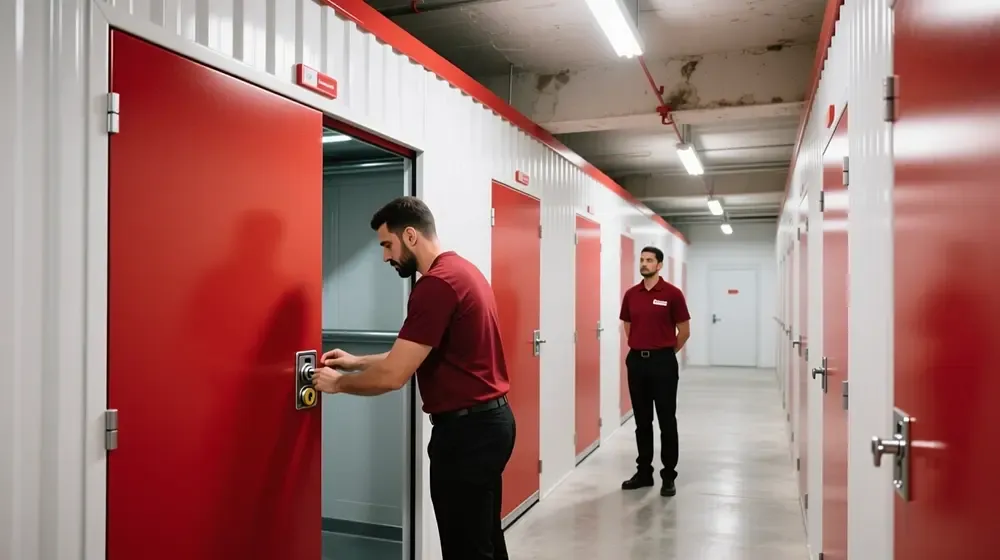
- Physical perimeter control, visitor logs, and restricted access zones.
- Continuous CCTV coverage in loading bays and storage aisles.
- Staff screening practices and role-based access to storage areas.
- Tamper-evident seals and barcode tracking for each box.
Residents can request written descriptions of the security policy and incident handling process, including response steps after any reported loss or damage.
Why does climate control matter for box storage in Ajman?
Climate control matters because the emirate experiences hot summers and coastal humidity that can harm textiles, paper, electronics, and wood when stored for long periods.
Practical checks:
- Ask providers to state target temperature ranges and humidity bands for storage zones.
- Confirm that facilities use insulation, ventilation, and dehumidification where appropriate.
- Clarify whether climate conditions remain stable during peak summer months.
Clothing, documents, photographs, and small electronics stay in better condition when the facility uses climate measures aligned with local weather extremes.
How should pricing and contract terms for box storage in Ajman be assessed?
Pricing and contract terms can be assessed by comparing all components of the offer rather than only the headline per-box rate.
Elements to review:
- Base storage fee
Monthly price per box (ask for it in writing), and whether the initial delivery and first collection are included.
- Movement charges
Fees for pickups, returns, urgent requests, or partial deliveries.
- Minimum term and exit rules
Minimum storage duration, notice periods, and any early exit charges.
- Price adjustment clauses
Conditions under which prices can change and the notice given.
- Unclaimed goods policy
Process for dealing with overdue accounts, including attempts to contact the customer and rules for disposal or auction.
Transparent and detailed terms help families avoid disagreements later and treat box storage as a stable, long-term service.
How do digital inventory tools improve the experience of box storage in Ajman?
Digital inventory tools improve the experience because they give residents precise visibility and control over each stored box.
Digital features that are handy are:
- Photos of each box captured at intake.
- Searchable tags, like winter clothes, exam books, or baby items.
- Status and history records available online and through mobile applications.
- Easy processes to request box returns or schedule pickups.
These tools let customers treat their boxes as an organised extension of home storage, instead of a remote warehouse they know little about.
Why are legal compliance and insurance important in box storage in Ajman?
Legal compliance and insurance are crucial because they set out who is responsible, and what remedies apply, when rare but serious events occur.
Residents can ask providers about:
- The warehouse’s trade licence and municipal approvals.
- Fire safety regulations, such as alarm systems and frequent inspections.
- Written lists of prohibited items and handling rules.
- Coverage of goods stored, limits of coverage, and claim procedures.
Providers that can explain these points clearly show a commitment to professional standards rather than informal storage.
What mistakes do Ajman residents often make when selecting box storage in Ajman?
When choosing a box storage provider, Ajman residents tend to make three major errors: they compare only the headline monthly price, they ignore facility conditions, and they accept an offer without clear written terms.
Typical selection errors:
- Price only comparisons
Residents compare per-box prices only and overlook additional fees for returns, urgent deliveries, or extra handling. The total cost then ends up higher than expected.
- No facility questions
Some customers do not ask about climate, pest control, or rack design. They discover the problems only when boxes come back with smells, dust, or minor damage.
- Unclear contracts
Customers sign contracts without reading the terms on disposal, auctions, or dispute handling. In any conflict, vague wording favours the side that wrote it.
A written checklist helps reduce these risks and keeps decisions based on facts.
What questions can families and expats in Ajman ask before signing with a box storage provider?
A short checklist helps families and expats in Ajman review providers. Each question covers one risk area and asks for a specific answer.
- What are your pickup and delivery areas in Ajman (what neighbourhoods do you serve)? What are the default time windows?
- What are your climate conditions in your storage facilities, such as average temperatures and humidity ranges?
- What is the security plan of the facility, and what surveillance and access controls do you use on a daily basis?
- What do you do to label, photograph, and track your specific box, and how can I view my inventory of boxes online?
- What is the actual monthly rental per box, and what does each pickup and delivery cost?
- What is the minimum storage term, what happens if I end the contract early, and how do you handle customers who move abroad for long periods?
- What items can you not store, and what do you do with unclaimed boxes or overdue accounts?
- What are your fire precaution and pest prevention measures, and how frequently do you check the premises?
- What insurance coverage applies to my boxes? What are the limits, and how do I submit a claim?
- Would you be able to provide any references or case studies of families or expats at Ajman using your box storage service?
Adapt the checklist to your own situation. What matters is asking exact questions and getting specific, written answers.
What final lessons should Ajman families and expats take from the rise of box storage in Ajman?
Box storage in Ajman is a structural adaptation to measurable demand, rather than a fad. Population density, high expatriate mobility, compact apartments, and e-commerce growth converge on the same outcome. Internal storage inside typical Ajman flats becomes insufficient.
For many households, boxes now act as a second layer of storage outside the apartment. Seasonal clothing, exam notes, children’s items, sentimental objects, and micro business stock stay safe without triggering rent upgrades. Home interiors retain order while belongings remain available. Evidence from population statistics, rent data, and self-storage market reports indicates that external storage services already form part of the urban infrastructure across the UAE. Local box services connect this infrastructure to local realities in Al Nuaimiya, Al Rashidiya, Ajman Downtown, Al Jurf, and nearby districts.
Practical actions:
- List all low-frequency items that currently occupy the living space.
- Estimate how many boxes these items require.
- Use the checklist questions from the guide to screen at least two or three providers.
- Compare the total annual storage cost with the rent increase for a larger apartment.
The key conclusion is clear. Box storage produces the best results when residents treat provider selection as a structured decision, not a last-minute reaction. A detailed review of coverage, security, climate control, pricing, digital tools, legal compliance, and insurance shifts the balance toward long-term reliability.