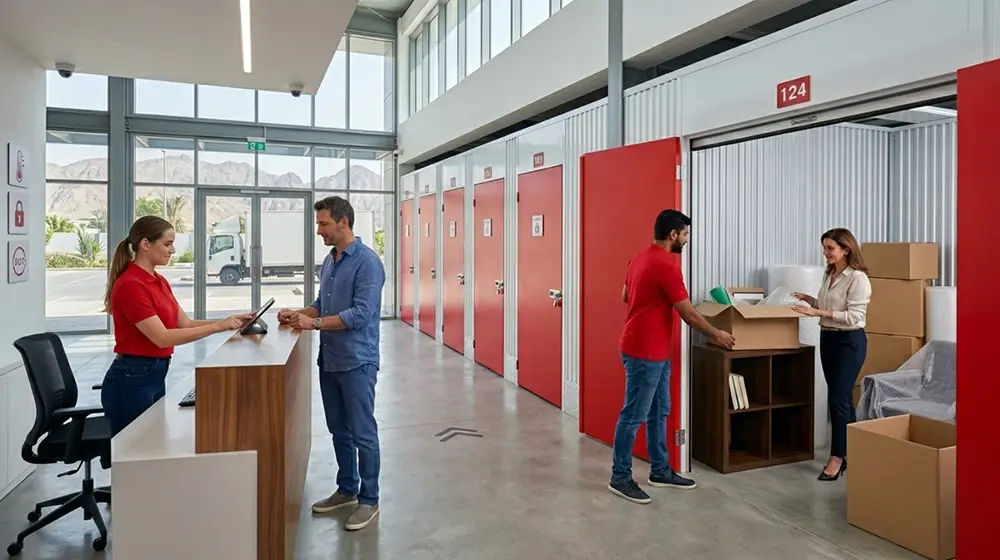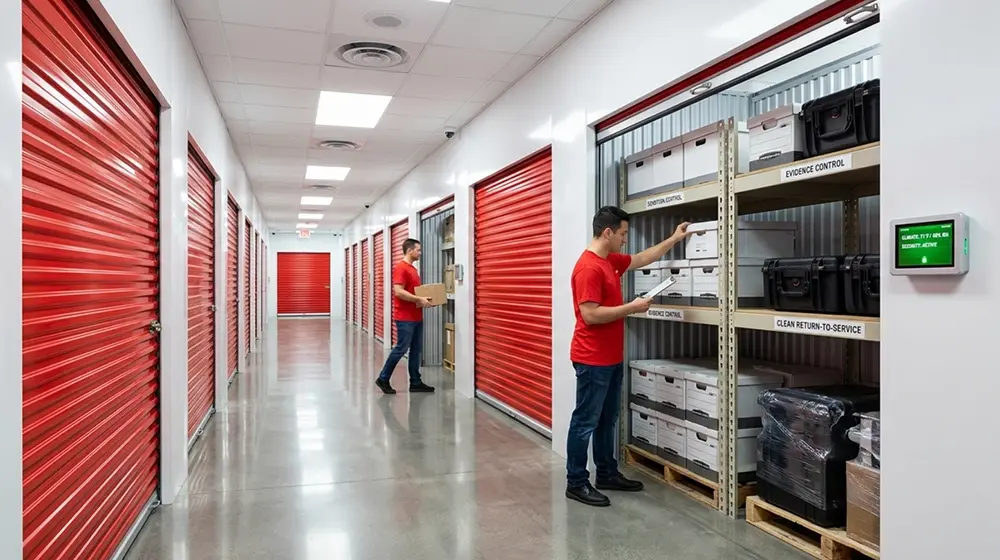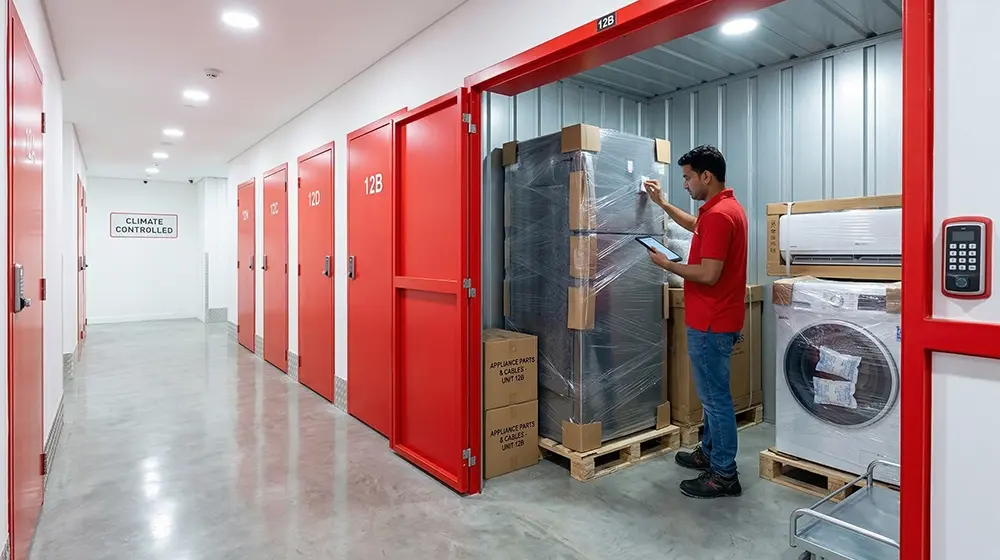
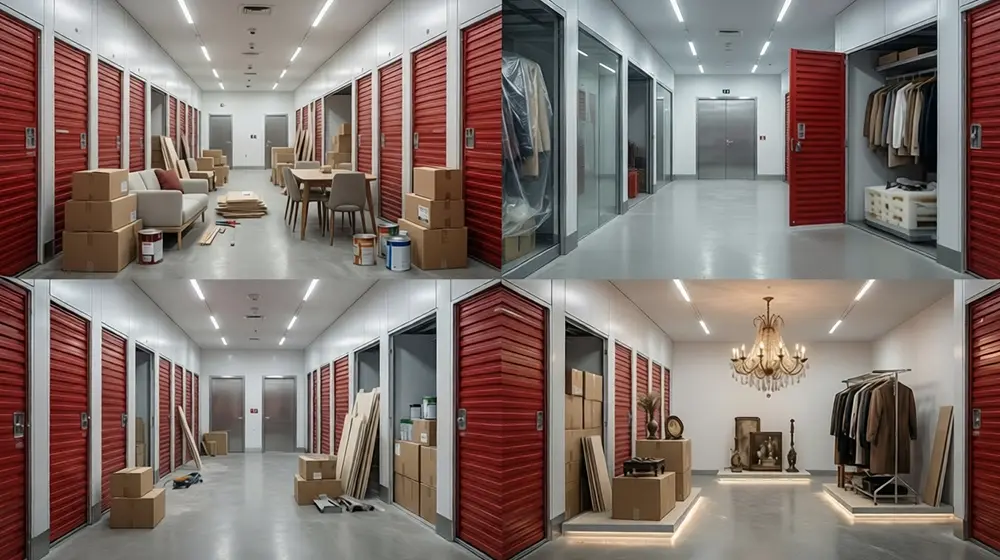
Renovating a home in Dubai rarely fails because of design or contractors. It fails because furniture, appliances, and personal assets are left without a clear storage plan. One wrong unit size, one unplanned retrieval, or one humidity exposure can turn a renovation into a costly logistics problem. Temporary storage is not just about finding space. It is about controlling cost, damage risk, access delays, and resale decisions during weeks or months of construction.
This guide explains how to choose between self-storage and managed storage, how to calculate whether items should be stored or sold, and how to prevent disputes through proper documentation.
Benefits of reading this article
- Lower cost variance by mapping unit size, duration, and handling events into one storage plan.
- Reduce damage and dispute exposure by implementing an inventory ID system, condition logs, and an evidence pack aligned to audit-trail logic.
The goal is simple: Protect your belongings, control your budget, and complete your renovation without avoidable surprises.
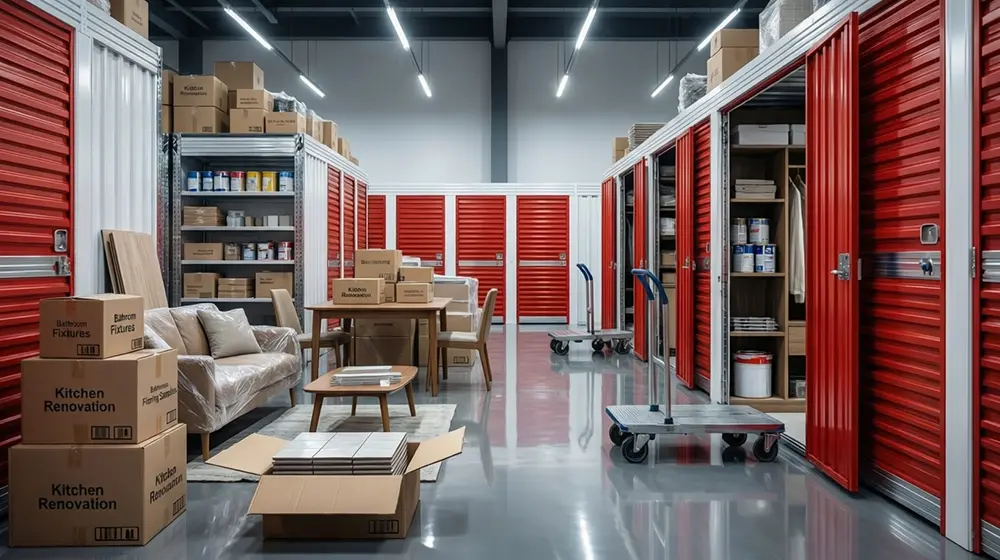
What market signals explain why temporary storage demand rises during Dubai renovations?
Temporary storage demand rises when household movement and property procedures rise. Dubai Land Department reported 2.78 million real estate procedures in 2024, a 17% increase vs 2023, and AED 761 billion in transactions in 2024.
Population growth increases renovation cycles and move frequency. Reuters reported that Dubai’s population has surpassed 4 million, tied to property and business growth.
Storage supply expansion supports wider choice but wider variability. Grand View Research estimates the UAE self-storage market at USD 602.5 million in 2024, projecting USD 859.2 million by 2030 and 6.3% CAGR (2025 to 2030).
Storage becomes the “buffer” between the renovation scope and living logistics. The operational constraint comes from building rules, access slots, and renovation approvals. Higher demand increases pricing tier spread, which makes a structured comparison necessary.
What is the practical difference between self storage and managed storage in Dubai?
Self storage is a customer-controlled custody model. The customer controls packing, transport, unit loading pattern, and retrieval actions.
Managed storage is a provider-controlled custody model. The provider controls pickup, packing standard, inventory logging, storage intake checks, and scheduled redelivery.
- Self-storage concentrates risk in packing quality, unit selection, and retrieval discipline.
- Managed storage concentrates risk in the chain of custody, item identification, and service scope clarity.
The difference is not branding. The difference is in handling events and the accountability surface.
Self-storage vs. managed storage comparison for Dubai renovation
The difference shows up as a measurable change in:
| Dimension | Self storage | Managed storage |
| Cost structure | unit size + duration | bundled custody + handling events |
| Inventory discipline | customer-driven | provider-driven with logs |
| Handling events | often higher | Often structured, fewer ad hoc events |
| Access pattern | flexible but customer-managed | scheduled, depends on SLA |
| Evidence strength | depends on the customer’s system | Often, a standardized intake process |
| Best fit | low access, stable inventory | staged retrieval, high value, high sensitivity |
Unit sizes vs typical apartment types during home renovation in Dubai
These are planning ranges, not guarantees. Actual fit depends on furniture footprint, disassembly, carton count, and stacking discipline.
| Apartment type | Renovation storage goal | Typical inventory being stored | Suggested unit size range | What usually pushes you up a size tier |
| Studio | Clear living space, keep essentials off-site | Sofa, small dining set, bed/mattress, 10–20 cartons, small appliances | 25–50 sq ft | Full-bedroom set, bulky sofa, no disassembly, high carton volume |
| 1BHK | Protect furniture + free space for contractors | Bed + mattress, wardrobe panels, sofa, TV unit, 20–35 cartons | 50–75 sq ft | Full dining set, 2 wardrobes, oversized sectional, and fragile items requiring spacing |
| 2BHK | Store core rooms, stage renovation phases | Two beds, 1–2 wardrobes, living set, 35–60 cartons, appliances | 75–120 sq ft | Keeping both bedrooms intact, limited disassembly, many cartons, baby/kids items |
| 3BHK | Full household off-site or phased return | Three bedrooms, larger living set, storage cabinets, 60–90 cartons | 120–200 sq ft | Multiple bulky wardrobes, large dining, home office equipment, high-value décor |
| 4BHK / Large family unit | Temporary full relocation off-site | Full household sets, many cartons, seasonal items | 200–300+ sq ft | Multiple room sets + large appliances + low stacking efficiency |
| Partial storage (any size) | Store only “keep” items after store vs sell | Selected high-value furniture, documents, electronics, 10–30 cartons | 25–75 sq ft | Keeping low-value bulky items, storing duplicates, and frequent retrieval needs |
Sizing rule of thumb for planning:
- If you are storing beds + wardrobes + sofa + dining, start at 75 sq ft planning range for most 1BHK–2BHK sets.
- If you are storing mostly cartons + small items, start at 25–50 sq ft and control volume through store vs sell decisions.
What decision criteria separate self-storage from managed storage during renovation?
The most reliable criteria set is cost model, access frequency, handling events, risk profile, and documentation strength.

(1) Cost model
Self storage pricing is usually tied to unit size and facility features.
- 25 sq ft: AED 300 to 400 per month.
- 50 sq ft: cost bands published at AED 900 to 1,400 per month.
Provider menus also list specific tariffs such as 12 sq ft at AED 300/month and 50 sq ft at AED 900/month.
Managed storage is often priced as a bundled service that includes pickup, packing, storage, and return. The cost structure depends on inventory detail and service scope, not just square footage. That shifts the cost model toward:
- Inventory volume
- Packing standard
- Pickup and return events
- Service scope definitions
(2) Access frequency
High access frequency suits managed storage only when the provider offers predictable retrieval SLAs.
- Low access frequency suits both models.
- High access frequency increases cost and handling risk for self-storage, and increases SLA dependence for managed storage.
(3) Handling events
Each additional handling event raises damage exposure. A standard renovation path includes:
- Item prep and disassembly
- Packing
- Loading
- Transport
- Intake
- Retrieval
- Return delivery
- Reassembly and placement
Managed storage can reduce the “ad hoc” retrieval pattern by enforcing scheduled retrieval.
(4) Risk profile
Risk concentrates in heat, humidity, and dust. Dubai’s climate makes humidity control relevant. EPA guidance links mold risk control to keeping indoor relative humidity below 60% RH, ideally 30% to 50% RH.
Reuters reported UAE summer extremes near record highs, with temperatures in inland areas exceeding 50°C in periods, while coastal cities such as Dubai experience regular mid-40s°C during heat spikes.
(5) Documentation strength
Documentation is the backbone of claims readiness. ISO’s Auditing Practices Group defines audit trail use as a method that improves audit effectiveness and traceability through records and process evidence.
Managed storage often formalizes documentation. Self-storage requires the customer to impose it.
What cost drivers increase total storage cost during renovation?
Storage cost escalation typically comes from predictable drivers.
Primary cost drivers
- Unit size step-up
A move from 25 sq ft to 50 sq ft can shift the monthly cost from AED 300–400 to AED 900–1,400 in published ranges.
- Duration extension
Every extra month adds the full monthly cost. Renovation slippage is a direct cost multiplier.
- Handling and transport events
Self-storage often creates extra trips. Managed storage often prices additional retrieval events.
- Climate control premium
Climate control is an environmental control feature. The premium varies by facility and location.
- Access constraints and booking friction
Building access windows and lift bookings can introduce paid waiting time in logistics.
What Dubai-specific renovation approvals and community rules affect storage planning?
Renovation work is often linked to approvals and community restrictions. Dubai Municipality provides building permit procedures and steps for building-related works.
Community-level NOC requirements are common. Emaar’s home modifications factsheet states that it is necessary to obtain a No Objection Certificate (NOC) to ensure modifications comply with guidelines.
The Dubai Building Code applies to renovation and modification in its scope statement.
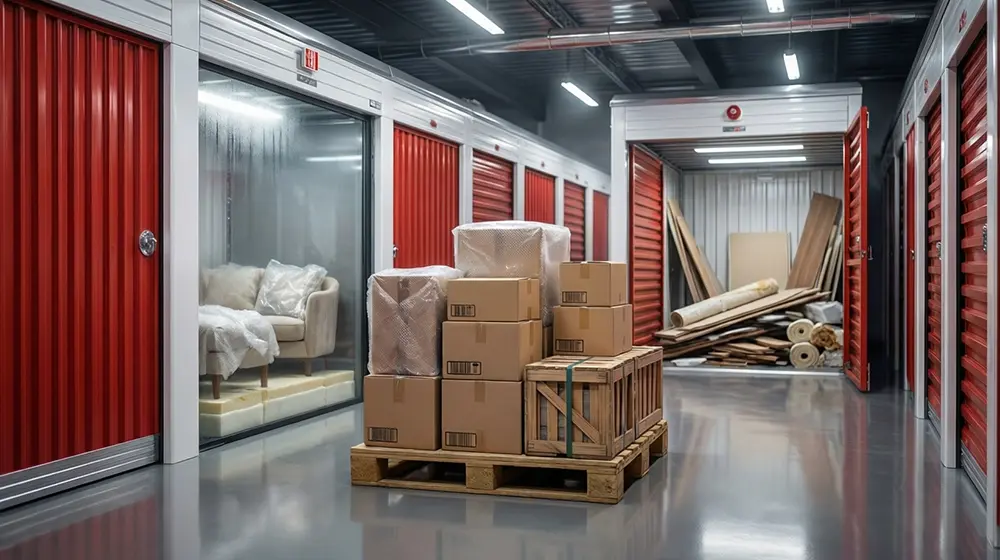
These controls affect:
- Pickup windows
- Loading bay access
- Crew scheduling
- Return delivery timing
Storage implication
- Storage pickup and return schedules must align with permits, NOCs, and building access rules.
What items should be stored during home renovation in Dubai?
Items worth storing have one or more measurable traits: high replacement cost, high sensitivity, low resale liquidity, or long lead times.
Store category 1: high replacement cost and low resale liquidity
- Modular wardrobes and cabinetry panels
- Premium mattresses with hygiene covers
- Large appliances with warranty value
Store category 2: material and finish sensitivity
Environmental stability matters in Dubai heat cycles. High heat and humidity exposure increases material stress risk, especially during extreme periods noted in the UAE heat reporting.
Store these if conditions matter:
- Solid wood and veneer furniture
- Leather seating
- Books and documents
- Framed art and canvases
Store category 3: high fragility and high handling risk
- Large mirrors
- Glass tops
- Large screens and monitors
Store category 4: home office assets and data-bearing devices
Data-bearing devices require custody discipline.
- External drives and backups
- NAS units
- Business documents
Audit trail logic supports custody controls via records and traceability.
What items are usually better sold than stored during renovation?
Sell decisions reduce unit size and reduce duration pressure.
Sell category A: bulky, low value, high volume
- Low-cost particleboard furniture that disassembles poorly
- Worn shelving and basic TV stands.
Sell category B: low-value textiles with contamination risk
- Older rugs and curtains that trap dust and odors
- Low-value cushions and throws
Sell category C: duplicate small appliances
- Duplicates that are inexpensive to replace compared to the cumulative storage cost
Dubai resale liquidity note
Dubai has an active secondhand market through platforms, with large furniture categories and visible price ranges.
What storage risks are unique during a Dubai home renovation?
Dubai renovation storage concentrates three technical risks: heat and humidity, dust contamination, and timeline slippage.
Heat and humidity exposure
Humidity volatility damages wood joints, veneers, leather, and paper products.
Conservation and HVAC literature treat stable humidity as critical for sensitive materials. A preservation reference associated with museum and archive practice describes the traditional target as 21°C and 50% RH with minimal fluctuations.
A practical storage implication follows:
- Mixed household goods: storage planning prioritizes stable conditions over “cool air only”.
- High sensitivity items: climate-controlled storage becomes a risk control, not an upgrade.
Dust and surface contamination
Renovation dust penetrates textiles, electronics vents, and cabinet interiors. Storage planning separates:
- Items that remain on site under sealed wrap
- Items that move to storage due to dust sensitivity
Timeline slippage
Renovation schedules slip. Storage bills and retrieval complexity rise with every extension. A storage plan, therefore, links unit selection to the realistic duration range, not the ideal schedule.
How do you calculate store vs sell using a break-even rule?
A break-even rule uses three inputs:
- Replacement cost
- Immediate resale value
- Monthly storage cost
Break-even months = (Replacement cost − Immediate resale value) ÷ Monthly storage cost
Use the Dubai monthly ranges to ground the monthly cost input:
- 25 sq ft: AED 300 to 400
- 50 sq ft: AED 900 to 1,400
- 50 sq ft: AED 900 menu example
Quick break-even examples
1. Cabinet worth AED 3,500 replacement
- Resale now: AED 1,000
- Monthly storage allocation: AED 1,000
- Break-even = (3,500 − 1,000) ÷ 1,000 = 2.5 months
2. Dining set worth AED 6,000 replacement
- Resale now: AED 2,000
- Monthly storage allocation: AED 900
- Break-even = (6,000 − 2,000) ÷ 900 = 4.44 months
These examples show why store vs sell becomes a budgeting tool when renovation duration is uncertain. That item fits “sell” if renovation duration exceeds the break-even months and if replacement logistics are low risk.
How do you choose a self-storage unit size during home renovation in Dubai?
Unit sizing starts with an inventory list and volume estimate.
Most Dubai storage cost guides tie unit sizes to approximate contents:
- 50 sq ft fits the contents of a studio apartment with 9 to 16 cubic meters as described.
- 75 sq ft aligns with 1-bedroom furniture in the same guide’s framing.
Unit selection becomes more accurate with a room-based inventory list:
- Living room seating count
- Dining set footprint
- Bed sizes
- Wardrobe panels or frames
- Cartons count
Over-sizing increases the monthly cost. Under-sizing increases damage and handling time.
What documentation reduces disputes for temporary storage during home renovation in Dubai?
Disputes follow missing proof. A practical evidence pack uses four documents.
(1) Inventory list with unique IDs
Use an item code format:
- LR-CHAIR-01
- BR-BED-01
- KIT-APPL-01
(2) Condition report with photo log
A condition report uses:
- 4-angle photos per large item
- close-ups of existing scratches
- serial numbers for electronics
(3) Box index and seal log
A box index lists:
- Box ID
- Contents category
- Room tag
- Fragile tag
(4) Access and custody log
Audit trail logic fits storage custody because traceability proves “what happened” and “when”. ISO auditing guidance describes an audit trail as tracing orders, specifications, and records through a process sample.
Managed storage providers sometimes supply these records as standard. Self storage requires the customer to run the system.
What legal and claims readiness steps fit storage during the Dubai renovation?
Claims readiness rests on proof, not narrative. EPA humidity guidance provides a defensible threshold for mold-risk control in storage planning.
A claim pack includes:
- Contract scope and exclusions
- Insurance terms
- Inventory list and condition report
- Photo timestamps
- Pickup and delivery confirmations
- Access logs
The goal is short dispute cycles.
What is a practical timeline plan for temporary storage during home renovation in Dubai?
Timeline planning reduces cost escalation. A simple gate model uses five stages:
- Pre-pack audit: Inventory, store vs sell decisions, unit sizing
- Pack-out: Condition photos, labeling, sealing
- Storage intake: Confirm item count, confirm climate requirement
- Mid-renovation retrieval: Planned retrieval events only
- Move-back: Staged return, condition re-check, sign-off
Cost escalation often follows mid-renovation retrieval chaos.
What are the most common mistakes in temporary storage during home renovation in Dubai?
- Unit sizing based on guesswork
Published unit size examples show large cost steps by size tier.
- No condition log before storage
Claims turn on proof.
- No box index
Missing box IDs cause repeat handling.
- Uncontrolled humidity for sensitive items
EPA’s humidity guidance provides a clear threshold.
- Unplanned retrieval events
Each retrieval adds cost and damage exposure.
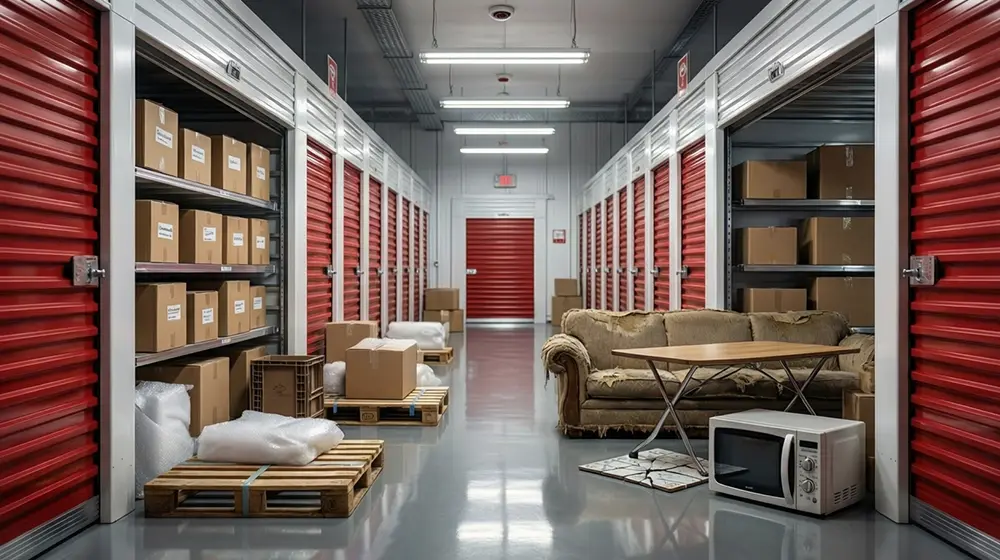
Checklist: Move-back day verification
Use this as a 10–15-minute control pass before final sign-off.
(1) Access and readiness checks
- Lift booking confirmed (slot time and loading bay access)
- Route clear (corridor protection, door clearance, floor protection)
- Room labels visible at destination (BR1, BR2, LR, KIT, STORE)
(2) Inventory control checks
- Count check: Cartons delivered vs cartons recorded on your box index
- High-value list check: Confirm delivery of all “priority IDs” first
- Seal check: Verify seals intact for cartons marked “sealed” in your log
(3) Condition verification checks
- Fast photo match: Compare 3–5 high-risk items to pre-storage photos
Examples: Sofa corners, table edges, mirror frames, appliance panels - Functional check: Confirm basic function for electronics and appliances
Examples: TV powers on, fridge door seals, washer drum spins, router boots
(4) Placement and assembly checks
- Critical furniture assembled first: Bed, sofa, dining table
- Hardware bag check: Confirm labeled screws/parts bags match each item ID
- Wall and floor check: Note any scuffs immediately with time-stamped photos
(5) Closure checks
- Exceptions list created (missing items, damage notes, wrong-room placements)
- Final sign-off only after exceptions are logged (even if fixes are promised)
Final Takeaway: Storage Is a Renovation Control System, Not a Spare Room
Renovation storage in Dubai is where timelines, building rules, and climate risk collide. The winning move is treating storage like a control system, not a last-minute place to dump furniture. Pick the custody model that matches your access pattern: self-storage when inventory is stable, and retrieval is rare, managed storage when phases and high-value items make chain-of-custody and documentation non-negotiable. Then shrink your unit size with a disciplined store vs sell break-even rule, because the fastest way to cut monthly spend is to reduce what you’re paying to protect. Finally, run storage like claims-readiness from day one: item IDs, condition photos, box index, and a custody log. If something goes wrong, proof ends the argument quickly. If nothing goes wrong, the same system makes move-back day faster, cleaner, and far less stressful.
FAQs
What’s the biggest mistake people make with renovation storage in Dubai?
Choosing unit size by guesswork instead of inventory + stacking discipline.
When is self storage the better choice?
When your stored inventory stays fixed, and you expect very few retrieval trips.
When is managed storage the better choice?
When renovation is phased, you need scheduled retrieval, pickup/return handling, and stronger custody records.
Do I really need climate-controlled storage in Dubai?
If you’re storing wood, leather, documents, books, or art, climate control is a risk control—not a luxury.
How do I decide “store vs sell” quickly?
Use break-even months = (replacement cost − resale now) ÷ monthly storage allocation.
What usually pushes a household into a bigger unit size tier?
Keeping bulky furniture intact, avoiding disassembly, and storing low-value “duplicates.”
How can I reduce storage cost without sacrificing protection?
Cut volume first (sell/donate), then choose the smallest safe unit and limit retrieval events.
What documentation prevents disputes with storage providers?
Item IDs, condition photos, a box index, and a simple custody/access log.
How many handling events are “too many” during renovation?
More handling means more damage riskplan retrieval in phases and avoiding ad-hoc trips.
What should I check on move-back day before signing off?
Counts vs your box index, seal status, quick condition checks on high-risk items, then exceptions logged before final sign-off.
Rakan Al-Juraid is a logistics specialist with a focus on commercial storage systems and high-security asset management. With extensive experience in industrial warehousing, he specializes in inventory tracking technology and transit safety. Rakan’s expertise lies in streamlining the storage process for both businesses and homeowners through strategic planning. His writing offers data-driven advice on insurance for stored goods, fire-safe environments, and heavy-duty logistics. He is committed to ensuring that every square foot of storage is utilized with maximum security and efficiency. Rakan aims to provide professional-grade storage standards to every reader navigating the moving process.
Layali Al-Samer is a seasoned storage and organization expert with over 12 years of experience in the logistics industry. She holds a degree in Spatial Design, specializing in high-density residential storage and climate-control solutions. Layali focuses on inventory management for luxury goods and long-term preservation techniques for sensitive heirlooms. Her articles provide expert guidance on maximizing unit efficiency and protecting valuables from environmental damage. She is dedicated to helping readers declutter their lives through strategic and organized spatial planning. Layali’s goal is to ensure every possession is stored with the highest level of care and precision.