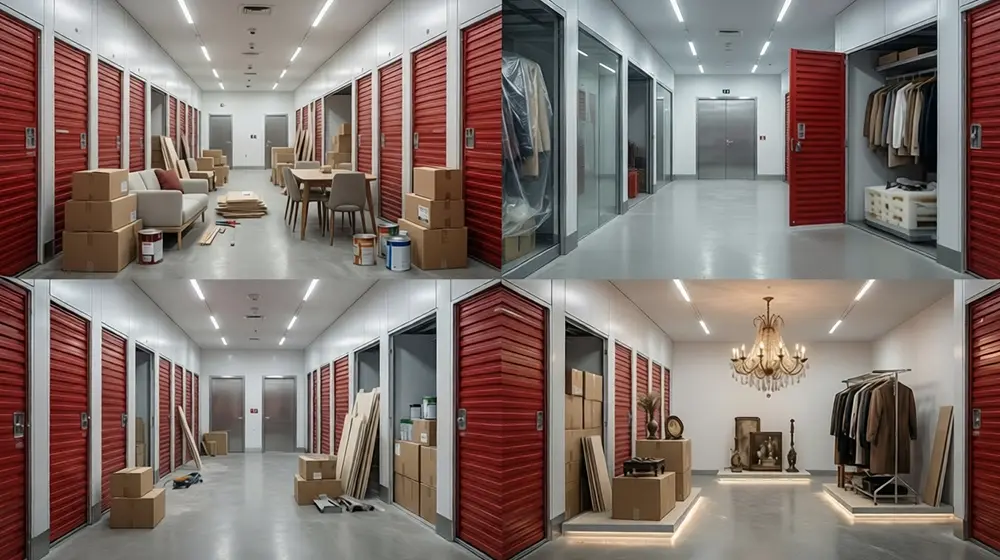

Dubai and Sharjah summer travel creates a predictable storage problem. Suitcases multiply. Seasonal gear expands. Closets fail first. Storage bills escalate next. Luggage storage in Dubai often starts as a small locker decision, then shifts into a larger unit when paid air and bulky winter items take over. Pricing ranges from about AED 300 per month for small units to AED 3,000+ for large units, so unit selection and packing discipline decide the outcome.
This article breaks down summer travel storage costs vs seasonal gear storage value using numbers, not opinions. It covers cost drivers, unit size mapping, humidity and material controls, a cost vs value decision framework, and an evidence-pack SOP for claims and dispute readiness.
What benefits come from reading this article?
- Cost control: Identify the storage cost drivers that push monthly spend from a small locker rate into a larger unit rate band, then reduce wasted paid volume using a retrieval and packing model.
- Damage and dispute risk control: Reduce humidity-driven odor, mold, corrosion, and textile damage risk through material controls, documentation, and an audit trail that supports claims positioning.
Dubai and Sharjah sit inside a high-mobility travel and tourism corridor, so luggage and seasonal gear storage behave like a seasonal demand product, not a static household habit.
Why does luggage storage demand spike in Dubai and Sharjah during the summer travel season?
Summer travel produces two overlapping demand signals: higher passenger movement and higher household churn in packing cycles.
Dubai International Airport recorded 92.3 million passengers in 2024, a record annual traffic figure that signals sustained travel throughput.
Dubai also recorded 18.72 million international overnight visitors in 2024, which reflects large inbound and outbound movement patterns that correlate with short-cycle packing and storage needs.
Sharjah shows a similar demand signal in hospitality throughput. Sharjah’s tourism authority reported about 1.6 million hotel guests in 2024, an 11% increase from 2023.
These are travel metrics, not storage metrics. They still form a high-credibility proxy for repeated packing cycles, higher luggage rotation, and seasonal gear reshuffling across summer travel periods.
What makes summer luggage storage in Dubai different from winter storage?
Dubai summer combines extreme heat exposure and high coastal humidity, which changes the risk profile of fabrics, leather, adhesives, and metal components inside luggage and travel gear.
Multiple climate summaries describe summer humidity reaching into the high range near coastal areas in July and August.
High relative humidity increases mold and deterioration risk on surfaces and in fabrics. Moisture-related deterioration risks when surface relative humidity reaches about 70% or higher, including mold and corrosion.
A classic indoor-environment review also notes that many fungi species do not grow unless relative humidity exceeds 60%, and mite populations increase strongly at higher humidity levels.
Summer storage in Dubai, therefore, shifts from “space management” into “space plus material control.”
What is the cost reality in Sharjah for luggage storage Sharjah demand cycles?
Sharjah pricing varies by provider and format, so the most defensible approach is to anchor to marketplace availability and direct quotes.
For Sharjah cost discovery:

- Use aggregator listings to compare providers and request quotes.
- Use the UAE storage market scale indicators to anticipate supply expansion, but seasonal availability pressure.
Market scale signals that matter for Dubai and Sharjah
Grand View Research estimates the UAE self-storage market generated USD 602.5 million in 2024 and projects USD 859.2 million by 2030, with 6.3% CAGR from 2025 to 2030.
This is not a Sharjah price list. It is a market scale indicator that supports a structured procurement approach and multi-quote comparison.
What does “value” mean in seasonal gear storage, beyond avoiding clutter?
Seasonal gear storage value measures the avoided cost and avoided risk created by storing an item in controlled conditions.
Seasonal gear storage value typically falls into 5 measurable buckets:
- Replacement cost value: The AED cost to replace the item at current market pricing.
- Time value: The hours saved during travel prep and return resets.
- Damage avoidance value: Reduced probability of mold odor, corrosion, deformation, and textile degradation under humidity stress.
- Retrieval value: Fast access without re-packing a full closet or spare room.
- Dispute value: Evidence that supports condition and custody if a claim issue arises, including photos, inventory IDs, and access logs.
Which storage model fits luggage and seasonal gear in Dubai and Sharjah?
Three storage models dominate this use case: at-home overflow storage, self-storage units, and managed storage.
Each model has a different cost and risk profile:
- At-home overflow storage: Low cash cost, high space cost, high climate exposure in many homes during summer.
- Self-storage unit: Clear monthly pricing by size, variable handling risk, and variable climate control by facility.
- Managed storage: Convenience focus, but requires tighter documentation and chain-of-custody controls because third-party handling increases claim complexity.
The “best” model is not universal. The “fit” depends on retrieval frequency, material risk, and the value of the items inside the luggage.
Which cost drivers decide whether luggage storage stays at AED 300–400 or escalates into four figures?
Storage cost escalation is usually driven by unit size selection errors and handling events, not by the suitcase itself.
Five drivers explain most cost escalation outcomes. The practical cost drivers that push you upward include:
- Paid air volume: Empty suitcases stored without compression, nesting, or fill planning.
- Low-density items: Winter duvets, bulky jackets, ski wear, camping gear.
- Retrieval frequency: Higher access rates correlate with rework, repacking time, and unit upsizing to preserve walk space.
- Packaging choices: Hard bins, garment boxes, and protective wraps increase volume but can reduce damage risk.
- Duration drift: “One month” storage turning into “one season” storage increases total cost exposure.
The cost system is therefore a packing engineering problem, not only a “rent a room” decision.
| Driver | Metric | Measurement unit | Why does it change the total cost |
|---|---|---|---|
| Unit size | 10, 25, 160 | sq ft | Base rate band scales, AED impact is the largest |
| Duration | 1, 3, 6 | months | Exposure multiplies quickly |
| Access | 0, 1, 4 | visits per month | Increases repacking and rework |
| Packaging | 1.0 to 1.4 | volume multiplier | Adds protection but increases paid volume |
| Paid air | 10 to 60 | percent | Drives upsizing and cost escalation |
What unit sizes map to luggage and seasonal gear storage volumes in Dubai?
Unit sizing gets easier when you map it to object counts instead of vague “small” and “large.”
| Storage target | Typical contents | Volume behavior | Cost sensitivity |
|---|---|---|---|
| Small locker or 25 sq ft class | 2–6 suitcases, travel boxes, shoes, small seasonal items | High nesting efficiency | High, because oversizing multiplies the cost |
| 35–75 sq ft class | Multiple suitcases, winter wear bins, sports gear, a stroller, and small appliances | Mixed density | Medium |
| 160 sq ft and above | Household overflow, furniture, high mixed inventory | Low packing efficiency if unmanaged | Very high, cost escalates strongly |
What items create the highest seasonal gear storage value in Dubai and Sharjah?
High-value storage items are items with high replacement cost and high climate sensitivity.
High-value examples include:
- Leather luggage, leather handbags, and leather shoes: Leather reacts to humidity through odor risk, surface changes, and adhesive weakness in bonded areas. Mold risk increases at elevated humidity exposures.
- Textiles and padded items: Winter coats, duvets, and fabric liners hold moisture and odors under high humidity.
- Metal components: Wheels, telescopic handles, fasteners, zippers, and tool components. Higher humidity increases corrosion risk.
- Electronics inside travel kits: Cameras, drones, power banks, adapters, medical devices, and travel routers. Humidity adds corrosion and condensation risk.
Value stays highest when you combine material risk and replacement cost, not when you store every low-value item by habit.
Which items have low seasonal gear storage value, even if they take a lot of space?
Low-value storage items are bulky, low-cost, and low-risk. They occupy paid volume with minimal avoided cost.
Common examples include:
- Low-cost suitcases with low replacement cost.
- Low-density filler items that can be repurchased quickly.
- Single-use travel accessories with low replacement cost.
These items often belong in at-home overflow storage or in compressed packaging, not in high-cost unit space.
What is the core problem in luggage storage in Dubai and luggage storage in Sharjah during summer travel?
The core problem is paid volume and unmanaged humidity risk. Dubai self-storage prices scale by unit size, so paid empty space becomes a recurring monthly loss.
At the same time, extreme UAE summer heat creates material stress conditions. Reuters reported repeated over 50°C conditions in inland areas during the UAE summer 2025 and mid-40s °C in coastal cities.
That combination creates a predictable pattern:

- Higher summer travel activity raises storage demand and retrieval events.
- More retrieval events increase repacking and create disorganization.
- Disorganization increases unit size selection and storage cost escalation.
- Heat and humidity increase odor risk, mold risk, and corrosion risk inside luggage and seasonal gear.
How does humidity connect directly to luggage odor, mold, and claims risk?
Humidity affects both microbial growth conditions and material deterioration.
Elevated relative humidity at a surface, about 70% or higher, links to mold and other deterioration, and 100% links to condensation on surfaces. Most fungi species do not grow unless the relative humidity exceeds 60%.
This evidence supports a practical inference: storage in environments where humidity stays high increases odor and mold risk, especially for fabrics and internal liners.
Claims risk rises when odor, discoloration, or corrosion appear, and the owner lacks a time-stamped condition record from intake.
What smart solutions reduce storage costs without destroying seasonal gear storage value?
Cost and value both improve when you reduce paid volume and increase item protection. Smart solutions that tie directly to cost drivers include:
Smart Solution Set 1: Volume control
- Nested suitcase stacking. Smaller suitcases stored inside larger suitcases.
- Density zoning. High-density items separated from low-density items to reduce paid air.
- Uniform bin footprint. Same base size bins stack and reduce wasted volume.
- Compression for textiles. Vacuum and compression methods applied to fabric categories that tolerate it.
Smart Solution Set 2: Retrieval control
- Retrieval probability labels. High, medium, and low retrieval labels for the next 90 days.
- Trip kit separation. High-frequency travel items stored outside the unit.
- Two-zone layout. Zone A for frequent retrieval, Zone B for seasonal deep storage.
Smart Solution Set 3: Material controls for the UAE summer
- Moisture control inside sealed bins. Track desiccant replacement dates.
- Off-floor placement for sensitive items.
- Separation of leather and textiles from mixed gear.
- Air-conditioned storage selection for humidity-sensitive items. Some UAE providers explicitly market air-conditioned units and climate control for sensitive items.
Humidity risk evidence supports moisture control and surface humidity control as a core protection axis.
How does seasonal demand in Dubai and Sharjah affect pricing and availability patterns?
Seasonal demand affects occupancy and short-term availability.
Sharjah’s tourism reporting includes hotel indicators such as occupancy rate and guest volume by periods, which shows measurable travel season variation. Dubai’s tourism reporting also shows a high base of international overnight visitors.
Storage operators respond to demand through inventory management, promotions, and unit availability. That pattern is common in self-storage markets globally, and the UAE self-storage market shows growth signals.
Grand View Research estimates the UAE self-storage market generated USD 602.5 million in revenue in 2024, with an outlook rising toward USD 859.2 million by 2030.
This growth creates more supply over time, but seasonal demand still pressures short-term availability.
What is the best practice SOP for luggage and seasonal gear storage in the UAE summer?
A storage SOP reduces cost escalation and improves dispute readiness. The SOP uses repeatable steps and documentation.
SOP Phase 1: Intake and inventory
- Inventory ID: Assign an ID to each suitcase and each high-value gear category.
- Condition log: Record zippers, wheels, handles, and fabric liner condition.
- Photo set: Wide shot plus weak points.
- Value tagging: Store the value score and retrieval score.
SOP Phase 2: Packing and material controls
- Use nested suitcases as primary volume control.
- Separate humidity-sensitive categories into sealed bins.
- Track moisture control replacement dates in the inventory log.
SOP Phase 3: Unit layout and access logic
- High-retrieval items placed at the front.
- Low retrieval items stacked deeper.
- Sensitive items placed off the floor.
SOP Phase 4: Audit trail
- Log every access event.
- Log repack events with photos for high-value items.
- Store receipts and contract documents in the same folder.
What documentation supports claims, liability, and dispute readiness for stored luggage?
Claims readiness improves when you maintain a basic evidence pack.
A practical evidence pack includes:
- Inventory register: Item ID, item type, brand, model, color, and unique markers.
- Condition log: Scratches, cracks, zipper status, wheel status, and handle extension status.
- Photo set: Wide shot plus close-ups of weak points.
- Packaging record: Bin type, seal type, desiccant pack count, and date.
- Access log: Dates of access and any repacking events.
This pack supports dispute readiness because it shows condition and chain-of-custody logic, which becomes important when damage events correlate with humidity-driven deterioration risk.
Which smart solutions reduce storage costs specifically for frequent travelers in Dubai and Sharjah?
Frequent travelers trigger higher retrieval frequency, which increases repacking and space waste.
Smart solutions for this segment include:
- Trip kit strategy: Keep a “ready kit” outside the storage unit, then store only low-frequency items.
- Two-zone packing: Zone A for weekly travel items, Zone B for seasonal items.
- High-visibility labeling: Labels include trip type, retrieval frequency, and content category.
- Modular bin standards: Use consistent bin footprints to stack efficiently.
These solutions reduce paid air volume, which is the most common hidden cost driver in unit sizing.
What checklist keeps luggage storage in Dubai and luggage storage in Sharjah under control?
A proper checklist reduces cost escalation and protects value.

Intake checklist
- Photo evidence for every suitcase and high-value gear item
- Condition log completed for wheels, zippers, handles
- Value score recorded
- Retrieval score recorded
- Bin count recorded
Packing checklist
- Suitcase nesting completed
- Textile compression completed for eligible items
- Sealed bins used for humidity-sensitive items
- Moisture control date recorded
Storage unit checklist
- The front zone reserved for high-retrieval items
- Off-floor placement for sensitive categories
- Clear aisle width preserved to avoid repacking events
Retrieval checklist
- Access log entry recorded
- Repack event photo recorded for high-value items
- Moisture control items refreshed on schedule
Smart Solutions: Control Paid Air, Protect Gear Value, Document Everything
Dubai and Sharjah summer travel turns luggage storage into a seasonal demand decision, not a one-time tidy-up. DXB passenger throughput reached 92.3 million in 2024, so luggage rotation stays high across travel cycles. Dubai also recorded 18.72 million international overnight visitors in 2024, which reinforces the travel-driven packing churn behind unit access and repacking events. On the cost side, Dubai self-storage price bands commonly run from roughly AED 300 per month for small units to AED 3,000+ per month for large units, so paid air and unit oversizing drive cost escalation faster than most households expect. Value holds when the plan protects high-risk materials under summer heat and humidity, then backs the condition with a basic evidence pack that supports claims positioning. Surface humidity risk thresholds linked to mold and deterioration support the control logic.
FAQs
What is the fastest way to reduce luggage storage costs in Dubai?
Unit size control reduces costthe fastest because Dubai pricing escalates sharply from small units to large units.
What statistic supports the seasonal demand context for luggage storage in Dubai?
DXB reported 92.3 million passengers in 2024, which signals sustained travel throughput and frequent packing cycles.
What statistic supports the seasonal demand context for luggage storage in Sharjah?
Sharjah reported about 1.6 million hotel guests in 2024, an 11% increase from 2023.
What cost range anchors Dubai self-storage planning for luggage and seasonal gear?
Common published ranges run from around AED 300 per month for small units up to AED 3,000+ per month for large units.
Which two factors drive most storage cost escalation in summer travel cycles?
Paid air volume and unit oversizing drive the largest recurring increases because they push households into higher size bands.
What humidity threshold links to higher mold and deterioration risk in stored fabrics?
Surface relative humidity around 70% or higher to mold and deterioration risk.
Which items carry the highest seasonal gear storage value in the UAE summer?
High replacement cost items with high humidity sensitivity, such as leather goods, padded textiles, and gear with metal components, carry the highest value under summer exposure risk.
What is the simplest cost vs value rule for deciding what paid storage space?
Paid storage space fits best for items with high replacement cost, high humidity sensitivity, and low tolerance for damage during long summer durations.
What is the single most useful document for claims and dispute readiness?
A time-stamped condition photo log at intake provides the clearest baseline for later comparison.
What market indicator supports a structured procurement approach for storage in the UAE?
A market outlook estimates USD 602.5 million UAE self-storage revenue in 2024 with projected growth toward USD 859.2 million by 2030, supporting multi-quote comparison logic.
Rakan Al-Juraid is a logistics specialist with a focus on commercial storage systems and high-security asset management. With extensive experience in industrial warehousing, he specializes in inventory tracking technology and transit safety. Rakan’s expertise lies in streamlining the storage process for both businesses and homeowners through strategic planning. His writing offers data-driven advice on insurance for stored goods, fire-safe environments, and heavy-duty logistics. He is committed to ensuring that every square foot of storage is utilized with maximum security and efficiency. Rakan aims to provide professional-grade storage standards to every reader navigating the moving process.
Layali Al-Samer is a seasoned storage and organization expert with over 12 years of experience in the logistics industry. She holds a degree in Spatial Design, specializing in high-density residential storage and climate-control solutions. Layali focuses on inventory management for luxury goods and long-term preservation techniques for sensitive heirlooms. Her articles provide expert guidance on maximizing unit efficiency and protecting valuables from environmental damage. She is dedicated to helping readers declutter their lives through strategic and organized spatial planning. Layali’s goal is to ensure every possession is stored with the highest level of care and precision.