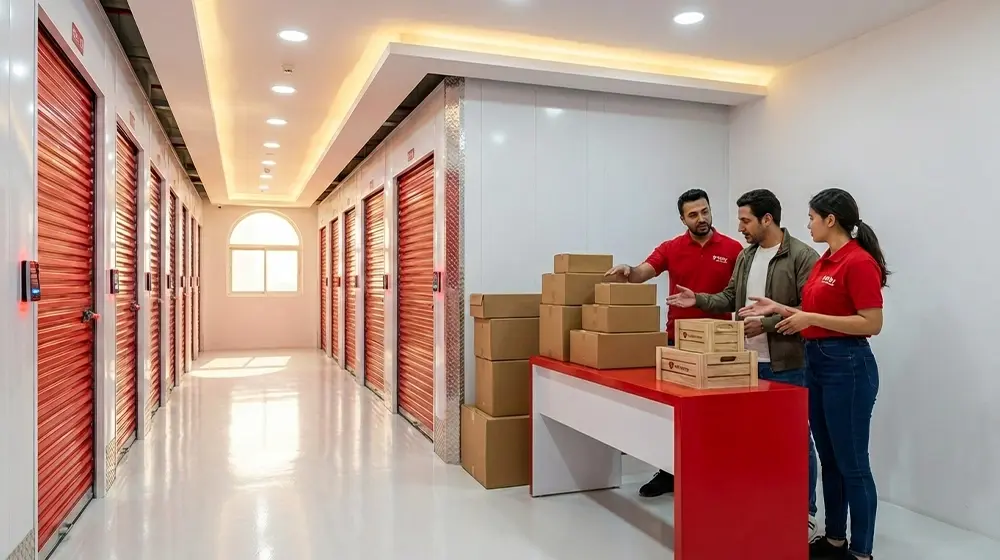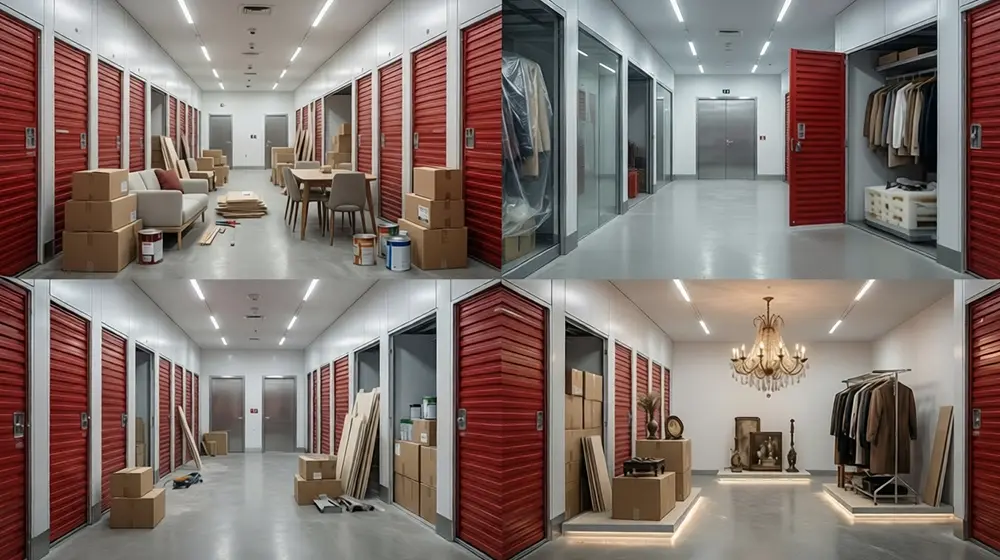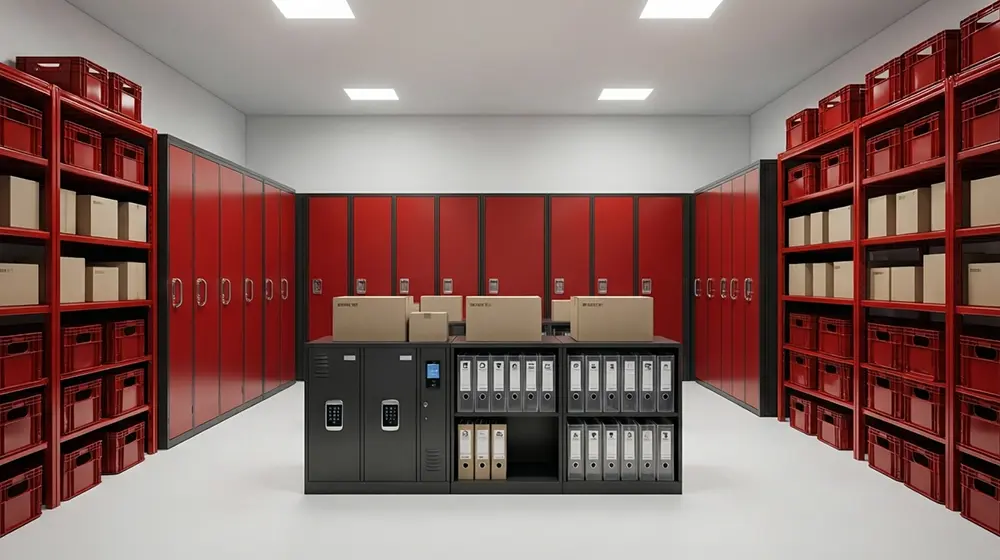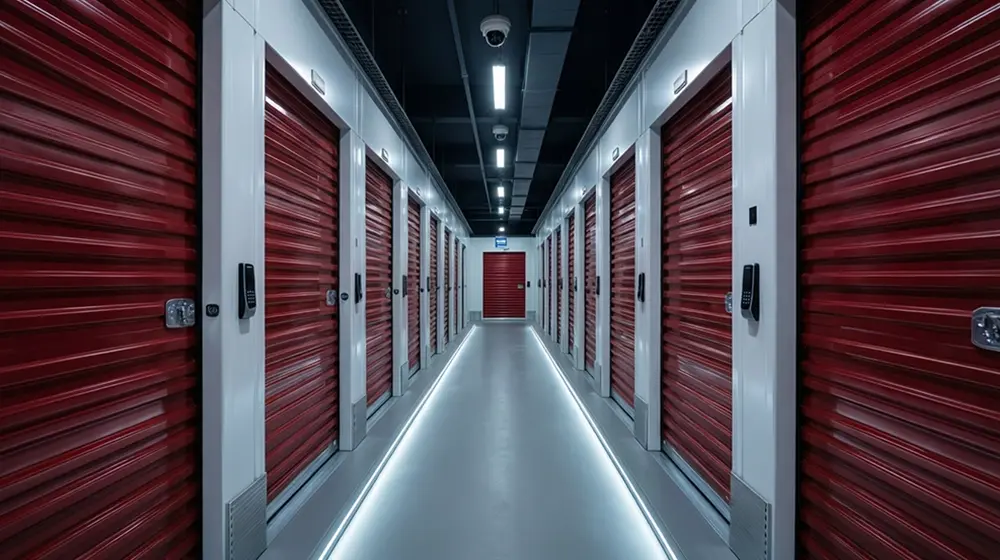
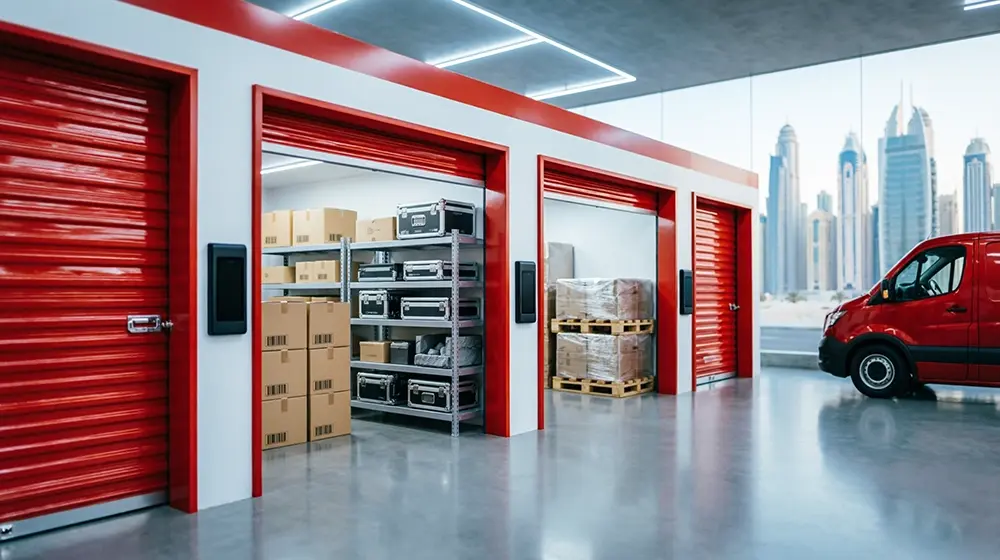
Dubai startups rarely run out of ideas. They run out of space. Inventory creeps into offices, marketing kits pile up under desks, and returns sit unresolved because there is nowhere to stage them properly. At that point, storage stops being a convenience and becomes an operational risk. This is where self storage for Dubai startups shifts into micro warehousing. It is not about finding the cheapest unit. It is about controlling access, reducing travel time, protecting inventory evidence, and forecasting monthly costs with discipline.
This guide breaks that logic down. It explains how self-storage functions as a micro warehousing layer near Dubai’s key business hubs, why location and access patterns matter more than headline rent, and how founders can forecast real storage costs before they escalate.
What benefits come from reading this article?
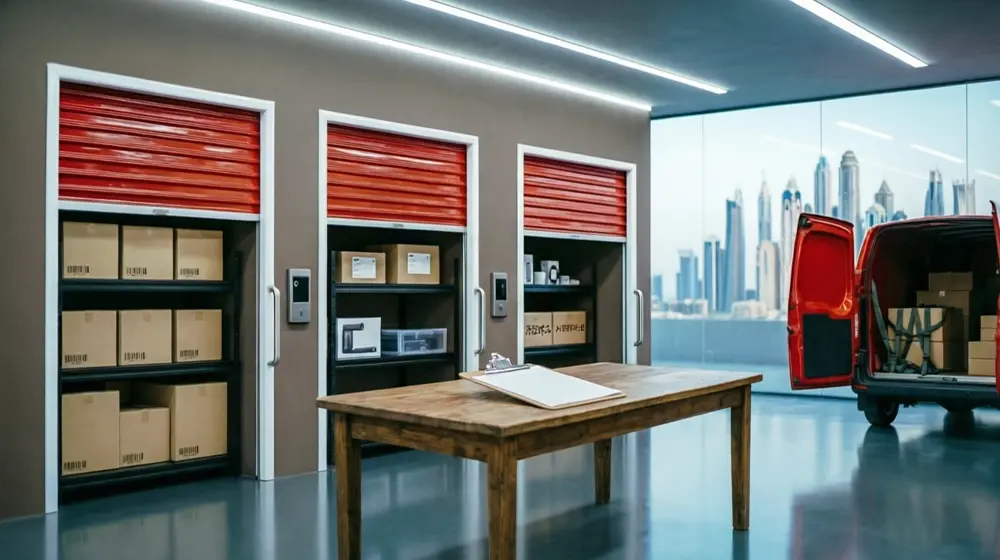
- A budget forecasting model that converts unit price, access frequency, and handling time into a monthly storage cost baseline for Dubai startups.
- A procurement grade checklist that reduces disputes by defining access logs, inventory evidence, and liability boundaries before contract signature.
The next section defines self storage for Dubai startups in operational terms, then maps business hubs to cost drivers.
What does self-storage in Dubai for startups mean in micro-warehousing terms?
Self-storage in Dubai for startups means renting a secured unit as overflow space for business assets, with repeated access patterns that mirror a small warehouse workflow.
Micro-warehousing scope includes SKU cartons, samples, event kits, spare IT assets, marketing collateral, and archived documents. These asset classes create retrieval frequency, not only storage volume.
Micro-warehousing fit appears when the unit supports defined access hours, clear receiving rules, and location stability relative to business hubs.
Why does the demand for self storage for Dubai startups rise with e-commerce growth?
E-commerce growth increases SKU count, returns volume, and packaging consumption, so startups allocate space to avoid office congestion and dispatch delays.
Dubai and UAE ecommerce metrics confirm the scale pressure. A WAM report citing EZDubai states the UAE e-commerce market reached AED 32.3 billion in 2024 and projects AED 50.6 billion by 2029.
Dubai’s official e-commerce strategy states that e-commerce is set to contribute AED 12 billion to Dubai’s GDP by 2026 as part of its logistics hub positioning.
These figures link to micro warehousing logic. Higher order frequency increases the value of location, access speed, and inventory accuracy.
Which startup communities and office districts shape storage demand in Dubai?
Startup density concentrates around business districts, free zones, and office communities. These locations influence access frequency and travel time cost.
Office community clusters commonly used for startup operations include:
- Dubai Internet City and adjacent tech offices
- DIFC for finance, fintech, and professional services
- JLT and DMCC for SMEs, trading, e-commerce brands, and service companies
- Business Bay and Downtown for agencies
- Al Quoz is a mixed industrial, creative economy, and distribution activity
- Dubai Investment Park for industrial adjacency and bulk movement patterns
Quantified ecosystem indicators help estimate startup density and movement pressure.
Dubai startup and office ecosystem indicators
| District or ecosystem signal | Quantified indicator | Why it matters for micro warehousing |
| Dubai Internet City | AED 100 billion added to Dubai’s GDP over 15 years | High business density increases access frequency and time value. |
| DIFC | 7,700 active registered companies in H1 2025 and 47,901 professionals | Density supports frequent access patterns and high opportunity cost per hour. |
| DMCC | 2,048 new companies registered in 2024, and a total of 25,000+ registered companies | Startup and SME scale increases demand for flexible storage and document controls. |
Which Dubai business hubs align best with startup micro warehousing?
The best hub aligns to the dominant cost driver. Cost driver means the largest component of total monthly storage cost, such as rent, travel time, access frequency, or labour minutes per visit.
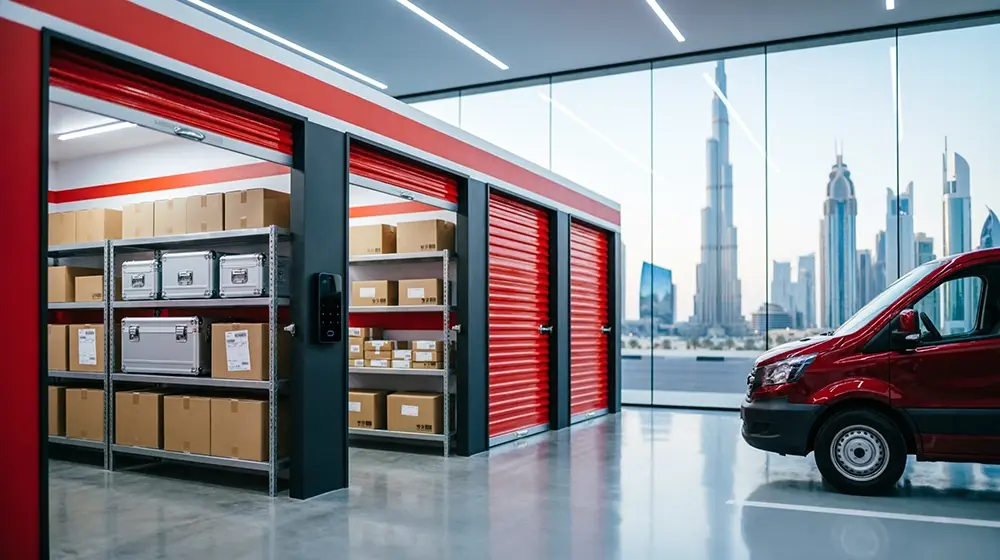
Which Dubai business hubs map best to nearby micro-warehousing?
The best hub mapping uses two variables: lead time and access friction. Lead time links to courier runs, staff pickup cycles, and client delivery commitments. Access friction links to parking, loading, lift rules, and pickup windows.
Dubai’s startup density also continues expanding across business districts and free zones. DMCC reports a district-wide total of almost 26,000 member companies and over 1,100 new companies in H1 2025, which increases demand for flexible space strategies. Dubai SME reported 1,986 new enterprises supported in H1 2024, a 57% rise versus H1 2023, which reinforces the same pattern: more companies, more space pressure.
What does near Al Quoz mean for startup micro-warehousing?
Near Al Quoz means a central industrial corridor with direct connectivity across major Dubai road networks. Al Quoz sits between Sheikh Zayed Road (E11) and Al Khail Road (E44), spans 27.1 sq. km, and functions as a mixed industrial and commercial zone.
Al Quoz aligns with startups that run frequent asset movement: event teams, creative studios, D2C brands, and service firms that stage kits for onsite work. The location often reduces cross-city retrieval variability.
Market pressure is also concentrated in Al Quoz. JLL’s Q1 2025 industrial notes place Al Quoz at AED 60 per sq ft for warehouses, tied to central access and demand.
What does near DIP mean for logistics-first startups?
Near DIP means proximity to larger industrial plots and a logistics-oriented cluster that supports warehousing workflows. Dubai Investments Park describes its industrial zone as offering warehouse and logistics facilities, including plots designed for warehouse development and modification.
DIP aligns with startups that operate heavier inventory cycles: Import staging and bulk packaging runs. DIP also appears in JLL’s Q1 2025 industrial commentary as one of the mainland zones with large transaction volumes, indicating active leasing and demand.
What does near Dubai Internet City mean for tech teams and asset control?
Near Dubai Internet City aligns with IT-heavy operations, where assets rotate through teams, labs, and client sites. Dubai Internet City positions itself as a leading tech and business hub offering commercial spaces and business services.
Micro-warehousing demand in this corridor often focuses on high-value, low-volume items: laptops, networking devices, demo hardware, and secure document cartons. The selection logic prioritizes access control, inventory tracking, and predictable pickup time.
What problems does self storage solve for startups?
Self storage solves operational constraints that appear after early growth and first repeat customers.
Common problems include:
- Inventory overflow inside offices and coworking spaces
- Returns accumulation without quarantine rules
- Packaging stock blocking work areas
- Missing items due to weak location control
- Event kits and demo devices dispersed across cars and homes
- Stock disputes due to the weak intake and release of evidence
Each problem maps to measurable exposures: labor minutes per pick, rework loops, damage rate, and customer complaint volume.
What is the budget forecasting rule set for self-storage for Dubai startups?
Budget forecasting rules convert storage operations into a forecastable monthly cost. The method uses a fixed baseline, along with variable drivers tied to access behaviour.
Rule 1: Separate rent from access cost
Rent covers the unit. Access cost covers trips, travel minutes, on-site minutes, and staff loaded hourly rate.
A rent-only forecast misses the access driver.
Rule 2: Forecast by visit type
Visit type segmentation increases forecast accuracy.
Visit types:
- Replenishment visits for inbound cartons
- Pick visits for outbound batching
- Non-inventory visits for event kits, tools, or collateral
Rule 3. Convert time into money using a loaded hourly rate
The loaded rate includes salary, payroll overhead, and time loss. Many startups measure it as payroll cost per working hour.
Rule 4: Add an evidence cost line
· Evidence cost includes labels, photo logs, barcode printing, and cycle counts.
· Evidence reduces dispute exposure and reduces internal search time.
Rule 4. Track three access types
Access type segmentation improves forecast accuracy.
Access types:
- Replenishment: Inbound stock, supplier cartons
- Picking: Outbound dispatch batches
- Non-inventory: Event kits, tools, collateral
Each type has different minutes per visit and a different error risk.
Monthly storage budget forecast table
| Cost component | Unit | Baseline input | Notes for forecasting accuracy |
| Unit rent | AED per month | Unit price | Use like-for-like unit size and access hours |
| Insurance or declared value cover | AED per month | Policy premium | Separate transit cover from storage cover when possible |
| Access visits | Visits per month | Count | Split by replenishment, picking, and non-inventory |
| Travel time | Minutes per visit | Minutes | Use the hub location’s average travel time |
| On-site time | Minutes per visit | Minutes | Include loading bay, waiting, and lift time |
| Staff loaded rate | AED per hour | Rate | Use the finance payroll baseline |
| Packaging and consumables | AED per month | Spend | Cartons, labels, stretch wrap, zip ties |
| Inventory control | Hours per month | Hours | Cycle counts, exception checks, and reconciliation |
| Loss and damage allowance | Percent | Percent | Use category risk tier logic |
| Contingency | Percent | Percent | Use a fixed percentage linked to variability |
What formula structure keeps the forecast consistent?
Use a simple structure:
- Monthly Total = (Base Rent + Insurance + Access and Transport Proxy + Handling Proxy) × (1 + VAT rate) + amortized one-time fees
- VAT rate = 0.05 baseline reference for planning
A startup forecast also tracks a range, not single-point values:
- Low case: Fewer retrieval trips, stable unit size
- High case: More retrieval trips, larger unit band, peak season availability pressure
What budgeting mistakes create the largest forecast variance?
Forecast variance concentrates in three gaps:

- Under-counted access frequency: A “weekly pickup” becomes 8 to 12 trips per month during campaign cycles.
- Unpriced receiving and handling: Inbound cartons arrive without a receiving rule, and staff time absorbs the friction.
- Ignored unit resize events: Startups move from 25 sq ft to 50 sq ft after a product launch, but the budget model stays static.
A variance log solves this. It tracks every upsell trigger as a measurable event, not as a narrative explanation.
What statistics support the storage versus warehouse decision?
Higher industrial rents tighten the selection space for small teams. Many startups shift toward smaller, flexible footprints to avoid long lease commitments and fit-out costs.
JLL reports Dubai warehouse rents averaged AED 42 per sq ft in Q1 2025 and increased 12.5 % year on year. JLL also reports that Al Quoz achieved AED 60 per sq ft due to proximity to the city centre.
These figures support two points:
- Flexible storage reduces long-lease exposure during growth volatility.
- Proximity reduces travel minutes and increases dispatch responsiveness.
What unit sizes fit common startup storage use cases?
Unit fit depends on volume, not only floor area. Use size bands to prevent overbuying.
What fits in a 10 to 25 sq ft band?
A 10 to 25 sq ft band fits compact business overflow. Many Dubai movers list lockers at 10 sq ft, which signals the use case: small, high-frequency access categories.
What fits in a 50 to 75 sq ft band?
A 50 to 75 sq ft band fits mixed storage: cartons plus a few bulky items. Bayut’s directory references 50 sq ft starting prices for certain listings, which supports this as a common step-up band.
Dubai storage guidance also uses 75 sq ft as a practical reference size for furniture-scale loads, with example pricing points on Dubai listings.
What fits in a 100 to 160 sq ft band?
A 100 to 160 sq ft band fits inventory-heavy operations and event staging. Some self-storage size-linked pricing ranges extend to 160 sq ft, which aligns with warehouse-like usage patterns inside a self-storage model.
How does a startup size a unit without paying for unused volume?
Unit sizing depends on cube utilisation, SKU profile, and vertical storage feasibility.
Key sizing variables:
- SKU count and carton dimensions
- Inventory velocity measured by dispatch days per week
- Pick method, such as tote picking or carton picking
- Vertical storage limit, such as shelving height
- Quarantine space for returns and exceptions
A simple sizing approach uses three zones:
- Storage zone
- Pick and pack zone
- Quarantine zone for returns and exceptions
The zoning reduces misplacement and increases pick speed.
What operational controls reduce picking errors in a self storage unit?
Error reduction depends on location control and repeatable process steps.
Controls that fit small teams:
- Bin and shelf codes using alphanumeric location labels
- Intake checklist with carton count and condition notes
- Batch picking list with item and quantity verification
- Exception log for missing items and damage notes
- Weekly cycle count on high-value SKUs
A factual indicator for ecosystem scaling comes from DIFC and DMCC business density, which correlates with higher operational pressure in adjacent office communities.
What documentation creates an audit trail for startup inventory?
Audit trail means traceable records for inventory movement with timestamps and responsible party identification.
Core documents:
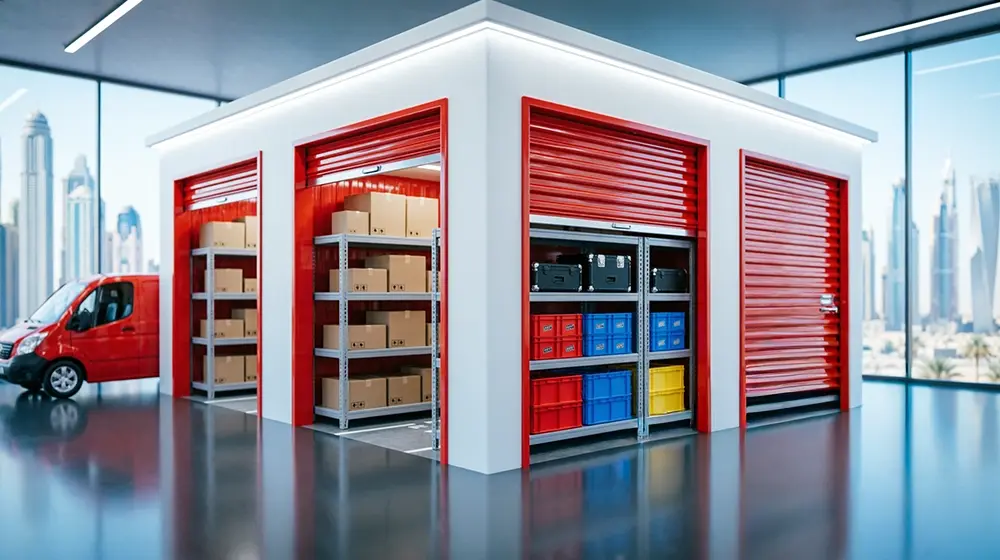
- Intake sheet with item list, carton count, and condition notes
- SKU register with location codes
- Access log with date, time, person, and purpose
- Movement history for transfers in and out
- Release confirmation with signature and photo evidence
Evidence quality reduces disputes and supports internal accountability.
What procurement questions reduce cost surprises for self storage for Dubai startups?
Procurement questions translate marketing claims into measurable contract terms and operational realities.
Pricing and billing
- Billing cycle and renewal rules
- Deposit value and refund triggers
- Price review mechanism and notice periods
- Early termination terms and move-out notice period
- Add on fees for late payment, key replacement, or admin tasks
Access and operations
- Access hours and holiday access policy
- Lift capacity and lift availability rules
- Trolley policy and loading bay process
- Parking limits and loading time limits
- Visitor registration rules for multiple team members
Evidence and incident handling
- Access log availability
- CCTV retention duration
- Incident report format
- Inventory photo policy inside unit areas
- Dispute workflow and response timelines
What liability and claims evidence categories matter in self storage?
Liability boundaries depend on contract terms, declared value, exclusions, and evidence quality.
Common boundary categories:
- Unit perimeter responsibility versus common area responsibility
- Water ingress and condensation exclusions
- Mould and humidity exclusions
- Force majeure clauses
- Declared value limits and coverage caps
- Temperature variability exclusions
Evidence categories that increase clarity:
- Time-stamped intake photos
- Location labelled inventory sheet
- Packaging record for fragile items
- Release confirmation with signature and photo
Terms vary by provider. Contract language varies across operators, so procurement review and legal review remain separate activities.
What material controls reduce damage in Dubai conditions?
Damage prevention depends on heat exposure, humidity risk, dust infiltration, and handling shocks.
Handling controls:
- Stable stacking pattern with heavier cartons at the base layer
- Clear aisle space for safe movement
- Secondary containment for liquids
Dubai conditions amplify adhesive and carton deformation risk during high heat periods. Dubai conditions matter because temperature and humidity variations affect packaging adhesives, cartons, and corrosion exposure.
What KPIs support budget forecasting rules?
KPIs allow a quantitative review of whether the storage unit reduces cost or creates hidden costs.
KPI set:
- Access visits per month
- Minutes per pick batch
- Inventory accuracy percent per cycle count
- Dispatch cut-off hit rate percent
- Returns resolution time in hours
- Damage rate percent per 100 orders
- Stockout incidents per month
E-commerce growth makes these KPIs more relevant. Higher market scale increases operational load.
What decision framework reduces selection errors?
Decision frameworks reduce selection errors by forcing measurable comparisons.
Step 1. Classify inventory velocity
- Low velocity: Less than 2 dispatch days per week
- Medium velocity: 3 to 5 dispatch days per week
- High velocity: 6 to 7 dispatch days per week
Step 2. Classify access intensity
- Low access: 1 to 4 visits per month
- Medium access: 5 to 12 visits per month
- High access: 13 plus visits per month
Step 3. Match hub to dominant driver
- High access patterns align with proximity to office communities such as Dubai Internet City.
- Central multi-district patterns align with Al Quoz due to accessibility and rent premium signals.
- Bulk patterns align with DIP due to industrial layout and loading logic.
This match logic aligns with the observed rent structure. JLL reports higher Al Quoz rates and strong citywide rent growth.
What perspective helps startups avoid the common cost trap?
The most common cost trap is a rent-only decision.
Rent only decisions ignore:
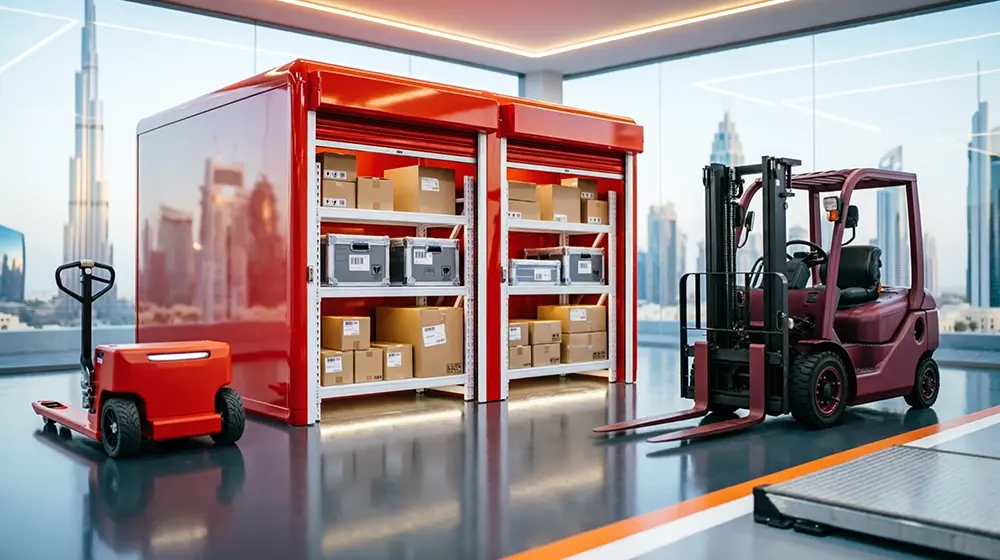
- Time cost per access
- Picking errors and rework minutes
- Damage handling and replacement cost
- Dispute the time cost for missing stock
This trap becomes more relevant as industrial rents increase.
A rent-only mindset also ignores macro demand drivers. The UAE self-storage market growth forecast indicates rising adoption and increased competition for convenient storage.
Final Thoughts: Predictable Costs Come From Process Discipline
Self storage works for Dubai startups when you treat it like a controlled operating node, not a cheap spare room. The smart decision is rarely about the monthly rent line. It is about the full cost of access, the minutes lost to travel and on-site handling, and the damage and dispute risk created by weak evidence. If your team is making frequent small picks, a unit near office communities can protect speed and reduce time leakage. If you move fewer but larger loads, a hub like DIP can reduce friction through loading efficiency. Use the forecast table as a rule set, not a one-time estimate. Track visits, minutes per visit, and basic inventory accuracy. Then lock in access logs, CCTV retention, and liability boundaries before signature. When the process is repeatable, the storage stays affordable.
FAQs
Is self storage really micro warehousing for startups?
Yes, when you use it for putaway, pick prep, returns staging, and packaging storage with basic controls.
What is the biggest cost mistake startups make with storage in Dubai?
Choosing based on rent only and ignoring travel time, visit frequency, and handling minutes.
How do I forecast monthly storage costs properly?
Add fixed costs, then price every visit using travel + on-site minutes multiplied by a loaded hourly rate.
Which Dubai hubs suit high-frequency access the best?
Locations near dense office communities tend to reduce time loss when you visit often.
When does Dubai Investment Park make more sense than central areas?
When your moves are less frequent but larger, and loading efficiency matters more than proximity.
How can I reduce picking errors inside a storage unit?
Use location labels, intake checklists, batch pick lists, an exception log, and a simple weekly cycle count.
What evidence should I keep to prevent stock disputes?
Time-stamped intake photos, a location-coded inventory sheet, access logs, and signed release confirmations.
Do I need insurance for items stored in self storage?
If the replacement cost would hurt cash flow, separate storage cover from transit cover and set a declared value.
How do I choose unit size without wasting money?
Plan three zones: storage, pick/pack, and returns quarantine. Then the size for usable volume, not floor area alone.
What contract terms should I check before signing?
Access hours, fee triggers, CCTV retention, incident reporting, liability exclusions, and the dispute workflow timeline.