24/7 Access Storage in Dubai: 12 Ways to Verify Which Facilities Really Offer Round-the-Clock Entry
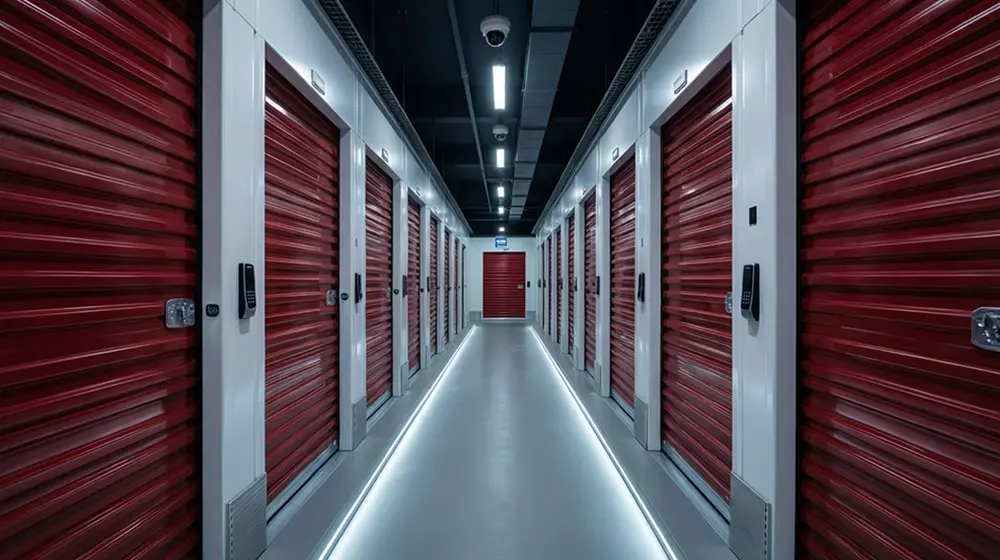
“24/7 access storage in Dubai” is one of the most advertised features in the self-storage market and one of the most misunderstood. Many customers discover too late that round-the-clock access does not always mean round-the-clock entry. Staff dependency, restricted loading hours, disabled credentials, or vague exception clauses can turn an urgent retrieval into a delay, dispute, or financial loss. This matters in Dubai, where travel gaps, tenancy overlaps, renovations, and business inventory often require access outside normal hours.
This guide explains what 24/7 access means in operational terms, how facilities structure entry control, and where access commonly fails. Most importantly, it provides a 12-point verification framework that helps you confirm true customer-controlled entry, document access rights, and build a claim-ready evidence pack before problems occur.
What benefits does this guide provide?
This guide delivers two operational outcomes.
- A 12-point verification method that converts “round-the-clock entry” into inspectable controls, documents, and access evidence.
- A claims readiness evidence pack that strengthens proof quality when access gets restricted, credentials fail, or retrieval is delayed.
What does “24/7 access storage in Dubai” mean in operational terms?
24/7 access storage in Dubai means customer-controlled entry to the facility at any time, using a documented access method that does not depend on staff presence. This definition separates marketing language from verifiable access rights. It also aligns storage access with formal physical entry control principles used in security governance, where access points and entry controls protect secure areas.
What is the difference between “24/7 entry” and “24/7 monitoring”?
Round-the-clock entry breaks when a facility’s access model depends on staff, phone approval, advance notice, or a temporary credential.
A facility can market “24/7 surveillance” while keeping customer entry limited to set hours, because surveillance and access represent different controls.
Which facility access models exist for 24/7 access storage in Dubai?
Facilities generally operate under four access models, and each model changes the probability of true round-the-clock entry.
| Access model | Entry control | Common failure point | What proof looks like |
|---|---|---|---|
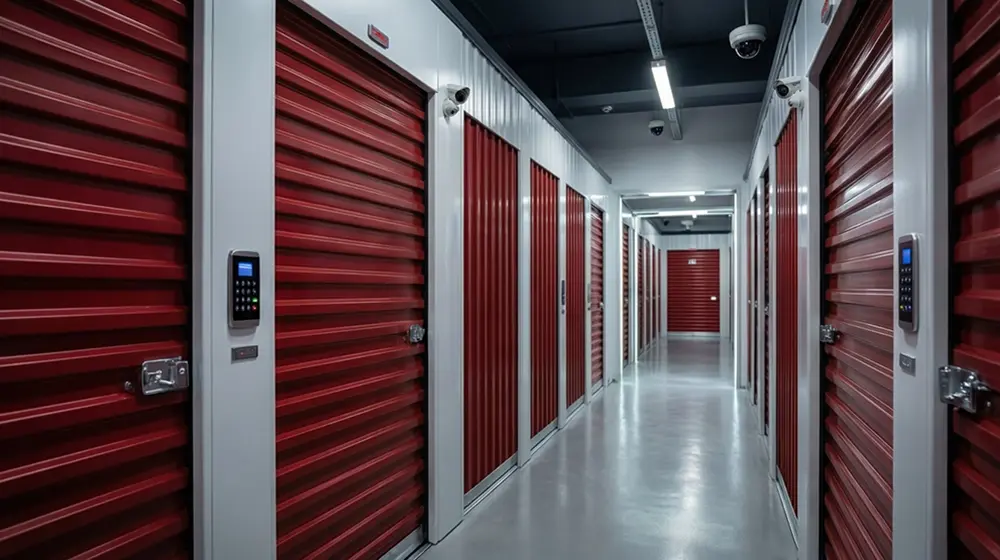
| App-based keyless entry | Customer controlled | App permissions, account suspension, system downtime | Written access policy, credential lifecycle, and access log policy |
| Access card or fob | Customer controlled | Lost card reissue delays, deactivation rules | Replacement SLA, deposit schedule, and audit trail statement |
| PIN keypad entry | Customer controlled | PIN resets, shared credential restrictions | User policy, reset process, log evidence |
| Staff-dependent after-hours | Staff controlled | Closed reception, delayed approval, notice windows | Explicit after-hours clause, escalation process, and written response times |
Physical access controls often include logs, guards, barriers, and access devices. For a storage customer, the practical point is simple: ask which of these the facility actually uses at each door.
Why does verification matter for 24/7 access storage in Dubai?
Verification matters because access is a contract deliverable, and disputes often start from ambiguous terms, unclear exceptions, and missing evidence.
UAE consumer protection law prohibits harmful terms in consumer contracting and states that any term that exempts the supplier from obligations under the law is null and void.
12 ways to verify which facilities really offer round-the-clock entry
1) Does the facility publish a specific entry method that supports 24/7 access?
True 24/7 access includes a defined entry method that functions without staff presence.
A facility that states “24/7 keyless access” describes an access method that operates outside staffed hours, subject to account status and system availability. A facility that states “open daily 08:00 am to 08:00 pm” describes an access window, even if it offers after-hours access by phone.
Verification actions
- Capture the facility page or contract clause describing the entry method and access hours.
- Identify the authentication factor: app login, QR code, PIN, access card, or biometric.
- Identify the dependency: staff approval, advance notice, third-party security gate.
Evidence artifact
- Screenshot of access method statement plus terms page link reference.
2) Does the facility define “24/7 access” as customer entry, not only CCTV or security monitoring?
Facilities often describe 24/7 monitoring, not 24/7 customer entry. Some facilities advertise CCTV monitored 24/7 and 24-hour security, which describes monitoring and guarding, not customer entry rights.
Verification actions
- Separate “monitoring” and “entry” in every quote comparison.
- Ask for a sentence that contains both: “customer entry” plus “24/7” plus “access method.”
- Reject ambiguous wording such as “access available” without hours.
Evidence artifact
- A quote line item that states entry hours and access method in one line.
3) Does the facility use access logs and provide an audit trail?
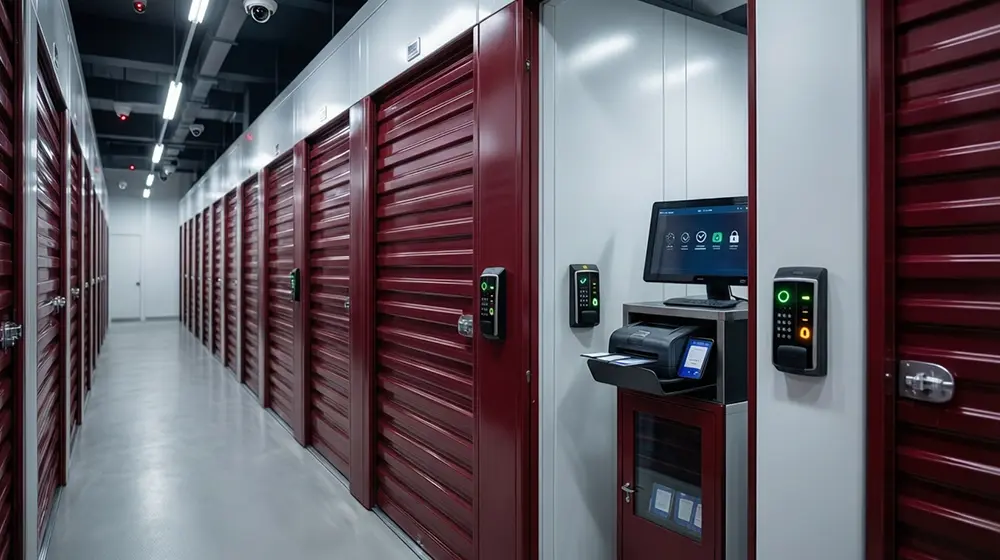
A facility that supports real round-the-clock entry maintains access logs that record entry events. Access logs reduce disputes because they record time, credentials used, and the access point.
Physical entry controls and entry management represent core physical security principles in common security control frameworks.
Verification actions
- Ask whether the system logs: gate entry, building entry, floor entry, and unit corridor entry.
- Ask whether the customer can request an access log extract for a date range.
- Ask for the log retention period in days.
Evidence artifact
- A sample redacted access log screenshot from the facility, with timestamps and access point labels.
4) Does the facility define exceptions that restrict entry, including maintenance, emergencies, or policy enforcement?
Even genuine round-the-clock access comes with exception clauses, and those clauses define risk. Facilities restrict entry during system maintenance, emergency incidents, or policy enforcement events such as overdue invoices or compliance breaches.
Verification actions
- Identify all entry restriction triggers: payment status, ID mismatch, security incident, fire alarm, and access system outage.
- Request the escalation path: on-site contact, hotline number, and incident ticketing.
- Request the maximum downtime window stated in policy.
Evidence artifact
- “Access restriction triggers” clause from terms and conditions, saved in PDF.
5) Does the facility specify ID and authorized-user rules that match your use case?
Access rights depend on identity rules. Facilities often restrict entry to registered users or require named access holders. That rule matters for businesses, families, and renovation projects with multiple retrieval operators.
Verification actions
- Confirm the number of authorized users included in the base price.
- Confirm whether the facility allows contractor access.
- Confirm whether the facility allows third-party collection with an authorization letter.
Evidence artifact
- Authorized user policy section plus a form template for access authorization.
6) Does the facility define credential lifecycle controls: issuance, replacement, suspension, and fees?
Credential lifecycle controls determine whether 24/7 entry remains stable over time. Facilities that use app entry often require device permissions and identity verification. Some facilities describe Bluetooth and device permission requirements, which create operational dependency on phone settings.
Verification actions
- Map credential types: app token, QR, keypad PIN, access card.
- Confirm replacement fees and deposit amounts.
- Confirm the time to reissue access after a loss or phone change.
Evidence artifact
- Fee schedule for replacement card or access reset, plus issuance timeline.
7) Does the facility define access windows for deliveries, loading bays, and large-item movement?
Round-the-clock entry and round-the-clock movement represent different permissions.
Some facilities allow entry at night but restrict loading, trolley use, elevator access, or vehicle access after certain hours.
Verification actions
- Confirm vehicle entry hours and loading bay rules.
- Confirm whether large-item retrieval needs booking.
- Confirm whether night access includes lift operation, dock lights, and staff assistance.
Evidence artifact
- “Loading and delivery” rule sheet or building access SOP.
8) Does the facility publish unit access conditions tied to safety controls, including fire protection and storage type?
Safety controls influence access restrictions. Storage facilities intersect with fire safety and material risk controls. In the UAE and GCC contexts, sprinkler requirements and storage configuration requirements appear in sector guidance around high-rack storage and mezzanines.
Verification actions
- Confirm the prohibited items list: flammables, gas cylinders, chemicals, perishable food.
- Confirm whether the facility uses Civil Defence approved fire protection, and whether alarms restrict access during incidents.
- Confirm whether unit type changes access: climate-controlled, warehouse, container.
Evidence artifact
- Prohibited items list plus fire safety statement in facility documentation.
9) Does the contract define liability, entry denial scenarios, and claim evidence requirements?
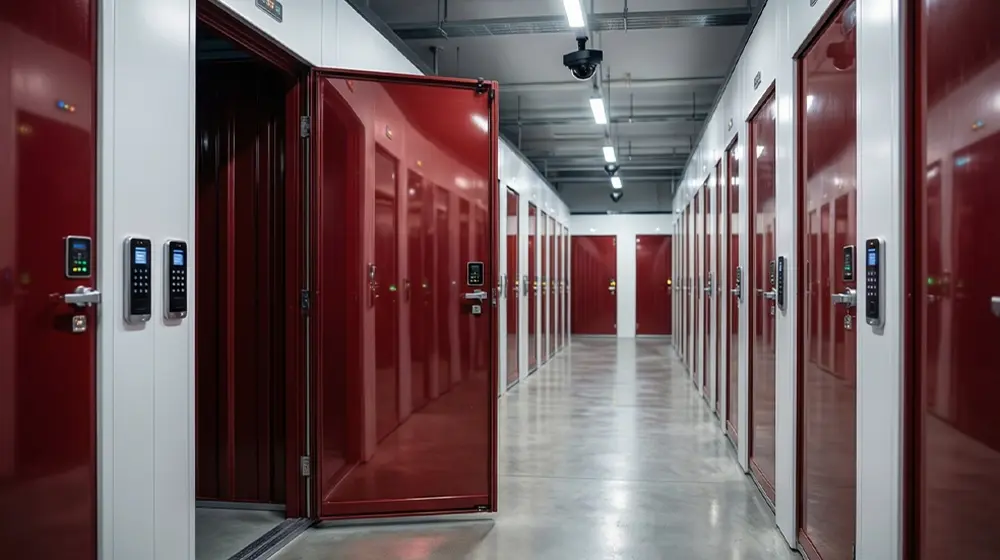
Access disputes turn into claims when retrieval delays cause loss or damage, and contract terms define proof requirements.
The UAE consumer protection framework includes legal provisions and assigned entities for consumer rights, and it addresses harmful contract clauses in consumer documents.
Verification actions
- Locate clauses for: denied entry, facility outage, security incident, force majeure, and unpaid invoices.
- Locate liability cap language and exclusions.
- Identify evidence requirements: inventory list, photos, receipts, access logs, and incident report.
Evidence artifact
- Claim evidence checklist attached to your storage file, stored with date stamps.
10) Does the facility provide transparent pricing for 24/7 access, including add-ons and deposits?
Some facilities price “24/7 access” as a tier or add-on, not a default right. Pricing transparency reduces disputes because the customer compares like-for-like access models.
Verification actions
- Request a price breakdown that isolates access-related costs: deposit, access card fee, after-hours surcharge, and admin fee.
- Ask whether pricing changes based on the number of authorized users.
- Ask whether “24/7 access” changes after promotional periods.
Evidence artifact
- Quote normalization table saved as PDF.
11) Does the facility’s operational maturity match recognized entry control principles?
Facilities with mature entry controls show consistent access management, logging, and secure area control. Physical entry control concepts appear in widely used security control guidance that emphasizes entry controls and protected secure areas.
Verification actions
- Confirm whether the facility uses layered access: perimeter, building, floor, unit corridor.
- Confirm whether the facility segregates customer access from staff areas.
- Confirm whether the facility tracks failed entry attempts.
Evidence artifact
- A facility security and access summary sheet with controls and access points.
12) Does the facility’s stated access claim match market norms and the business storage demand curve?
Market growth increases competition, which increases marketing claims, which increases the value of verification. Grand View Research estimates the UAE self-storage market generated USD 602.5 million in 2024, with a projected 6.3% CAGR from 2025 to 2030 and an expected market size of USD 859.2 million by 2030.
In a growing market, facilities differentiate on convenience signals such as “24/7 access,” keyless entry, and premium security.
Verification actions
- Treat “24/7 access” as a contractual deliverable, not a slogan.
- Compare facilities using the 12-point checklist and require evidence artifacts.
- Document access model selection based on your retrieval frequency and risk level.
Evidence artifact
- A scored facility comparison sheet, saved with date and facility contact.
What market signals support rising demand for storage access convenience?
The UAE self-storage market is expanding, and growth increases the number of facilities and the number of “24/7 access” claims to evaluate.
As check 12 notes, Grand View Research expects the UAE market to keep growing at about 6.3% a year to 2030.
At a global level, Grand View Research estimates the global self-storage market was USD 56.81 billion in 2023 and projects USD 83.20 billion by 2030, with 5.9% CAGR from 2024 to 2030.
These signals point to competitive messaging. Verification protects time-critical retrieval needs.
What are the most common failure points for 24/7 access storage in Dubai?
Four failure points recur across facilities: staff dependency, policy ambiguity, credential disruption, and movement restrictions. These failures exist even when a facility advertises round-the-clock access.
1. Staff-dependent after-hours entry
Staff dependency converts access into a service request. A service request introduces response time variability and denial scenarios.
2. Exception clauses that are broad and undefined
Broad exception clauses create outcome uncertainty. Undefined exceptions reduce comparability across facilities.
3. Credential lifecycle disruption
Credential disruption blocks entry even when access hours remain open. Lost cards and app changes create access downtime.
4. Vehicle and loading restrictions
Restricted loading turns retrieval into a scheduling problem. Time-critical retrieval becomes constrained by movement rules.
Which use cases require the strictest verification for 24/7 access storage in Dubai?
Strictest verification applies to travel gaps, move-out overlap windows, renovation schedules, and business inventory retrieval.
Residents who travel often are a special case: a long trip away is exactly when a blocked credential or a payment-status suspension goes unnoticed until you need the unit.
Risk segmentation matrix for 24/7 access storage in Dubai
| Use case | Retrieval frequency | Failure impact | Verification priority |
|---|---|---|---|
| Traveler gap storage | Medium | Medium | Access hours, access method, exceptions |
| Tenant move-out overlap | High | High | Vehicle access, credential lifecycle, denied entry clause |
| Renovation storage | High | High | Contractor access, authorized users, loading rules |
| Business inventory | High | High | Audit logs, role-based access, and liability terms |
What is the minimum decision rule for “true 24/7 entry”?
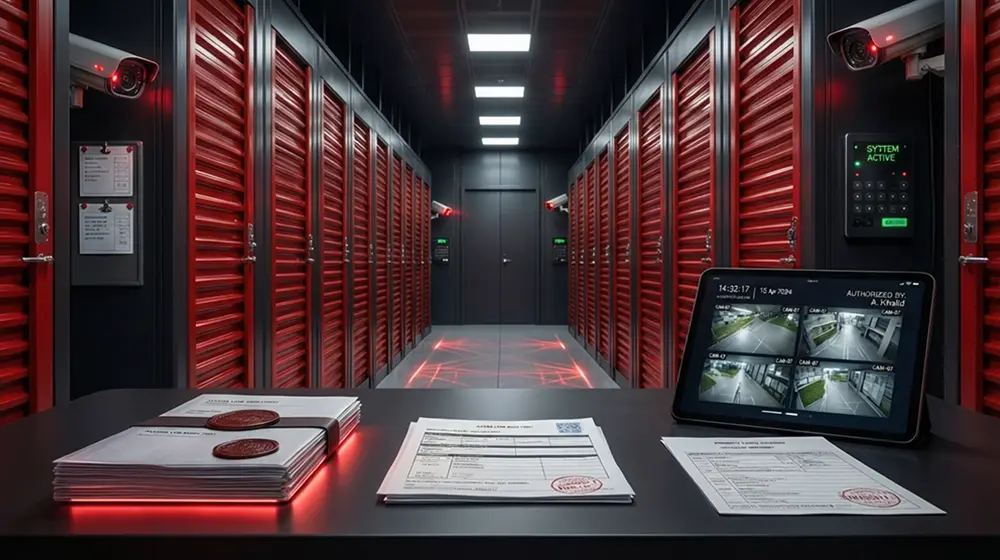
True 24/7 entry exists when a facility provides customer-controlled entry, written access rights, and an auditable log process. This rule converts marketing claims into evidence.
Facility classification model
- Verified 24/7 entry: Customer-controlled entry, documented policy, plus access logging.
- Conditional 24/7 entry: After-hours entry exists, but depends on staff approval or special conditions.
- Limited-hours access: Access windows exist, and entry is closed outside of defined times.
What is a facility verification checklist that fits procurement workflows?
A procurement checklist standardizes evidence collection across facilities and reduces scope ambiguity.
Evidence requests to send to facilities
- Access hours statement for customers and vehicles
- Access method description, including after-hours operation
- Access log policy, including retention period
- Exceptions list, including triggers and escalation
- Authorized users policy and contractor access policy
- Credential issuance and replacement fees and timelines
- Loading bay and large-item movement rules
- Prohibited items list and incident access protocol
- Contract clauses for denied entry and liability boundaries
- Full fee schedule and deposit schedule
Evidence artifacts to store in the decision file
- Policy screenshots with URLs and dates
- Contract PDF with version date
- Quote PDF with line-item breakdown
- Email confirmations for disputed clauses
- Access log sample or access log policy statement
What evidence pack supports denied entry disputes and retrieval delays?
A claim-ready evidence pack includes access terms, payment proof, access attempts, access logs, and time-stamped inventory proof.
UAE consumer protection law describes prohibited harmful terms and confirms consumer compensation rights, which increases the value of documentation and supporting evidence.
The UAE government consumer protection page also directs consumers toward structured complaint processes.
Evidence pack checklist
- Contract version and terms date
- Facility access policy and exceptions clause
- Fee schedule and payment receipts
- Authorized users list with IDs
- Inventory list with photos and serial numbers for electronics
- Entry attempt evidence: timestamps, screenshots, access log extracts
- Incident report number and written communication log
The “24/7” Decision Rule: Customer-Controlled, Written, Auditable
“24/7 access” is only valuable when it survives the moment you actually need it. In Dubai, access failures rarely happen because the unit is full. They happen because entry depends on staff, credentials break, loading rules shut down movement, or the contract hides broad exceptions that override the promise. That is why this guide treats access like a deliverable, not a tagline. Use the 12-point verification method to confirm customer-controlled entry, request the specific policies that govern downtime and restrictions, and insist on audit evidence such as log retention and escalation paths. Then store the evidence pack before you sign. When access is time-critical, paperwork is not admin. It is protection. Choose the facility that can prove its access model in writing and in logs, not the one that sells it with the biggest headline.