Inside Climate Controlled Storage in Dubai: How Self Storage Units Beat Heat & Humidity
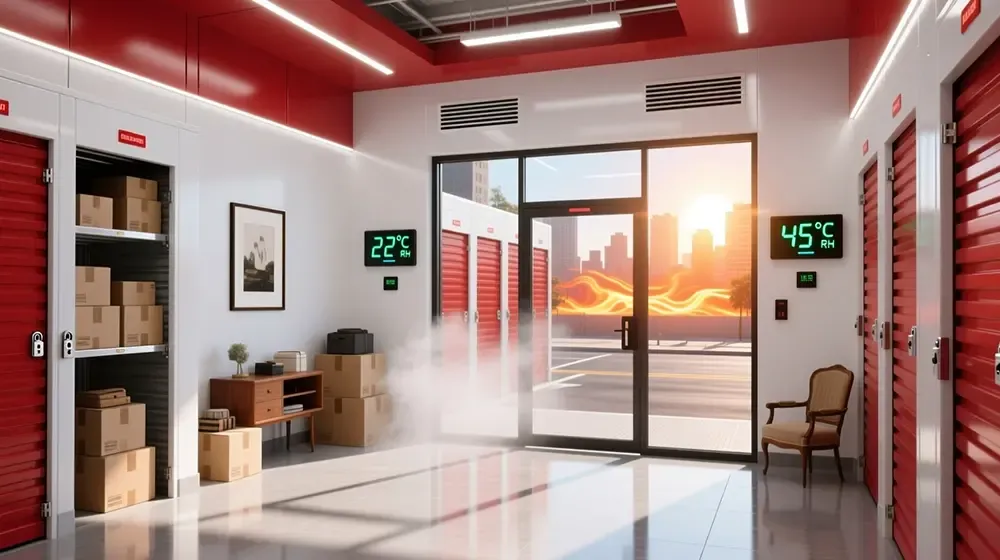
Storing personal or business items in Dubai requires careful planning because of the city’s environmental challenges. Regular storage units often expose valuables to extreme heat, seasonal humidity, and even dust storms, which cause long-term deterioration. Climate controlled storage in Dubai solves these issues by regulating both temperature and humidity, creating a safer environment for sensitive belongings.
Facilities that provide climate-controlled storage use a combination of HVAC systems, industrial dehumidifiers, backup generators, and digital monitoring sensors. These ensure stable indoor conditions even when outside temperatures soar above 40 °C or humidity spikes during the night.
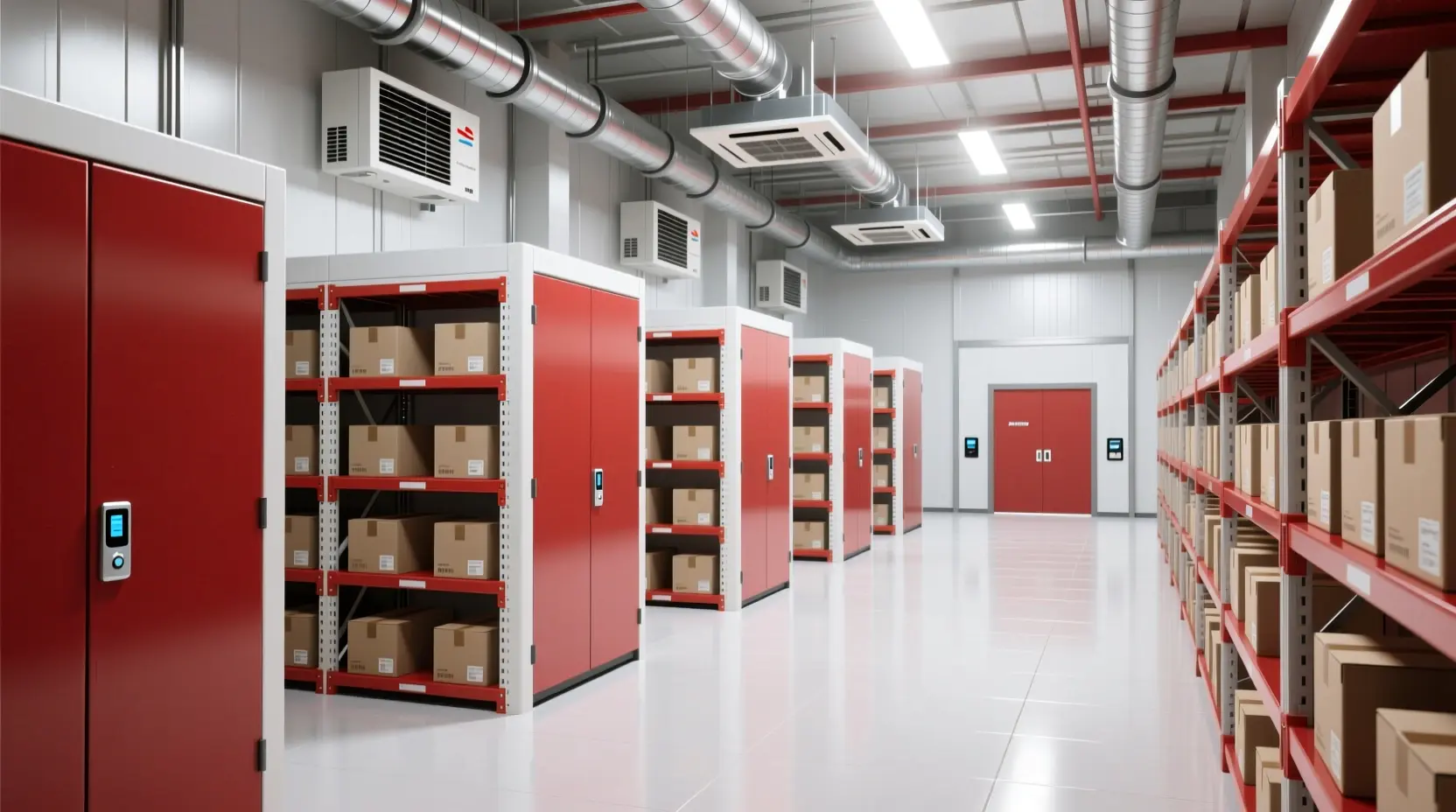
Technical specifications of climate controlled units
Reputable Dubai storage providers maintain international standards for climate control, ensuring that conditions inside the unit remain constant:
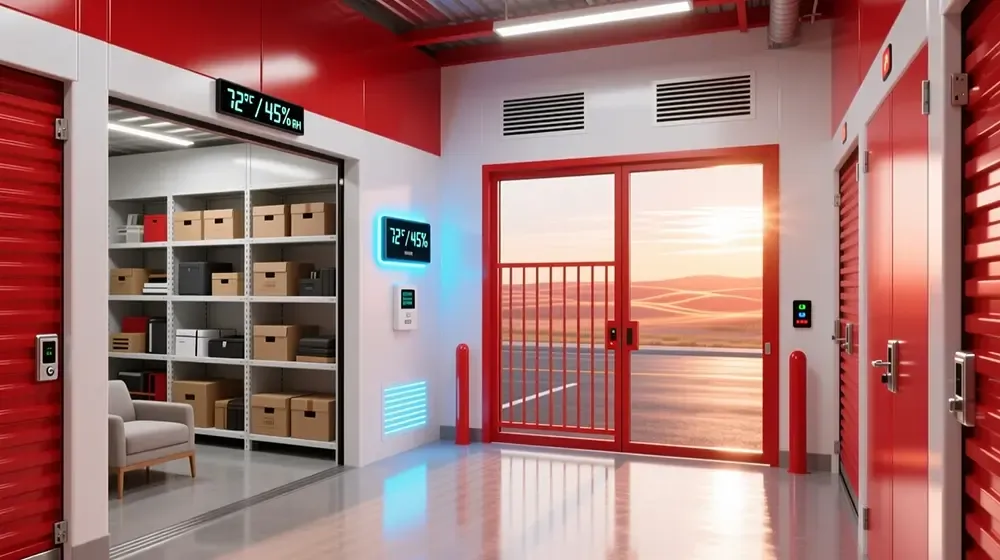
- Temperature range: 18–24 °C. This prevents heat damage to electronics, wood, and textiles.
- Relative humidity (RH): 40–55%. This is the recommended band to reduce mold, prevent paper yellowing, and protect musical instruments.
- Backup systems: Redundant HVAC units, alarms, and power supply ensure continuity during Dubai’s peak summer load periods.
- Pest control integration: Regular fumigation and sealed interiors minimize infestation risks.
Why this matters for users
Without climate control, most storage environments in Dubai quickly expose items to permanent damage. Electronics fail when solder joints degrade under heat, furniture warps under RH swings, and documents or photos curl and fade when RH exceeds 60%.
Why Is Climate Controlled Storage in Dubai Important?
Dubai is a global hub for trade, tourism, and luxury living, but its environment is one of the harshest for storing valuables. Unlike temperate cities where regular storage might suffice, Dubai’s triple threat of heat, humidity, and dust storms makes climate control an essential safeguard.
High-value goods such as electronics, antiques, furniture, textiles, and even pharmaceutical inventory degrade far more quickly under local conditions. Flooding incidents, like the severe rains of April 2024, have also demonstrated that uncontrolled storage facilities can be vulnerable to both water ingress and moisture build-up. For families, professionals, and businesses, climate-controlled storage is more than a premium; it is a necessity.
Also Read: What Is Box Storage in Dubai and Why Climate-Controlled Facilities Matter?
Dubai’s environmental risks explained
Heat exposure
- The hot season lasts for 4.3 months, from May 14 to September 24, with an average daily high temperature above 38 °C. The hottest month of the year in Dubai is August, with an average high of about 41 °C and a low of about 30 °C.
- Electronics begin to fail above 35 °C, with solder joints cracking and batteries swelling.
- Plastics, adhesives, and varnishes soften under prolonged heat, leading to material breakdown.
Humidity fluctuations
- Dubai’s average humidity hovers around 60%, but during the summer months, it can spike between 70-90% in coastal areas. The National Centre of Meteorology often issues weather warnings when relative humidity peaks between 70 and 90 percent in coastal and internal areas.
- Molds take significantly longer to germinate at 19 °C compared with 25.5 °C on building materials that are sensitive to mold growth, while paper and textiles start absorbing excess moisture, leading to stains and brittleness.
- Instruments and wooden items expand and contract, warping or cracking due to RH swings.
Dust and sand intrusion
- Dubai’s frequent shamal winds blow sand and dust into unsealed spaces.
- This accelerates corrosion in electronics and mechanical equipment, while also damaging textiles and finishes.
Flooding risks
- Dubai will spend 30 billion dirhams ($8.2 billion) to boost its rainwater drainage system, aimed at boosting water management capacity by 700%, after the Gulf city was hit by the heaviest downpours recorded in the UAE in 75 years in April.
- Non-climate-controlled facilities, especially ground-level units, face higher risks of seepage, dampness, and secondary mold growth after such events.
Who faces the highest risks without climate control?
Electronics users
- Laptops, cameras, AV gear, and servers are highly sensitive to both heat and RH swings.
- Heat and humidity cycling in uncontrolled storage raise the risk of corrosion, battery swelling and board failure.
Art collectors and museums
- Paintings, textiles, and antiques require 21 °C ±1, 50% RH ±5 for preservation.
- Even short-term storage in uncontrolled conditions can cause irreversible fading or warping.
Families with heirlooms
- Documents, photos, and books begin discoloring when RH exceeds 60%.
- Personal archives may lose historical or sentimental value if not protected.
Businesses holding stock
- Retailers storing textiles, cosmetics, and instruments risk losing part of their stock to mildew, odour and finish damage in uncontrolled storage.
How Much Does Climate Controlled Storage Cost in Dubai?
Climate controlled storage in Dubai commands a premium over standard storage units, reflecting the extra infrastructure (HVAC, monitoring, dehumidifiers, backup power) required to maintain stable temperature and humidity. Local menus, lease rates, and operator economics provide real data to help users benchmark cost vs value.
This section gives you current pricing bands, cost drivers, global comparison context, and Return on Investment (ROI) insights so you can decide whether the price premium is justified for your storage needs. For the latest figures by unit size, check current Dubai prices.
Local Pricing Bands & Cost Drivers
| Unit Size / Lease Type | Typical Price Range (Dubai) | Key Cost Drivers |
|---|---|---|
| 10 sq ft lockers | AED 200–400/month | Small footprint, suited to boxes, documents and small electronics. |
| 25 sq ft compact units | AED 400–550/month | More space for boxes and small furniture; basic climate needs. |
| 50 sq ft rooms (studio contents) | AED 650–850/month | More space, stronger HVAC load, location & security. |
| Larger units (100 sq ft) | AED 1,350–1,600/month | Higher square footage, more cooling volume, and more OPEX per unit. |
The unit bands above are Ruby Self Storage’s published Dubai monthly ranges; VAT and any extras appear on the written quote. Every Ruby unit is 8 ft high. | Warehouse lease (climate-capable facility) | AED 30–60/sq ft/year (base lease before utilities, staffing, etc.) | Lease cost + high OPEX (cooling, electricity, maintenance) + climate control premium. |
Premium vs Standard Storage in Dubai
- Standard self-storage units (non-climate) in Dubai usually cost less than climate-controlled units of a similar size, typically by about 20–30% and by around a third in one published Al Quoz benchmark. For the worked figures by unit size, see the AC vs non-AC price difference. Premium locations (Downtown, Marina, JLT) often push climate control premium toward the higher end of that range.
- Users choosing climate control also often pay extra for features like 24/7 access, CCTV, insurance, and fire safety, which are sometimes bundled, sometimes optional. Ask for every extra to be listed on the written quote so you can compare like with like.
- In box storage (smaller, parcel-based), climate-controlled options often carry a premium over standard box storage too. The smaller scale means a smaller absolute cost, but the percentage difference can still be meaningful.
Global Comparison & Market Context
Understanding Dubai costs becomes easier when compared to global trends in climate controlled storage:
- The global climate-controlled self-storage market was valued at approx USD 48 billion in 2023, with expectations to reach around USD 85 billion by 2032 (CAGR ~6.5%), driven by increasing urbanization, disposable income, and consumer awareness.
- In the UAE, warehouse lease rates for climate-capable storage are in the AED 30-60/sq ft/year band, similar to what global operators in premium markets might charge after adjusting for cost of living and energy.
- Some industry reports suggest climate-controlled units globally can command 40-60% higher pricing than standard units in markets where climate control is rare. In Dubai, where climate control is widely offered, the premium is typically lower, around 20–30%, but still material.
Cost Drivers & What Influences Pricing Variation
Several factors cause big price differences between providers and units:
1. Location (central vs peripheral)
- Units in Business Bay, Dubai Marina, and Downtown are significantly more expensive than units in the outskirts because of real estate cost and demand.
- Transport/drive times matter during frequent access.
2. Unit size & ceiling height
- Larger units have better economies of scale.
- Taller ceilings increase volume to cool, raising HVAC and insulation costs.
3. Amenity level
- Features like climate-monitoring sensors, backup power, fire suppression, pest control, and dust filtration all increase cost.
4. Lease term & occupancy
- Longer-term commitments usually earn discounts.
5. Brand reputation & certifications
- Providers with an established track record, documented climate logs, and recognised certifications tend to charge a premium.
ROI Insights: When Does the Premium Pay Off?
To judge whether climate-controlled storage is worth the extra cost, use this framework:
- Premium cost (extra/month) vs expected damage cost without climate control.
- Break-even period (months) = expected repair or replacement cost of damage ÷ premium per month.
| Example Use-Case | Premium per Month | Potential Damage Without Climate | Break-Even (approx) |
|---|---|---|---|
| 50 sq ft room (furniture & electronics) | AED 150-200 | Warping, electronic failure costing AED 2,500-4,000 in one summer | ~13-27 months |
| Box storage of documents/photos (6 months) | AED 30-50 | Mold, image loss, paper curling, and possible loss of archives cost AED 800-1,200 | ~16-40 months (sooner if the items are irreplaceable) |
| Inventory storage (SME, textiles, clothing, 100 sq ft) | AED 270-400 | Mildew and fabric damage, assumed at 10-15% of AED 50,000 stock (AED 5,000-7,500) | ~13-28 months |
These are illustrative assumptions, not measured loss rates: replace the damage column with your own repair or replacement estimate.
Lifespan & Cost Savings
In Dubai, heat, humidity, dust, and episodic flooding combine to accelerate damage to electronics, wood, textiles, paper, and artworks. Climate controlled storage in Dubai reduces that damage by holding ~18–24 °C and ~40–55% RH, which slows corrosion, warping, and mold growth. When you compare the monthly climate premium to realistic repair or replacement costs, the math often tilts toward climate control, especially if your items sit through even one Dubai summer.
Why this matters for ROI:
A single summer of heat- and humidity-related damage (repairs, replacements, restoration) can cost more than a year of climate premium on a small unit. Operators see the same economics from the other side: climate-capable facilities cost more to build and run, and customers with sensitive goods are willing to pay for that protection.
Mechanisms of damage in Dubai’s climate (and how control prevents them)
Damage pathways are predictable. Heat accelerates chemical reactions and softens adhesives; humidity drives corrosion, mold, and dimensional change; dust abrades surfaces and infiltrates electronics; and sudden moisture events trigger secondary mold. Climate-controlled storage interrupts those pathways by stabilizing temperature and flattening humidity swings in sealed, monitored interiors.
Key mechanisms (with mitigation):
Electro-corrosion & board failure
- Driver: Sustained RH > 60% + heat; risk increases further with dust and bias (powered gear).
- Mitigation: ~18–24 °C + ~40–55% RH; sealed boxes; desiccant packs for high-value kits.
Mold/mildew growth
- Driver: RH ≥ 60%; spore activity rises in warm, stagnant spaces.
- Mitigation: RH control, air movement, and routine inspection in climate controlled storage.
Wood swelling/warping & finish cracks
- Driver: Daily/seasonal RH swings in Dubai’s hot months, especially coastal nights (70–90% RH).
- Mitigation: Tight RH band ~50% ± 5; slower ramps; cushioned packing for instruments.
Paper/photo cockling & yellowing
- Driver: RH > 60% with cycling; acidity/ink instability.
- Mitigation: Controlled RH; acid-free boxes; unit-level monitoring.
Sudden moisture events (floods/condensation)
- Driver: Storms like April 2024; warm-moist air meeting cooler surfaces.
- Mitigation: Sealed units above grade, pallets, RH control, quick-response SOPs.
Evidence snapshot: Target bands that work (and why)
The most effective storage band for mixed household goods in Dubai mirrors museum basics: cool-steady temperature and mid-range RH. While you don’t need museum-tight tolerances for everything, aiming for ~21 °C and ~50% RH sets a high bar that protects most categories.
- General mixed goods: 18–24 °C, 40–55% RH (facility best practice).
- Museum-grade reference: 21 °C ± 1, 50% RH ± 5 (regional exemplar for sensitive collections).
- Mold threshold: ≥ 60% RH increases risk; keep below to protect paper, textiles, and leather.
Savings model: how to quantify your return in Dubai
Use a simple model to decide if the climate premium makes sense for your items. Estimate your premium per month, your expected non-climate damage, and compute the break-even. For Dubai, consider at least one summer cycle in the horizon—heat + high night RH drive most losses in that window.
Step-by-step:
- Premium/month = climate unit price − regular unit price.
- Expected non-climate damage = realistic repair + replacement exposure if stored through summer (use local reports).
- Break-even months = expected damage ÷ premium/month.
- Decision rule = choose climate control if storage spans summer and items are sensitive/high value.
Dubai price anchors to plug in:
- 25 sq ft: AED 400–550/month (Ruby’s published Dubai band).
- 50 sq ft: AED 650–850/month (Ruby’s published Dubai band).
- Premium uplift: ~20–30% (climate vs regular).
- Expected losses (non-climate): your own repair or replacement estimate for the items you plan to store.
Sensitivity analysis: what changes your math
Your break-even shifts with seasonality, item mix, and access frequency. If you store through June–September, the risk spike accelerates payback. Dense electronics kits, leather art pieces, and solid-wood furniture push ROI even faster.
Variables that shorten payback:
- Hot season overlap (≥ 1 summer).
- High-sensitivity inventory (electronics, wood, leather, textiles, archives).
- Coastal locations (night RH 70–90%).
- Recent flood-season exposure (moisture risks).
Variables that lengthen payback:
- Short storage terms < 6–9 months outside peak summer.
- Robust/non-sensitive items (sealed plastics, corrosion-resistant metals).
- Peripheral locations with lower RH spikes and lower rental premia.
Sector snapshots: where climate control returns the most
Different sectors have different risk/return curves. In Dubai, the most dramatic savings show up where humidity and heat attack materials or where resale value matters.
High-return sectors (examples):
AV/IT & production gear
- Risk: Board corrosion, lens fungus, battery swell.
- Climate gain: Lower failure incidence; fewer repairs and recalibrations.
Fine art, antiques, and luxury textiles
- Risk: Finish cracking, mold, color shift.
- Climate gain: Preserves resale and provenance; aligns with museum-style bands.
SME inventory (fashion/cosmetics/instruments)
- Risk: Stock lost to mildew/finish damage in uncontrolled storage.
- Climate gain: Smoother sell-through, fewer returns, better customer experience.
Practical preservation set-ups inside climate units (Dubai-ready)
Climate control sets the baseline; storage technique finishes the job. Use the unit’s controlled environment, plus packaging and elevation, to guard against dust and moisture.
Checklist (quick wins):
- Elevate furniture and boxes on pallets or racking.
- Use breathable covers for wood and textiles; avoid plastic wrap that traps moisture.
- Desiccants in sealed totes for electronics and optics.
- Acid-free boxes for documents/photos; label with storage date.
- No tight packing against walls; allow air movement for uniform RH.
- Ask for logs: receive monthly temp/RH graphs from your climate-controlled storage provider.
Quick ROI table
| Use Case (Dubai) | Climate Unit Cost | Regular Unit Cost | Premium/Month | Expected Damage if Non-Climate | Indicative Break-Even |
|---|---|---|---|---|---|
| 25 sq ft (electronics, documents) | AED 500 | AED 400 | 100 | AED 1,500–2,000 | 15–20 months |
| 50 sq ft (furniture + AV mix) | AED 800 | AED 650 | 150 | AED 2,400–4,000 | 16–27 months |
| SME textiles (100 sq ft) | AED 1,550 | AED 1,250 | 300 | 10–15% of AED 50,000 stock (AED 5,000–7,500) | 17–25 months |
Figures in this table are illustrative: the unit costs sit within published Dubai bands with a 20–25% climate premium, and the damage estimates are assumptions to replace with your own. Break-even months = expected damage ÷ premium per month.
Final Verdict: Why Climate Controlled Storage in Dubai Is a Smart Investment
Climate-controlled storage in Dubai is not a luxury; it is a strategic safeguard against extreme heat, humidity, dust, and floods. For households, it avoids repair and replacement bills, and for businesses, it preserves inventory value and compliance standards. On the illustrative figures above, the extra 20–30% premium typically breaks even within one to two years of storage, and sooner for high-value or irreplaceable items. The evidence shows that when storing electronics, furniture, artwork, antiques, textiles, or archives, climate-controlled storage in Dubai is absolutely worth the investment.