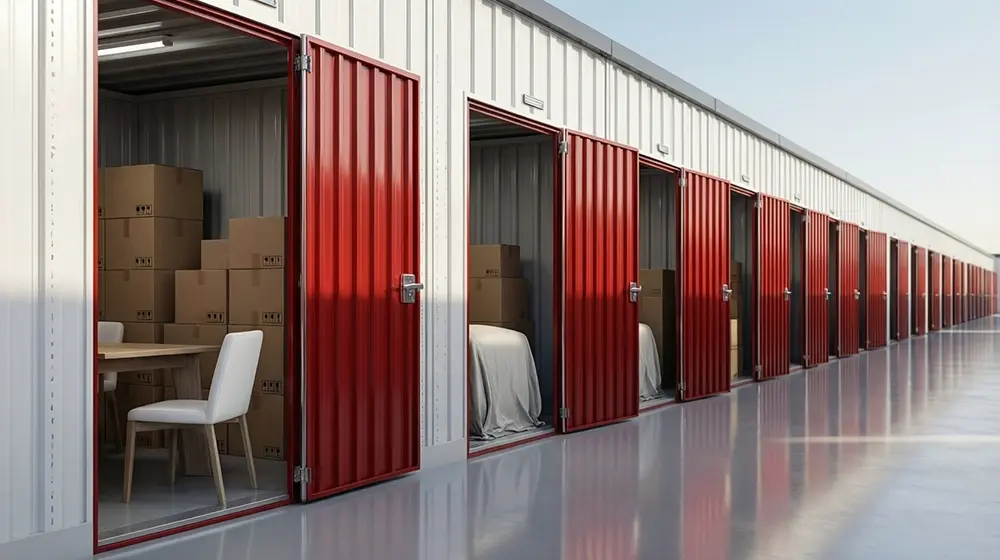

Long-term storage units in Dubai now sit where fast population growth, high rents, and harsh summer heat meet everyday tenant decisions. Dubai’s population is estimated at about 3.95 million residents in 2025, so more households lean on storage during each move or downsizing cycle. Industry research values the UAE self-storage market at USD 602.5 million in 2024, with forecasts of roughly USD 859.2 million by 2030, which gives providers strong incentives to optimise pricing menus, promotions, and fee clauses rather than headline rents alone. Price guides show that a 25 square foot unit in Dubai typically costs around 300 to 400 AED per month, while 50 square foot rooms often sit near 900 to 1,400 AED before extras. In this environment, the fine print on a long term storage unit in Dubai can quietly reshape costs through promotion limits, automatic renewals, access rules, rate increases, climate wording, insurance exclusions, and deposit or disposal powers.
This guide highlights seven specific contract details that storage companies would prefer you not to notice on day one, and shows how to turn each one into clear questions, checklists, and numbers before you sign.

1. What does the promotion period really cost in a long-term storage unit in Dubai?
The promotion period in a long-term storage unit contract in Dubai often covers only a small part of the total twelve-month bill.
A 25 square foot self-storage Dubai unit usually costs about 300 to 400 AED per month, while 50 square foot units range from 900 to 1,400 AED, and 75 square foot units sit near 1,000 to 1,450 AED per month. A separate storage price grid lists 25 square foot units at about 550 AED, 50 square foot units at roughly 1,100 AED, and 100 square foot units at about 2,200 AED per month.
Many long-term storage Dubai providers advertise a first month at half price or a free month when tenants prepay twelve months. Operators highlight a first month free, subject to availability and per square meter pricing from about 150 AED per square meter per month. Some offer one month free when tenants prepay 12 months of storage.
Example for a long-term storage unit in Dubai
Assume a climate-controlled 50 square foot long-term storage unit in Dubai:
- Base monthly rent: 1,100 AED.
- Promotion: 50 % discount for the first month.
- Contract length: 12 months for furniture storage in Dubai.
Twelve-month cost calculation
- Month 1 at promotion: 550 AED.
- Months 2 to 12 at base rate: 1,100 AED each, which equals 12,100 AED.
- Total twelve-month rent: 12,650 AED.
The promotion reduces the annual bill by 550 AED, which equals about 4.3 % of the total. The contract for this long term storage unit in Dubai, therefore, behaves as a standard 1,100 AED unit for more than 90 % of the term.
Checklist
- Read the table that lists base rent separately from promotion.
- Calculate the cost for the full term using only the base rent for any long term storage unit in Dubai.
- Confirm whether free months require full prepayment of twelve months.
- Check whether the promotion applies once or resets after a pause in furniture storage in Dubai.
2. How do automatic renewals and notice periods extend a long-term storage unit in Dubai?
Automatic renewals and notice periods in Dubai storage contracts can extend a long-term storage unit in Dubai beyond the planned end date and add extra months of rent.
Self-storage Dubai contracts often define the term as open-ended, with monthly billing that continues until the tenant cancels. Tenants can rent from one month to eleven months, and the contract renews each month automatically until termination via an application or self-service tool.
Some storage unit contracts in Dubai pair this with notice periods that require written notice between 15 and 30 days before renewal. A tenant who plans to end a long-term storage unit in Dubai at the end of month twelve but forgets the cutoff may pay for month thirteen as well.
In a city where DXB Interact data reports more than 208,030 additional residents between 2024 and 2025, frequent relocations and travel plans make it easy to overlook notice dates.
Practical checks
- Locate the clause that describes the initial term and renewal method.
- Confirm the minimum commitment period, for example, three or six months.
- Identify the exact wording on notice periods, including calendar days and the method.
- Record the final date when notice can be given without extending the long-term storage unit in Dubai into another month.
3. How do access hours, lock-out rules, and late fees restrict a long-term storage unit in Dubai?
Access hours, lock-out conditions, and late fees define when tenants can actually reach a long-term storage unit in Dubai, even when the total unpaid amount is small.
24-hour monitoring, climate control, and flexible access are key benefits, but detailed conditions usually sit in separate contract clauses that describe payment terms. Many self storage Dubai contracts link three elements:
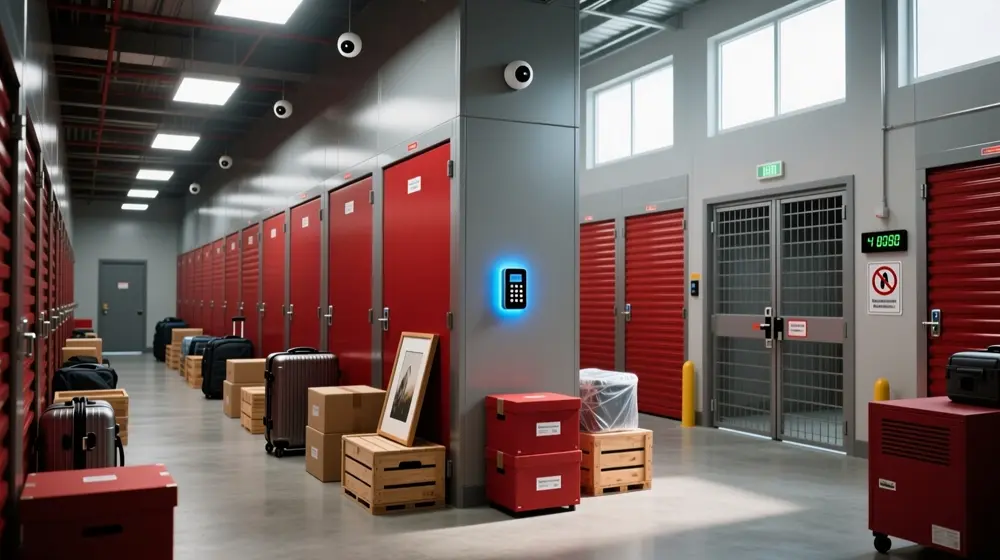
- The due date for monthly rent is often the first day of the month.
- Late fee trigger, sometimes after 5 to 7 days.
- Lock out trigger, sometimes after 10 to 14 days without payment.
Once a lockout starts, tenants may lose access to a long-term storage unit in Dubai through gate codes, lift access, or padlock control, even though the stored items remain inside.
Consumer protection commentary on Federal Law No. 15 of 2020 explains that suppliers must avoid harmful contractual terms, but may still enforce reasonable conditions where they have disclosed terms clearly and treat customers consistently.
Example scenario for late fees in a long term storage unit in Dubai
- Monthly rent: 900 AED.
- Late fee: 100 AED after seven days.
- Lock out: Applies after fourteen days.
If a tenant misses payment for one month and pays after twenty days, the payment can include:
- 900 AED rent.
- 100 AED late fee.
- Possible reactivation fee if the storage unit contract in Dubai includes such a line.
For a long-term storage unit in Dubai held for twelve months, three late payments can easily add 300 AED or more in fees, separate from rent.
Questions to ask about access rules in a long term storage Dubai contract
- Are access hours truly 24 hours or restricted to office timings?
- On which day does the facility block access for non-payment?
- Are there separate fees for lockout, reactivation, or key replacement?
- Does the contract permit remote closure of a long-term storage unit in Dubai through electronic locks?
4. How do price increases and indexation affect a long-term storage unit in Dubai?
Price increase and indexation clauses allow a provider to change the rent for a long-term storage unit in Dubai during the storage period, even when the tenant has already moved items in.
The UAE self-storage market is expected to grow from about USD 602.5 million in 2024 to approximately USD 859.2 million in 2030, with demand driven by household moves, commercial storage, and temperature-controlled services. In parallel, Middle East and Africa self-storage revenue stands at USD 2,249.8 million with an expected growth rate of around 6.5 % per year.
This environment encourages regular price reviews. Contracts for a long-term storage unit in Dubai usually adopt one of three price change structures:
- A fixed percentage increase after a defined period, such as 5 to 10 % after twelve months.
- An adjustment linked loosely to operating costs, such as utilities.
- A general right to revise rates with written notice, often 30 days in advance.
The effect on a long term storage unit in Dubai becomes clear in a simple calculation:
- Starting rent: 1,000 AED per month.
- Increase percentage: 8 % after twelve months.
- New rent: 1,080 AED per month in year two.
Over twenty-four months, the total rent equals 24,960 AED instead of 24,000 AED, a difference of 960 AED. If the initial rent was 1,100 AED, the gap widens further.
Points to check
- Does the contract specify a maximum annual increase for a long-term storage unit in Dubai?
- Does the provider commit to a fixed rate for a defined period?
- How much written notice must the provider give before a new rate begins?
- Does the tenant have any special right to exit a long-term storage unit in Dubai without penalty when a price rise occurs?
5. What do climate control and maintenance clauses actually cover in Dubai storage contracts?
Climate control and maintenance clauses describe the protection a long-term storage unit in Dubai receives against heat, humidity, water ingress, and mold, but they often include qualifiers and exclusions.
August is the warmest month with average temperatures near 35.7 °C, combined with high humidity. The UAE recorded temperatures near 51.8 °C in an inland location during August 2025 after its hottest recorded spring, with major cities including Dubai facing regular mid-40 °C days.
Temperature and humidity control, and mention climate-controlled units, aim to protect valued items from environmental damage. However, standard contract wording can still state that the provider is not responsible for damage caused by inherent defects in items, poor packing, condensation, insects, or gradual deterioration.
In practice, climate clauses in a long-term storage unit in Dubai usually tell tenants:
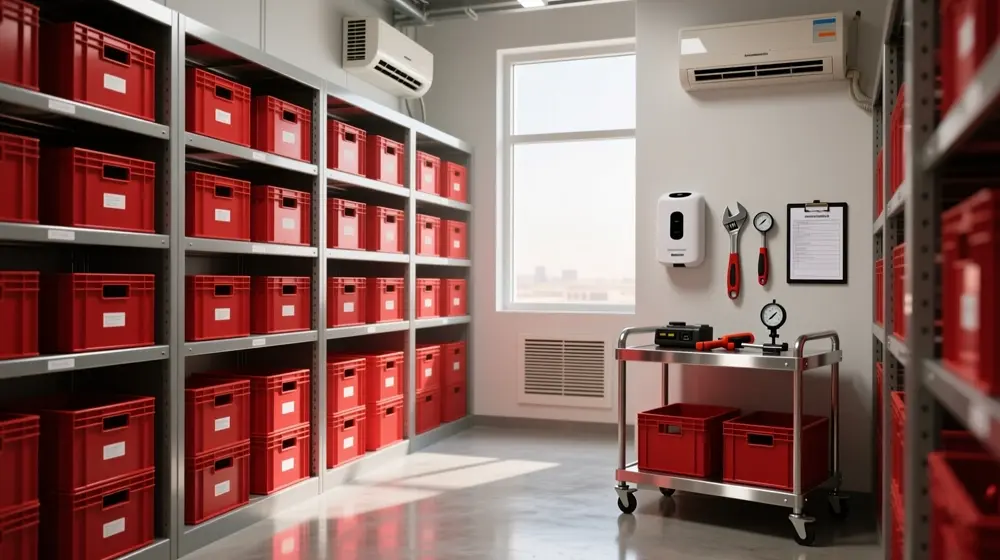
- Whether climate control applies to individual units or only to corridors and common areas.
- Whether the facility operates air conditioning continuously or during defined hours.
- Whether humidity control uses mechanical systems such as dehumidifiers or only natural ventilation.
Questions about furniture storage in Dubai
- What approximate temperature range does the provider target for units, for example, 22 to 26 °C?
- Are humidity levels monitored and logged for each area?
- What is the process time for fixing reported water leaks or visible condensation in a long-term storage unit in Dubai?
- Does the contract state that the tenant must wrap items or use pallets to benefit fully from climate control?
Federal consumer protection law expects providers to describe services accurately and prohibits clauses that fully remove responsibility, but it does not prevent reasonable limitations where damage results from misuse or unavoidable conditions.
6. How do insurance exclusions and claim limits change risk in a long term storage unit in Dubai?
Insurance, exclusions, and claim limits define whether financial loss inside a long-term storage unit in Dubai remains with the tenant or is shared with an insurer.
Some self-storage Dubai providers bundle basic cover into the monthly fee. Others direct tenants to external insurers. Storall, for example, notes that it requires a security deposit equal to one month’s rent, and it lists separate rates for ancillary services, which may include insurance or packing support.
General explanations of self-storage insurance in the UAE describe common patterns:
- Policies often ask tenants to declare a total value for contents.
- Covered causes of loss may include fire, burglary, and certain water events.
- Exclusions often include mold, insects, gradual deterioration, and improper packing.
For any long-term storage unit in Dubai, tenants need to understand three numeric aspects of insurance:
- Sum insured for the unit as a whole.
- Sub limits for categories such as electronics or art.
- Deductible or excess, which is the amount the tenant must absorb before coverage applies.
Risk distribution for furniture storage in Dubai
- Declared value of contents: 60,000 AED.
- Policy limit per claim: 60,000 AED.
- Sub limit for electronics: 10,000 AED.
- Deductible: 1,000 AED.
If a water leak damages furniture and electronics inside a long-term storage unit in Dubai, the claim may only cover up to 10,000 AED for electronics and 49,000 AED for furniture after applying the deductible, even though the actual loss could be higher.
Insurance questions to raise before signing any storage unit contract in Dubai
- Is insurance mandatory for a long-term storage unit in Dubai, and is it included or billed separately?
- What are the full exclusions besides the obvious illegal items?
- How does the provider document incidents and support claims?
- Does the provider require an inventory list or just a value declaration for furniture storage in Dubai?
7. What can deposit, cleaning, and disposal clauses allow a storage company to do in Dubai
Deposit, cleaning, and disposal clauses govern how a self-storage Dubai facility can recover costs when a tenant leaves a long-term storage unit in Dubai in poor condition or stops paying. Many storage facilities in Dubai adopt similar structures, with deposits that sit in addition to monthly fees.
Disposal and lien clauses in a storage unit contract in Dubai usually define a sequence:

- Non-payment for a specified period, for example, 30 to 60 days.
- Written notices by email, SMS, or registered mail.
- Lock out of the long-term storage unit in Dubai.
- Right to sell or dispose of contents to recover outstanding rent and fees.
Consumer protection analysis in the UAE highlights that Federal Law No. 15 of 2020 prohibits harmful and hidden terms, yet still allows service providers to use clearly disclosed procedures where tenants default.
Practical implications for a long term storage unit in Dubai
- A tenant who travels abroad for three months without updating contact details risks missing notices.
- Accumulated arrears plus auction and disposal costs can absorb the entire deposit and still leave a balance.
- Items stored for emotional reasons without precise valuation, such as personal photo albums, have a high non-financial cost that contracts cannot recover.
Checklist before handing over keys to a long term storage unit in Dubai
- Record deposit amount, conditions for refund, and notice periods in writing.
- Confirm whether cleaning charges apply if minor dust or packaging remains.
- Clarify how many days of arrears lead to the disposal or sale of contents.
- Store up-to-date contact details with the provider to receive all notices.
Conclusion: Read the Storage Contract, Not Just the Banner
When you first price a long-term storage unit in Dubai, it is tempting to focus on the friendly promotion at the top of the page and ignore the dense clauses that follow. Yet your real bill is shaped less by the first discounted month and more by renewals, notice dates, access rules, late fees, rate increases, climate wording, insurance limits, and what happens if you leave a unit in poor condition or miss payments while travelling. A simple checklist that turns each major clause into a number, a date, and a clear “yes or no” answer can protect you from avoidable costs that run into hundreds of AED over a year.
Before you sign, map out your expected storage period, calculate the full twelve-month cost at the base rent, and write down every trigger that can change that figure, from late fees to annual increases. Ask direct questions about climate control and insurance, especially if you store furniture, electronics, or items with emotional value that money cannot replace. If a company will not answer clearly in writing, treat that as a signal. A long term storage unit in Dubai should feel like a quiet extension of your home, not a contract that keeps surprising you. The extra thirty minutes you spend reading the fine print now can save you money, stress, and arguments later.
Important note
This article uses data from Dubai demographic statistics, climate records, and the UAE self-storage market research to describe patterns that affect a long-term storage unit in Dubai. It does not replace legal advice on any individual storage unit contract that Dubai tenants may sign. High-value furniture storage in Dubai or complex multi-year agreements can justify an independent legal review before commitment.
FAQs
Is a long-term storage unit in Dubai cheaper than upgrading to a larger apartment?
Often yes, especially if you only need extra space for seasonal items or a limited period, but you should compare the annual storage cost with the rent difference for a bigger home.
How much does a typical 50 square foot long term storage unit in Dubai cost per month?
Most providers price a 50 square foot unit in a band of roughly 900 to 1,400 AED per month before promotions and fees.
Are the free month or half-price promotions in Dubai storage contracts really worth it?
They can help with cash flow in the first month, but they usually reduce the total twelve-month bill by only a few %, so you must still budget for the full base rent.
How far in advance should I give notice to end a long term storage unit in Dubai?
Many contracts ask for written notice between fifteen and thirty days before the next billing date, so putting a reminder in your calendar is essential.
Do Dubai storage facilities truly offer twenty-four-hour access to long-term units?
Some do, but others limit access to staffed hours or apply lockout rules after short periods of non-payment, so you should confirm exact access times and triggers in writing.
Can the storage company increase my rent while my items are already inside the unit?
Yes, many contracts allow rate reviews after a set period or with thirty days’ notice, so you should check whether any cap or fixed rate period is clearly stated.
Is climate control always included in long-term storage units in Dubai?
No, some facilities offer fully climate-controlled units while others only cool corridors or common areas, so you must ask where air conditioning and humidity control actually apply.
Do I really need separate insurance for a long-term storage unit in Dubai?
You should at least know whether cover is included, what the limits and exclusions are, and whether your own home or contents policy extends to off-site storage.
Why do storage companies in Dubai ask for a security deposit on top of the monthly rent?
The deposit helps them cover unpaid rent, cleaning, or disposal costs, and is usually refundable if you pay on time and return the unit in good condition.
Can a Dubai storage company sell or dispose of my items if I stop paying?
If the contract includes clear lien and disposal clauses and you ignore notices, the provider can usually lock the unit and later sell or dispose of contents to recover outstanding amounts.
Rakan Al-Juraid is a logistics specialist with a focus on commercial storage systems and high-security asset management. With extensive experience in industrial warehousing, he specializes in inventory tracking technology and transit safety. Rakan’s expertise lies in streamlining the storage process for both businesses and homeowners through strategic planning. His writing offers data-driven advice on insurance for stored goods, fire-safe environments, and heavy-duty logistics. He is committed to ensuring that every square foot of storage is utilized with maximum security and efficiency. Rakan aims to provide professional-grade storage standards to every reader navigating the moving process.
Layali Al-Samer is a seasoned storage and organization expert with over 12 years of experience in the logistics industry. She holds a degree in Spatial Design, specializing in high-density residential storage and climate-control solutions. Layali focuses on inventory management for luxury goods and long-term preservation techniques for sensitive heirlooms. Her articles provide expert guidance on maximizing unit efficiency and protecting valuables from environmental damage. She is dedicated to helping readers declutter their lives through strategic and organized spatial planning. Layali’s goal is to ensure every possession is stored with the highest level of care and precision.