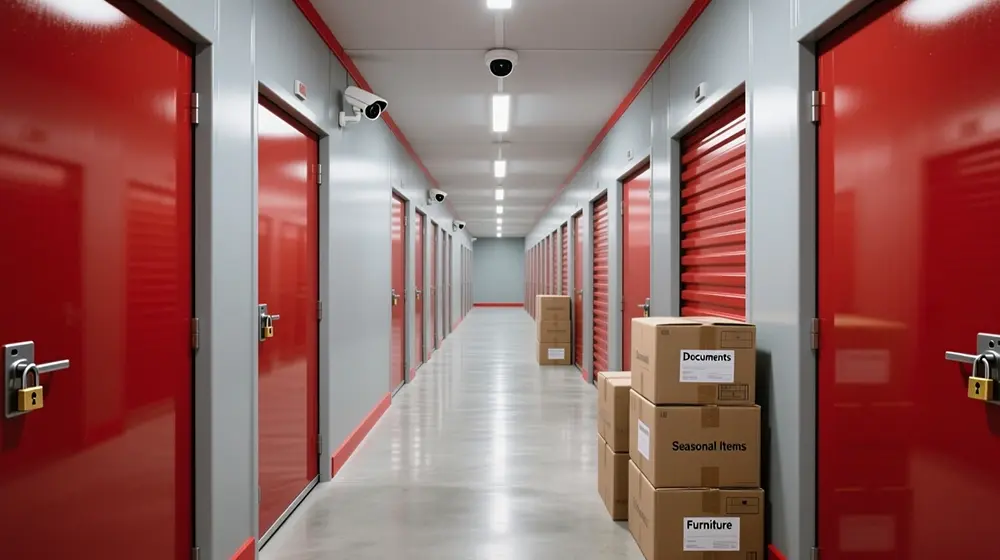
Self Storage in Sharjah: Affordable Secure Options Near Industrial Areas and Residential Zones Where Climate Matters More Than Price
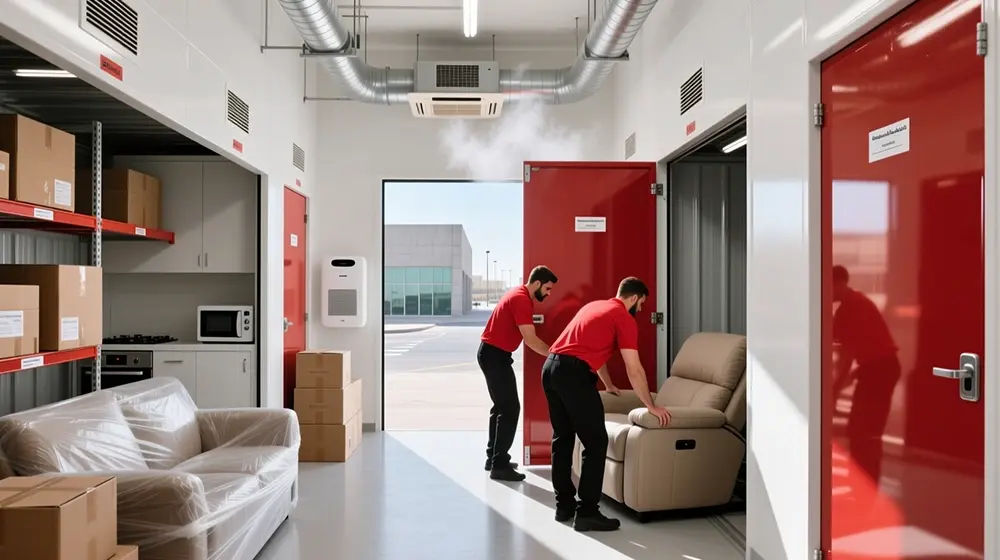
Self storage in Sharjah now sits at the point where rapid population growth, dense industrial belts, and a harsh coastal desert climate all meet. Sharjah Census 2022 shows the emirate at about 1.8 million residents after a 22 % rise since 2015, while official figures place GDP near 145.2 billion AED in 2023, driven by industry and services around the main city, free zones, and Industrial Area 1 to 18.
At the same time, climate data records August daytime temperatures around 40 to 41 °C with average humidity of roughly 48 to 57 % (depending on the source) and sea temperatures above 33 °C. In these conditions, a cheap bare concrete unit near an industrial road can quietly destroy wood furniture, mattresses, electronics, and paperwork faster than most tenants expect. Industry research shows the UAE self storage market growing steadily through 2030 (figures below), which shows that many residents now treat storage as part of core housing decisions.
This guide explains why, for self storage in Sharjah near industrial areas and residential zones, climate performance should sit ahead of price on any checklist.
What key facts explain why self storage in Sharjah is a climate decision more than a price decision?
Self storage in Sharjah is a climate decision more than a price decision because extreme heat and humidity create measurable damage risks that exceed small monthly rent differences.
1. Population and growth
- According to the Sharjah Census 2022, the emirate reached 1.8 million residents, a 22 % increase since 2015.
- The current metro area population of Sharjah in 2025 is 1,910,000, a 2.03% increase from 2024.
2. Economic and industrial context
- The official UAE platform reports Sharjah GDP at about 145.2 billion AED in 2023.
- Sharjah Industrial Area covers 33.58 square kilometres with 18 sub localities and accounts for a large share of the UAE’s industrial activity.
3. Climate stress on storage units
- The August average daytime temperature in Sharjah sits near 40 °C, with nights near 28 °C.
- Climate datasets record an average August high of 41 °C, with typical ranges from 37 to 44 °C.
- Average relative humidity in August is roughly 48 to 57 %, depending on the source, while sea temperature reaches about 33.5 °C.
4. Housing pressure
- The average annual apartment rent in Sharjah is 48,918 AED.
- Al Nahda Sharjah shows yearly rents starting from 25,000 AED and averaging around 49,000 AED.
5. Self storage market scale
- The UAE self storage market generated about USD 602.5 million in 2024 and may reach USD 859.2 million by 2030, with a 6.3 % compound annual growth rate from 2025 to 2030.
These numbers show why self storage in Sharjah near industrial areas and residential zones becomes part of a climate and housing system rather than just a side expense.
How do the Sharjah population and housing figures create structural demand for self storage in Sharjah?
Sharjah population and housing figures create structural demand for self storage in Sharjah because a growing resident base shares limited apartment space and faces rising rents.
Population and income context
The emirate recorded 1.8 million residents, up from about 1.47 million in 2015, which represents a 22 % increase in seven years. The current metro area population of Sharjah in 2025 is 1,910,000, a 2.03% increase from 2024.
- The same series shows the metro population growing by roughly 2 to 3 % a year since 2021, from about 1.79 million in 2022.
Sharjah’s GDP reached about 145.2 billion AED in 2023, with diversified non oil sectors. Industrial and services employment concentrates around Sharjah city, industrial corridors, and free zones, so workers live close to these zones and often manage frequent relocations.
Rent levels that push residents toward self storage Sharjah
-
Average apartment rent in Sharjah sits near 48,918 AED per year.
-
The average 2 bedroom rent in Sharjah sits near 54,608 AED per year.
-
Yearly apartment rents begin near 25,000 AED.
-
The average yearly rent in Al Nahda is about 49,000 AED.
-
In Al Nahda, a 1 bedroom unit costs about 37,000 AED per year on average.
-
A 2-bedroom unit costs around 45,000 AED per year on average.
When a household in Al Nahda or Muwaileh spends 37,000 to 49,000 AED per year on rent, even 6,000 to 12,000 AED per year for self storage in Sharjah becomes a sensitive decision. In many cases, residents choose self storage Sharjah units near industrial areas and residential zones instead of upgrading apartment size, because the cost of a storage unit remains well below the jump from 1 bedroom to 2 bedroom rent.
How does the Sharjah climate change the basic risk profile for self storage in Sharjah?

Sharjah’s climate changes the basic risk profile for self storage in Sharjah because prolonged heat and moderate to high humidity create predictable deterioration for stored materials.
Core climate indicators relevant to self storage Sharjah
- According to WorldWeatherOnline, the average daytime temperature in Sharjah during August is about 40 °C, with nights near 28 °C.
- According to WeatherSpark, daily August high temperatures usually sit between 40 and 41 °C, rarely below 37 °C.
- According to Climate Data, August is the hottest month in Sharjah, with an average temperature of 35.3 °C across the full day.
- According to Weather Atlas, the average relative humidity in August is about 57 %, with sea temperature near 33.5 °C.
- Other humidity trend summaries put August relative humidity lower, at around 48 %, with January near 57 %. Sources average day and night readings differently, so plan for roughly 48 to 57 % in August, with higher readings overnight.
These conditions mean that a non climate controlled self storage facility in Sharjah near industrial areas and residential zones often operates with internal peak temperatures above 40 °C for repeated days, along with humidity levels that encourage moisture migration into wood and textiles.
Practical material risks inside self-storage Sharjah units
1. Wood furniture and composite boards
- Expansion and contraction from repeated temperature swings.
- Warping, cracking, and veneer separation in low ventilation units.
2. Mattresses and textiles
- Moisture absorption at relative humidity above 55 %.
- Odor and mold risk when ventilation remains poor for months.
3. Electronics and appliances
- Component stress occurs when ambient storage temperature frequently exceeds manufacturer recommendations, which often cluster around 30 to 35 °C.
- Condensation risk in periods of rapid cooling after hot days.
4. Paper, photographs, and artwork
- Curling, yellowing, and ink spread under combined heat and humidity.
- Adhesive degradation on framed items.
Because these effects depend on temperature multiplied by time, the decisive factor for self storage in Sharjah becomes the climate profile in the unit, not small monthly rent differences between facilities.
Where do Sharjah industrial areas and residential zones intersect to create self storage Sharjah hotspots?
Sharjah industrial areas and residential zones intersect along corridors where Industrial Areas 1 to 18, free zones, and mid-rent communities sit within short driving times.
Industrial hubs that generate self storage Sharjah demand
According to open spatial data and community profiles:
1. Sharjah Industrial Area
- Area about 33.58 square kilometres.
- Contains 18 sub localities.
- Accounts for a large share of the UAE’s industrial activity.
2. Al Sajaa Industrial Area
- Part of a larger 14 million square foot industrial cluster near Sharjah city.
3. Sharjah Airport International Free Zone (SAIF Zone)
- Positioned next to Sharjah International Airport as a logistics and industry hub.
4. Hamriyah Free Zone
- Identified as one of the larger industrial free zones in the UAE, with port access and heavy industrial tenants.
Industrial firms in these locations use additional storage for spare parts, seasonal inventory, and documents. Employees also store personal belongings during job changes and accommodation moves.
Residential zones that feed self storage in Sharjah
According to apartment rental data, the most sought after rental locations in Sharjah include Muwaileh, Al Nahda Sharjah, and Al Majaz.
1. Al Nahda Sharjah
- Easy access to Dubai via main highways.
- Yearly rents from 25,000 AED average around 49,000 AED.
- Typical rents of 37,000 AED for 1 bedroom and 45,000 AED for 2-bedroom units.
2. Muwaileh
- Classified as a popular rental district for families and students.
- Hosts mid-range apartments that serve workers in the Sharjah Industrial Area and SAIF Zone.
These residential zones send tenants to self storage Sharjah corridors near Industrial Area roads, SAIF Zone, and Hamriyah Free Zone. The pattern creates linear belts of demand where industrial and housing activity overlap.
How large is the UAE self storage market that includes self storage Sharjah facilities?

The UAE self storage market, which includes self storage Sharjah facilities, is a mid sized but fast growing segment with hundreds of millions of dollars in annual revenue.
Market size and growth trajectory
According to Grand View Research and multiple UAE storage industry summaries:
- Market revenue in 2024: About USD 602.5 million.
- Forecast revenue in 2030: About USD 859.2 million.
- Growth rate: Compound annual growth rate of about 6.3 % from 2025 to 2030.
- Unit size pattern: Medium units generated the largest revenue share in 2024. Large units form the fastest-growing category because businesses use them for overflow inventory and micro warehousing.
Globally, Grand View Research values the self-storage market at USD 56.81 billion in 2023 and projects USD 83.20 billion by 2030, growing at a CAGR of 5.9%. The UAE, therefore, contributes a compact but relevant share, with Sharjah as one node in this national network.
Implications for self storage Sharjah
- Self storage in Sharjah operates within a national market that grows faster than many traditional real estate segments.
- Medium and large units near industrial zones and residential districts in Sharjah align with the national pattern, because both households and firms use them.
- The climate context in Sharjah increases demand for climate aware designs and climate-controlled sections relative to some cooler markets.
How do the cost patterns of self storage in Sharjah compare with apartment upgrades?
Cost patterns of self storage in Sharjah compare favourably with apartment upgrades when tenants quantify rent differences and calculate the cost of additional space.
Conceptual cost comparison
1. Apartment upgrade cost band
- Move from a 1 bedroom at about 37,000 AED per year in Al Nahda to a 2 bedroom at about 45,000 AED per year.
- Increment around 8,000 AED per year for more floor area.
2. Self storage Sharjah cost band
- As a rough guide, small to medium unit rents in the UAE often fall in the range of 6,000 to 12,000 AED per year, depending on size and climate features. Always ask for a written quote.
3. Space and risk trade off
- A tenant stores infrequently used furniture, seasonal items, or business inventory in self storage in Sharjah.
- The tenant keeps a smaller apartment footprint near Muwaileh or Al Nahda.
Example (illustrative pattern using visible rent bands)
- 1-bedroom apartment Al Nahda: 37,000 AED per year.
- 2-bedroom apartment Al Nahda: 45,000 AED per year.
- Difference: 8,000 AED per year.
If a self storage Sharjah unit near industrial and residential belts costs 7,000 to 9,000 AED per year, then:
- Total housing plus storage expense approximates the 2 bedroom rent.
- The climate performance of the unit decides whether stored items retain value over time.
- A very cheap, non-climate-controlled unit that increases damage risk changes the equation, even if headline rent remains low.
This pattern supports the central idea that climate metrics inside the unit often matter more than slight price differences between facilities.
What main facility types appear in self storage Sharjah near industrial corridors and residential zones?
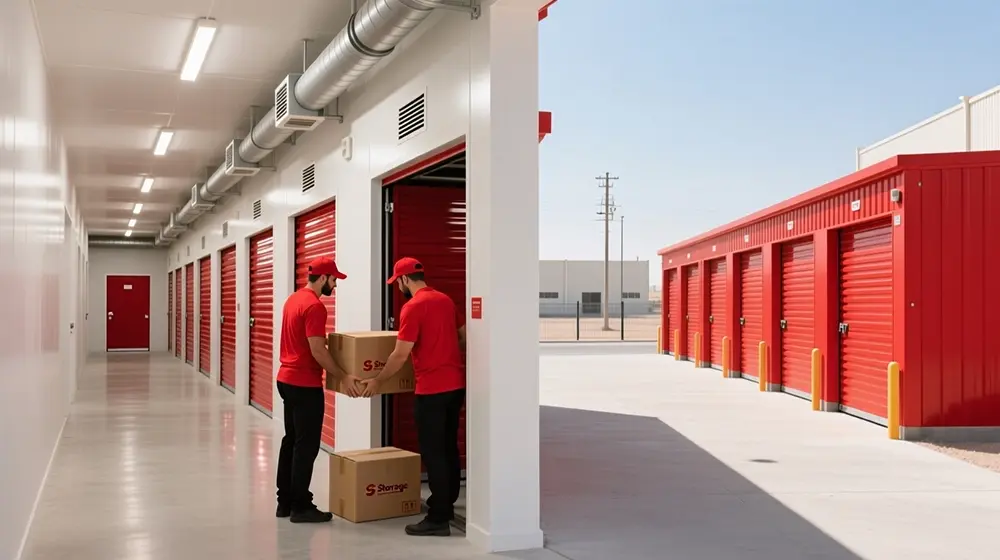
Main facility types in self storage Sharjah near industrial corridors and residential zones include non climate controlled units, improved ventilated units, climate-controlled rooms, large warehouse bays, and box storage services.
1. Non climate controlled warehouse-style units
- Located in industrial buildings inside Industrial Area 1 to 18 and adjacent zones.
- Typically, metal roll up doors and concrete structures.
- Benefit from low base rents but high internal temperature swings.
2. Improved ventilated mixed-use units
- Located in mixed-use or commercial buildings near Muwaileh, Al Nahda, and Al Majaz.
- Corridor-based layouts with some insulation.
- Provide more stable temperatures without full climate control.
3. Climate-controlled storage rooms
- Part of national provider networks in the UAE self storage market, with temperature and humidity monitoring.
- Serve high value furniture, documents, artworks, and electronics.
- Carry premium rents relative to basic units.
4. Large warehouse bays and micro warehousing
- Used by SMEs and e commerce firms in the SAIF Zone and Hamriyah Free Zone.
- Support micro warehousing, seasonal stock, and returns processing.
5. Box or valet storage services
- Operate across Dubai and Sharjah metropolitan corridors.
- Collect sealed boxes or crates from residential towers and industrial workplaces.
- Central facilities often provide basic climate protection.
Self storage in Sharjah near industrial areas and residential zones, therefore, covers an entire spectrum from low-cost containers to advanced climate controlled rooms. Climate indicators drive the meaningful difference between them.
How can tenants evaluate self storage Sharjah options with a data-backed checklist?
Tenants can evaluate self storage Sharjah options with a data-backed checklist that links climate indicators, building envelope, security, and transport time.
Climate and building envelope checklist
1. Internal temperature evidence
- Ask for measured internal temperature ranges during August when average external temperatures reach about 40 °C.
- Prefer units where recorded internal highs stay materially below external peaks.
2. Humidity awareness
- Ask whether the facility monitors humidity during months where relative humidity averages 48 to 57 %.
3. Building position and shading
- Confirm whether the unit walls face direct afternoon sun, especially on the west sides.
- Inspect for insulation, double skin roofs, or shade structures.
Security and operations checklist
1. Camera coverage and access logging
- Continuous CCTV on entrances, corridors, and loading bays.
- Individual access codes with recorded entry logs.
2. Contractual clarity
- Written details on late payment fees, default timelines, and any lockout rules.
- Clear allocation of responsibility for climate related damage.
Location and logistics checklist
1. Drive time triangle
- Map distance from the tenant residence in Al Nahda or Muwaileh to the storage facility, and from the facility to the industrial workplace in Industrial Area or free zones.
2. Access windows
- Availability of early morning or late evening access to avoid mid-day heat.
- Holiday access rules for industrial shift workers.
This checklist converts general statements about climate and convenience into observable criteria.
Is a specific self storage unit in Sharjah suitable for climate-sensitive items?
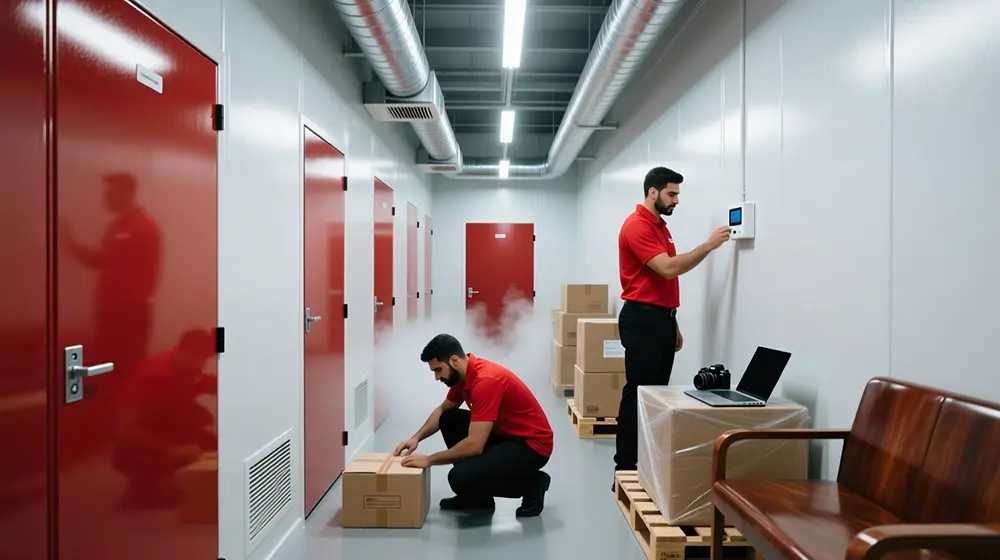
Residents can run a simple three part self assessment before signing a contract.
Step 1. Climate check
- Internal temperatures remain below 35 °C for most hours in August.
- Humidity monitoring exists, and staff understand humidity values between 50 and 60 %.
Step 2. Contract and security check
- Contract names climate categories for units and discloses any limits on responsibility.
- CCTV coverage and access recording operate for all corridors.
Step 3. Cost and upgrade comparison
- Annual storage rent stays materially below the 8,000 AED rent jump between typical 1-bedroom and 2-bedroom units in Al Nahda.
If the answer is positive for each step, the specific unit aligns more closely with the climate-first logic that defines self storage in Sharjah.
Conclusion: Put Climate First, Then Talk Price
Self storage in Sharjah sits inside the same system as apartment rents, industrial corridors, and summer heat that pushes daytime temperatures toward 40 °C. The numbers show that a few thousand dirhams saved each year on a basic unit can vanish the moment a mattress molds, a wooden bed frame warps, or electronics fail after months in a hot, humid room. In practice, tenants in Al Nahda, Muwaileh, and nearby districts are not just comparing storage prices. They are deciding whether their stored items will still be usable after another August in a coastal desert city.
If you treat climate data, building design, and internal temperature evidence as your first filter, then compare rents and locations along the industrial belts, you turn storage into an extension of your housing strategy instead of a side expense. That is the point where self storage in Sharjah near industrial areas and residential zones stops being a gamble and becomes a planned tool to protect furniture, documents, and business inventory over several summers.