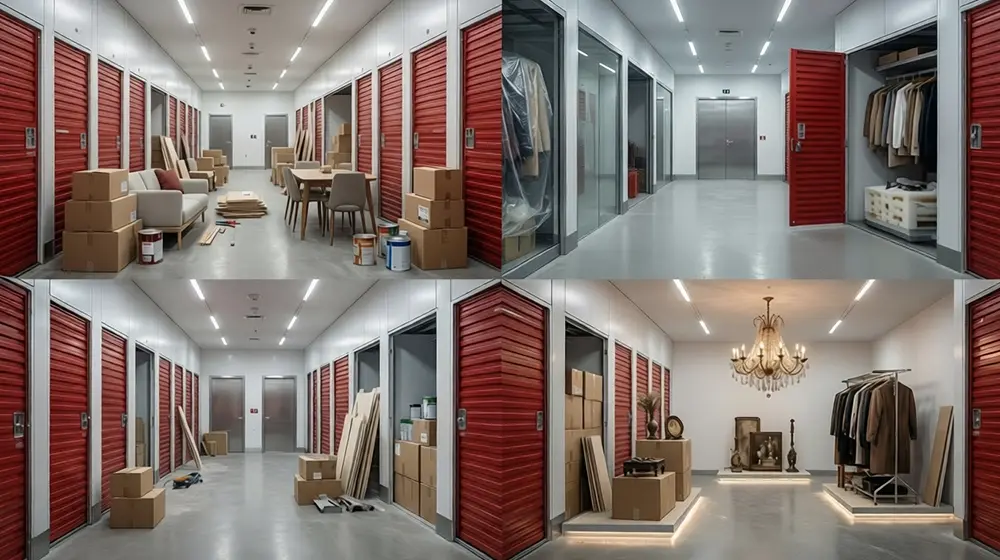
What Is Covered by Self Storage Insurance in Dubai? Coverage Limits, Exclusions, and Claim Eligibility
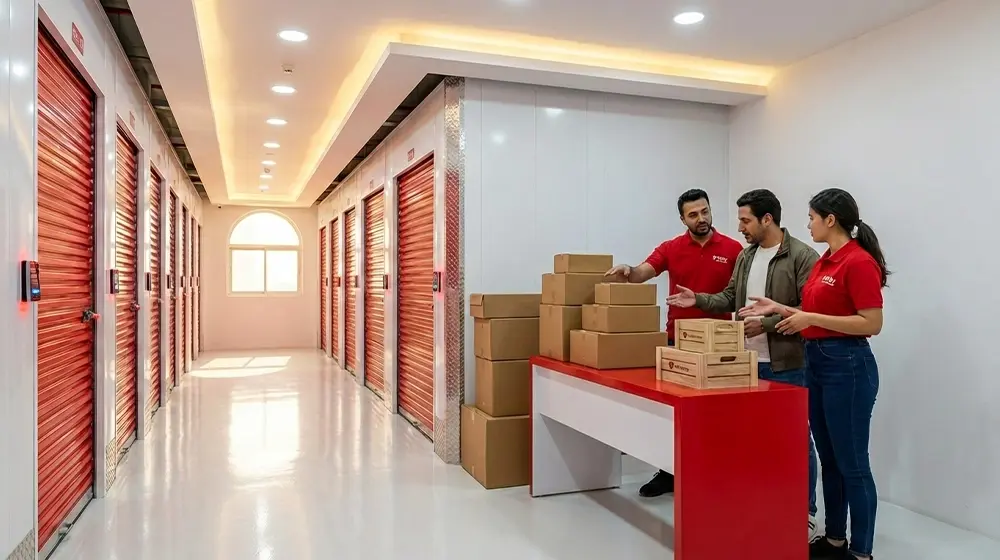
Self storage insurance in Dubai often looks simple until a loss happens and the claim turns on one clause, one limit, or one missing document. Most disputes start with the same gaps: unclear coverage, misunderstood exclusions, and weak proof of ownership or value.
This article explains what self-storage insurance in Dubai covers and what it does not, using policy terminology that controls outcomes, including sum insured, single article limits, sub-limits, and deductibles. It also breaks down claim eligibility, theft and reporting requirements, and the liability boundary between a storage tenant, a facility contract, and an insurer.
Benefits of reading this article
- Faster coverage decisions through a Dubai-specific coverage matrix that maps perils, limits, and exclusions to item categories and proof requirements.
- Higher claim acceptance probability through a claims-ready evidence pack that matches insurer conditions and storage contract notice clauses.
This guide covers self-storage insurance in Dubai, presented in decision-ready sections that separate coverage, exclusions, limits, and claim eligibility, with numeric policy examples and Dubai risk statistics.
What is self-storage insurance in Dubai, and what risk does it transfer?
Self-storage insurance in Dubai transfers financial risk for stored goods from the renter to an insurer for covered perils during the insured period, up to the sum insured and within conditions stated in policy wording and schedules.
Which terms control coverage scope?
Coverage scope follows a small set of terms that repeat across UAE home contents and personal belongings wordings, which many renters use as a practical reference for storage cover decisions.
Key terms that control coverage scope
- Sum insured: The maximum payable total for the insured contents section.
- Single article limit: The maximum payable for one item unless the item is separately declared. UAE documents show AED 40,000 as a common single-item threshold for general contents.
- Sub-limits: Category caps inside the sum insured, often applied to valuables and items temporarily removed, with percentage caps shown in policy handbooks.
- Excess or deductible: The first part of the claim that remains with the policyholder, shown as minimum AED amounts in key fact documents.
Why does the storage contract matter in Dubai?
Many Dubai storage contracts state a liability cap for the operator and place primary risk on the renter, which makes self-storage insurance in Dubai the dominant route for replacement-value recovery when a covered peril occurs. One Dubai contract example states a maximum liability of AED 500 per unit or AED 3,000 per renter, whichever is lower. At Ruby Self Storage, ask about cover for the declared value of your goods, and check your home contents policy first, because many exclude goods kept in storage.
What does self-storage insurance in Dubai typically cover?
Self-storage insurance in Dubai typically covers loss or damage to insured goods from defined perils, up to the sum insured, with item limits and exclusion clauses controlling payout eligibility.
Which perils appear most often in coverage language?
Fire and theft appear frequently as covered events in UAE relocation services, and many storage arrangements mirror these perils through master policies or tenant policies.
Peril examples and the coverage boundary
Common peril categories used in UAE storage services frameworks:
- Fire, smoke, explosion: Appears in UAE home and contents policy sections that many tenants use as a coverage reference point for stored goods.
- Theft with reporting conditions: Policy clauses often connect theft payout to fast police notification and evidence of forcible entry, depending on wording.
- Accidental damage: Some policies include accidental damage coverage for portable goods, often under personal possessions cover with limits.
Which property categories often qualify for cover?
Insurers commonly align coverage to household or business contents categories, then apply single-article limits and valuables sub-limits that cap payout per item or per category.
Typical covered categories in storage contexts:
- Household contents, furniture, boxed household goods.
- Electronics, often treated under general contents caps and evidence requirements, with single-item limits shown in UAE documents.
- Personal belongings outside the home, typically with a lower single-item threshold, such as AED 10,000 in the Emirates NBD key fact document example.
What does replacement value vs indemnity value mean for stored goods?
Replacement value targets the cost to replace an item with an equivalent new item, while indemnity value targets the depreciated value; payout method depends on policy wording and valuation clauses.
Attribute values that change payouts
- Single article limit: Caps payout for any one item, even when the total sum insured remains higher.
- Valuables category cap: Caps payout for jewelry, watches, artwork, collectibles, or documents unless scheduled.
What changes when valuation uses “replacement” versus “indemnity”?
Valuation basis changes claim settlement outcomes. Some policies apply replacement-cost routes through preferred suppliers or defined settlement clauses, while others settle on an indemnity basis, depending on the schedule. The settlement clause controls the number, not the purchase story.
What are common exclusions in self-storage insurance in Dubai?
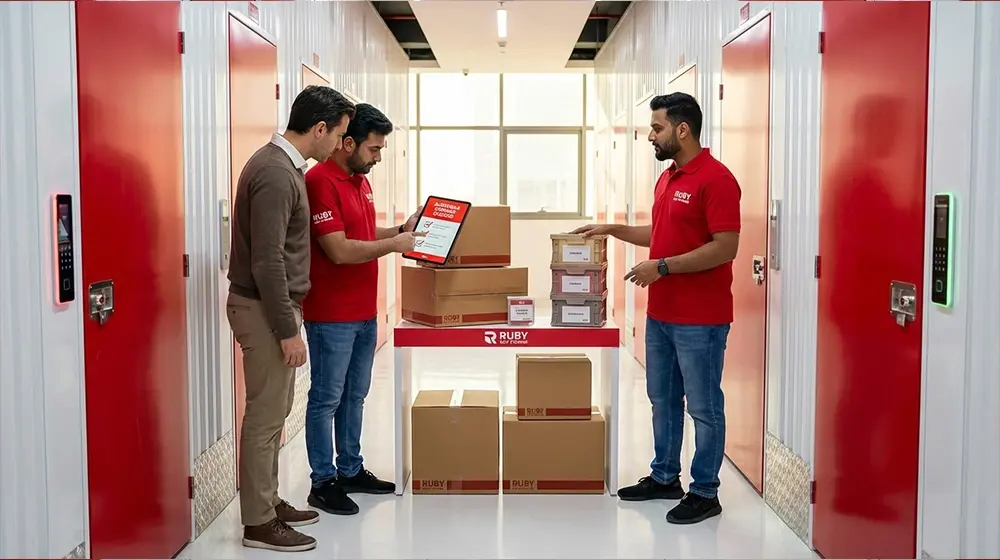
Common exclusions in self-storage insurance in Dubai include high-value categories, cash and documents, gradual deterioration, mold or humidity-related damage, pests, and losses that lack qualifying evidence or breach contract conditions.
Which items commonly face exclusion by category?
Cash, jewelry, and personal documents often appear in exclusion statements or in restricted cover statements unless declared and endorsed, and many storage and contents policies apply strict conditions to such categories.
Category exclusions and limits that show up frequently
Frequent restricted categories:
- Cash, currency, and personal documents.
- Negotiable instruments and securities.
- Business stock and business equipment under many personal belongings wordings.
Which causes of loss commonly sit in exclusions?
Many policies exclude gradual deterioration and environmental causes such as mold, fungus, insects, vermin, corrosion, and wear and tear. That exclusion class matters for storage goods because storage environments can amplify humidity and pest exposure, while the damage mechanism remains gradual.
Why does the Dubai climate context matter?
UAE climate humidity datasets show sustained relative humidity levels that can support condensation cycles in enclosed spaces, and policy wording commonly excludes fungus or vermin-type damage, so storage condition controls become a claim-relevance factor.
Which conditions can block claim eligibility?
Claim eligibility often depends on compliance with conditions that insurers treat as gating controls. UAE key fact documents explicitly cite exclusions linked to a lack of police reporting for relevant losses, which turns reporting into a measurable eligibility requirement in theft scenarios.
Common eligibility blockers:
- Missing police report in theft-linked losses where policy clauses require reporting.
- Missing proof of ownership and value for the damaged or missing items.
- Item value above the single article limit without a separate declaration, where wording requires it.
- Storage contract notice failures in operator liability pathways, such as short notice windows tied to reporting.
What determines claim eligibility for self-storage insurance in Dubai?
Claim eligibility depends on policy-peril match, compliance with reporting and security conditions, and proof of ownership, value, and incident circumstances aligned to insurer and facility documentation standards.
What proof supports ownership and value?
Ownership and value evidence commonly includes invoices, receipts, bank records, warranties, serial numbers, and time-stamped photos. For high-value items above single-item thresholds, insurer documents indicate declaration and scheduling expectations.
Evidence hierarchy for high-value items
- Purchase invoice with item identifiers.
- Serial number list for electronics and tools.
- Time-stamped photo set showing the condition before storage.
- Valuation evidence for valuables above sub-limit thresholds.
What incident evidence supports theft, fire, or water loss?
Incident evidence often includes police reports for theft, facility incident reports, access logs, CCTV availability statements, photographs of damage, and packaging condition records. UAE key fact documents cite police reporting as a decisive requirement for certain loss types, which makes theft claim eligibility evidence-driven rather than assumption-driven.
Evidence set that supports theft claims:
- Police report reference number.
- Facility incident report and timestamped description.
- Photos of the lock, door, and signs of forced entry, where applicable.
- Inventory list that matches the missing items to prior possession records.
Time window factor
Some policy clauses reference short reporting windows, such as 24 hours for theft discovery, which changes eligibility for theft claims when notification occurs late.
What time limits and notification rules appear in practice?
Storage contracts add their own notification rules on top of the policy. Some cite 24-hour written reporting for loss discovery in their liability sections, while others ask for “prompt” notice without a number, so diary both the insurer’s and the facility’s deadlines from the day you discover a loss.
Who is liable in a storage loss: tenant, facility, or insurer?
Liability usually splits across the tenant’s insurance, the facility’s limited contractual liability, and the insurer’s policy obligations, and storage terms often cap facility liability and assign risk to the occupant.
What does “facility liability limitation” mean in Dubai storage contracts?
A facility liability limitation caps the storage operator’s financial responsibility for loss or damage, often at a fixed AED amount per unit or per renter, and it can apply only when negligence is proven under contract terms.
What does a Dubai storage liability cap look like?
A Dubai storage facility states maximum liability for loss or damage not exceeding AED 500 per unit or AED 3,000 per renter, whichever is lower. That numeric cap explains why renters treat self-storage insurance in Dubai as the primary recovery instrument for high-value inventories.
What does that cap mean in payout math?
A liability cap creates a ceiling that remains far below typical stored contents values.
- Stored household contents value: AED 80,000
- Facility contract liability cap: AED 3,000 per renter
- Maximum contract recovery ratio: 3,000 / 80,000 = 3.75%
This ratio turns insurance coverage limits and evidence quality into the controlling factors for meaningful recovery.
When does negligence change the liability path?
Negligence changes the path when evidence shows a facility control failure that breaches its own standards, and contract wording ties facility responsibility to proven negligence, service scope, and written notice timing.
Evidence types that support a negligence discussion
- Written incident timeline and service scope proof.
- Access logs and custody chain records.
- CCTV retention confirmation if available.
How do storage conditions affect coverage: engineering and material controls?
Storage conditions affect coverage because many policies exclude gradual damage, mold, vermin, and wear and tear, so engineering controls and packaging controls become claim-relevant risk mitigators.
Which engineering controls reduce loss frequency and support eligibility?
Core controls include fire detection, controlled access, CCTV, and environmental control practices, and public Dubai fire safety performance data highlights incident rate metrics that inform risk context.
Dubai fire risk context
UAE Ministry of Interior figures cited by a national outlet show total fires falling between 2022 and 2023 while residential fires rose; the numbers are set out in the risk statistics section below.
Operational interpretation for storage insurance
- Fire remains a high-impact peril, so fire controls align with insurability discussions.
- Access controls support theft evidence, especially when theft cover requires forcible entry evidence.
Which material and packaging controls increase claim strength?
Packaging controls create a condition baseline and reduce “gradual deterioration” ambiguity, which matters because exclusions often reference fungus, vermin, insects, atmospheric conditions, and wear and tear.
Controls expressed as a checklist
- Double-wall cartons for fragile goods.
- Moisture barrier film for textiles and paper.
- Pallets or racking to lift cartons from the floor contact.
- Seal labels and inventory IDs on each carton.
- Photo set per carton row before unit lock.
Climate data sources show humidity variation patterns across UAE stations, so condensation control becomes relevant in stored-textile and paper categories.
Which Dubai risk statistics support coverage prioritization?
Risk prioritization improves when coverage decisions map to real incident rates and response performance data.
What do the UAE and Dubai fire statistics show?
UAE Ministry of Interior figures reported by reputable UAE outlets show civil defence teams responded to 2,473 fires in 2023, down from 3,000 in 2022, with residential fires rising to 1,636 in 2023 from 1,385 in 2022.
Dubai Civil Defence open data reports operational performance indicators, including an average response time to fire incidents of 5:30 and a fire incident rate per 100,000 population of 7.66 for the achieved 2024 metric table.
Why do these numbers matter for self-storage insurance in Dubai?
- Fire is a high-severity peril that drives loss magnitude, even when frequency remains moderate.
- Fire controls and evidence trails remain central to claim narratives in many self-storage service providers.
How does storage pricing in Dubai influence coverage limits?
Storage pricing data clarifies a common mismatch: low monthly storage fees can coexist with high replacement-value inventories, which increases underinsurance risk when declared values remain low.
Ruby Self Storage’s published Dubai bands, for example, run from AED 200–400 a month for a 10 sq ft locker to AED 2,300–2,800 for a 200 sq ft unit, with VAT on the written quote; see current Dubai prices.
Mismatch example
- Unit fee: AED 400 per month
- Storage duration: 12 months
- Total storage fees: AED 4,800
- Stored contents replacement value: AED 120,000
The fee-to-value ratio equals 4,800 / 120,000 = 4.0%, which supports a practical procurement insight: premiums and deductibles matter less than coverage limits and exclusions when stored value is high relative to unit cost.
What decision framework fits self-storage insurance in Dubai for businesses and households?
A decision framework for self-storage insurance in Dubai works when it maps item categories to coverage limits, single-item thresholds, sub-limits, excess, and evidence maturity, then selects a policy route that fits that map.
Step 1: Build a quantified inventory register
A quantified register reduces valuation disputes and aligns with the single article limit logic shown in UAE documents.
Minimum fields:
- Item name, brand, model
- Serial number
- Condition grade (new, good, worn)
- Replacement value in AED
- Category tag (furniture, electronics, valuables, documents)
- Photo reference ID
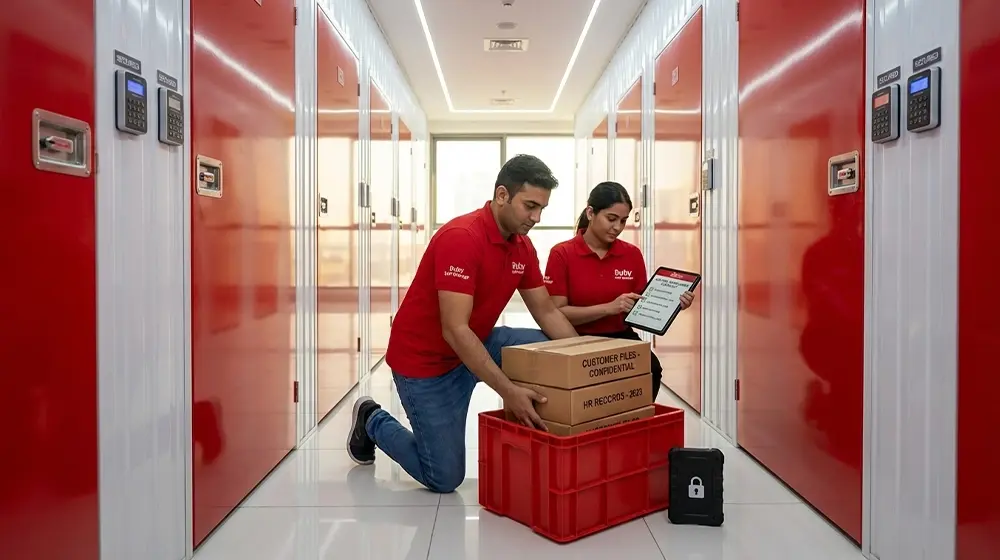
Step 2: Segment by value bands tied to UAE single-item thresholds
Value segmentation reduces hidden single-item breaches.
Example segmentation using UAE single-item anchors:
- Band A: AED 0 to 10,000 per item
- Band B: AED 10,001 to 40,000 per item
- Band C: Above AED 40,000 per item
UAE documents use AED 40,000 as a single-item declaration threshold for general contents, and AED 10,000 as a declaration threshold for personal possessions in an Emirates NBD key fact example.
Step 3: Compare policies through a coverage matrix
A matrix keeps each subject area semantically clean and supports procurement-style evaluation.
| Decision factor | Definition | Numeric anchor from UAE sources | Claim impact |
|---|---|---|---|
| Single item threshold | Declaration trigger | AED 40,000 general contents | A non-declared high-value item can face a cap or rejection |
| Personal possessions threshold | Declaration trigger | AED 10,000 example | Portable goods face a lower scheduling threshold |
| Minimum excess | Minimum deductible | AED 250 contents, AED 500 portable equipment | Net payout reduction per claim |
| Facility liability cap | Operator’s maximum liability | AED 500 per unit or AED 3,000 per renter | Contract recovery ceiling |
How do procurement teams evaluate insurance terms and claim support?
Procurement evaluation focuses on verifiable policy wording, claims process clarity, and documentary readiness, since the UAE insurance sector operates under Central Bank supervision and a regulated insurance activities framework.
Procurement criteria list
- Sum insured adequacy vs audited inventory value.
- Sub-limit match to high-value categories in storage.
- Theft condition clarity, especially forcible entry evidence.
- Reporting windows and written notice requirements.
- Evidence list maturity: receipts, logs, photos, and identifiers.
What is the claims-ready evidence pack for self-storage insurance in Dubai?
A claims-ready evidence pack contains an inventory register, proof of value, proof of condition, and proof of incident aligned to common reporting timelines and contract liability clauses.
Evidence pack components and attribute values
1) Inventory register
- Item name, brand, model, serial number.
- Item category tag: furniture, electronics, documents, valuables.
- Declared value per item and total per category.
2) Proof of value
- Invoice or receipt copy.
- Bank transaction record that matches the invoice amount.
- Replacement quote printouts for older items.
3) Proof of condition
- Time-stamped photos before sealing.
- Condition notes: scratches, dents, cracks, water marks.
- Packaging list: carton type, seal count, pallet count.
4) Proof of incident
- Police report for theft where policy requires it.
- Facility incident report reference number.
- Access records request: entry logs, lock inspection notes.
What misconceptions distort self-storage insurance in Dubai?
Misconceptions usually relate to liability boundaries, theft conditions, and environmental exclusions, and storage contracts often place risk on the occupant and cap facility liability.
Myth 1: The facility covers every loss inside the unit.
Reality: Many storage terms assign goods risk to the occupant and place insurance responsibility on the occupant, with facility liability limits stated separately.
Myth 2: Theft coverage applies to any missing item.
Reality: Policy wording can connect theft payout to police reporting timelines and to evidence of forcible entry, so “missing” and “theft” do not match in many clauses.
Myth 3: Humidity damage qualifies as water damage.
Reality: Many wordings exclude fungus, mildew, vermin, insects, and atmospheric conditions, so condensation-driven damage can fall into excluded gradual deterioration categories.
Key Takeaways: Coverage Limits, Exclusions, and Claim Eligibility in Dubai Storage Insurance
Self-storage insurance in Dubai rarely fails because the event is unclear. It fails because the paperwork is incomplete, the value is understated, or the policy limits were never tested against the real inventory. Coverage is shaped by definitions, not expectations. The sum insured sets the ceiling. Single article limits and sub-limits reshape the payout. Exclusions remove entire loss categories, especially gradual damage. Claim eligibility then depends on discipline: proof of ownership, proof of value, proof of condition, and incident documentation that matches reporting rules. Storage contracts add a second boundary by capping facility liability and pushing replacement risk back to the renter. The practical takeaway is simple. Treat storage insurance like a controlled process. Build an inventory register, document high-value items, and maintain an evidence pack. That approach reduces disputes, shortens claim cycles, and keeps recovery aligned with the real value in storage.