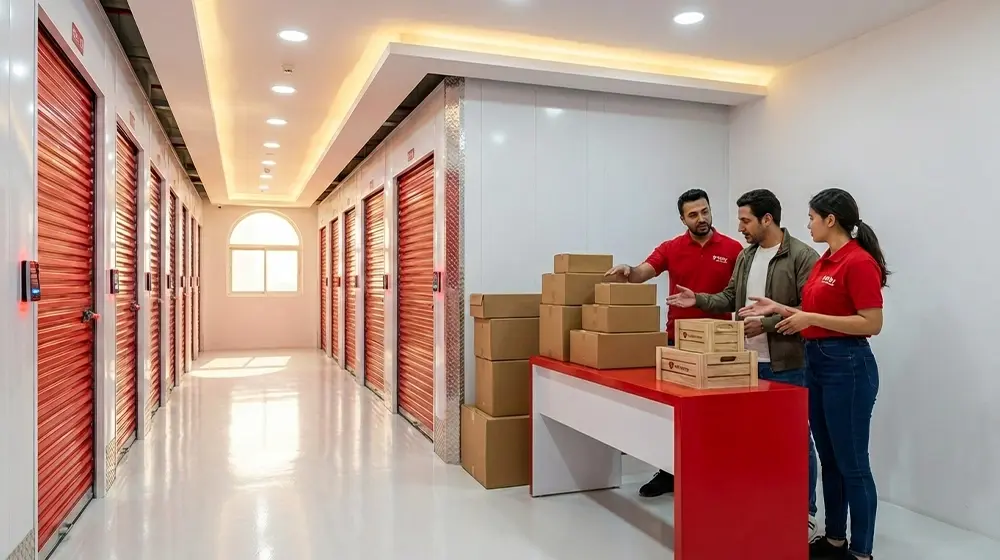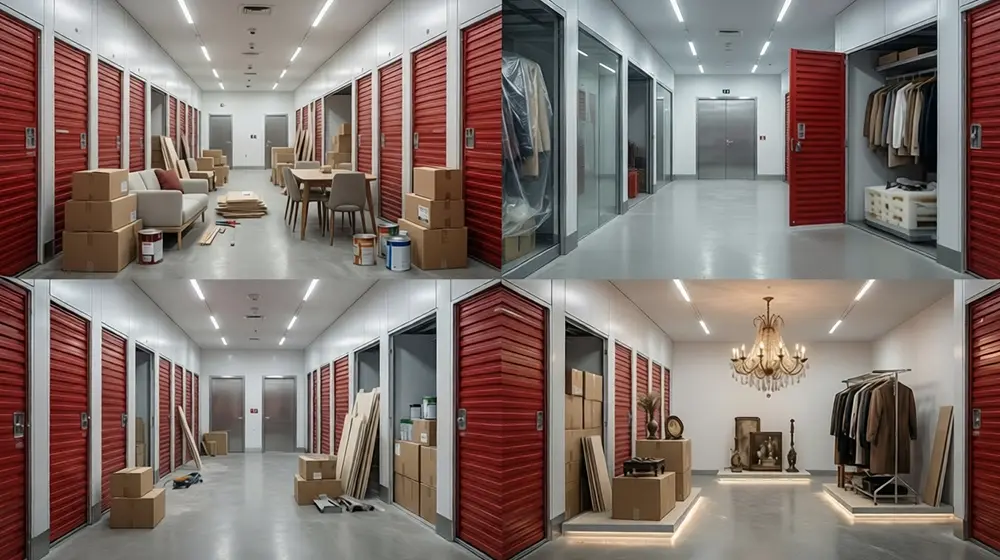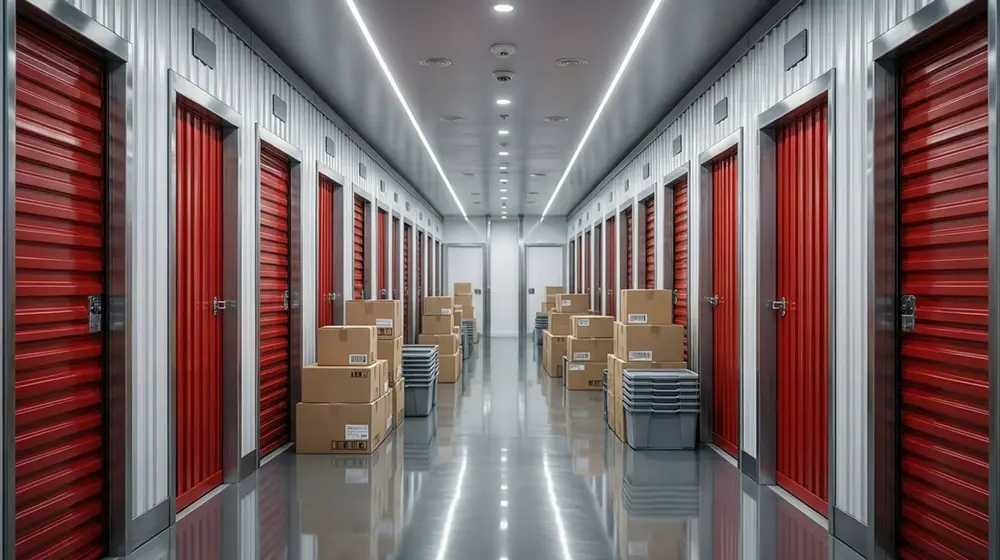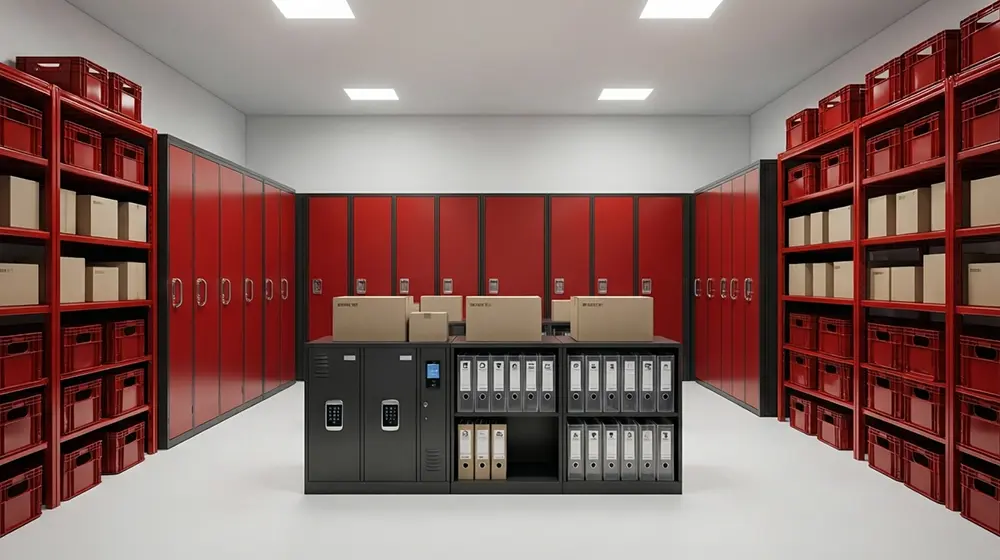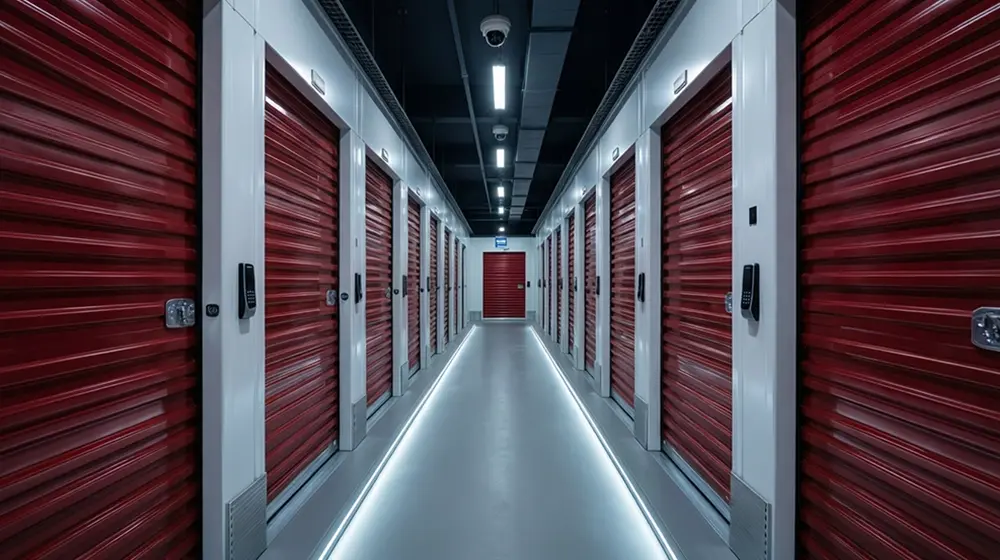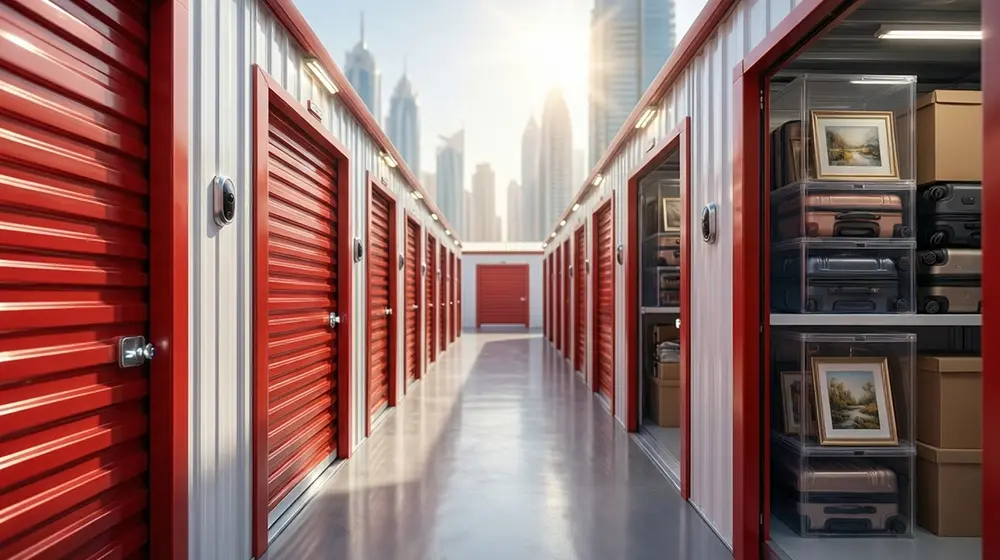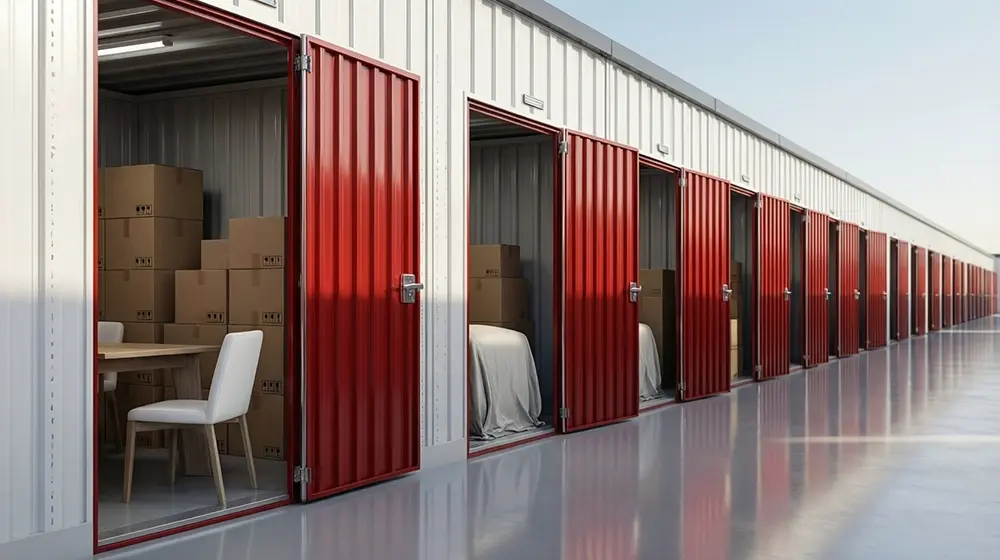

Storage units in Dubai cluster around industrial logistics corridors such as Al Quoz, Ras Al Khor, Al Qusais, Dubai Investment Park, Jebel Ali, and Dubai South, because these zones optimize access, racking, security, and vehicle circulation for move storage, renovation storage, and business stock storage.
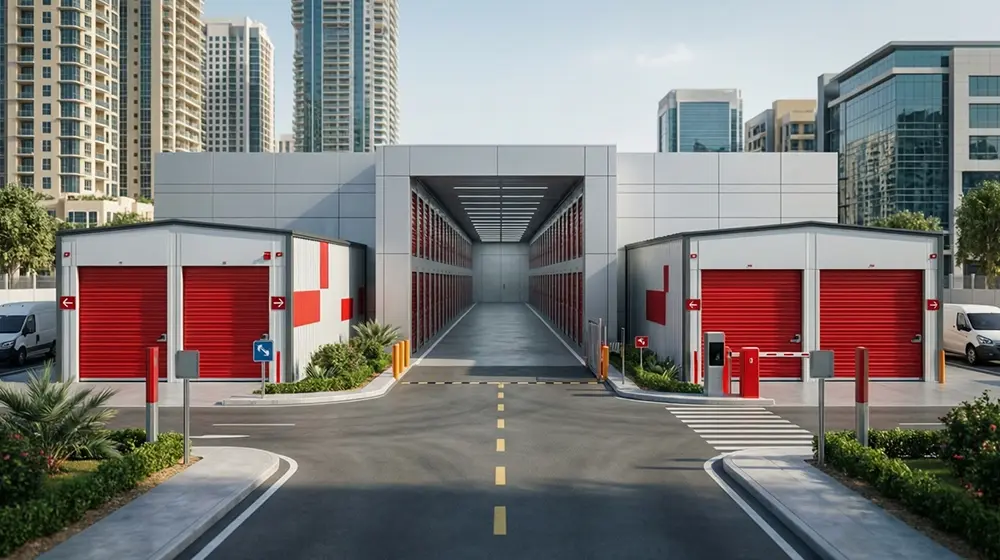
Benefits of reading this article
- Lower mismatch risk by mapping storage units in Dubai to the correct area cluster for move storage, renovation storage, or stock storage, using rent, access, humidity, and compliance variables.
- Lower damage and dispute risk by applying a storage evidence pack and material controls calibrated to Dubai humidity and mold growth thresholds.
What does “storage units in Dubai” mean for residents and businesses?
Storage units in Dubai mean secured rented space for household goods or business inventory, delivered as self storage rooms, containerized units, or light industrial warehouses, selected by access frequency, environmental control, and compliance exposure.
Dubai’s storage demand sits within two measurable demand engines:
- Residential demand engine: Household moves, downsizing, renovation staging, and seasonal overflow, scaled by a large resident base.
- Business demand engine: SMEs, e-commerce, spare parts, and last-mile stock positioning, scaled by business formation and online retail growth. Dubai Chambers reports 258,318 active member companies and 70,500 new member companies in 2024.
A market scale signal also appears at the country level. According to Grand View Research, the UAE self-storage market generated a revenue of USD 602.5 million in 2024 and is expected to reach USD 859.2 million by 2030.
Which variables identify the “best area” for storage units in Dubai?
The best area for storage units in Dubai matches your storage purpose to 6 variables: access time, corridor connectivity, rent intensity, humidity risk, fire safety constraints, and documentation friction.
The 6-variable selection model
1. Access and drive time
- Define access frequency: 2 visits per year differs from 2 visits per week.
- Map access to the nearest high-capacity road corridor (E11, E44, E311) to stabilize travel time variability.
2. Corridor role
- Select a central corridor for frequent access and fast last mile.
- Select a south logistics corridor for import export stock, pallet flows, and scalable warehousing. JAFZA positions the Dubai Logistics Corridor as a sea-air system tied to Jebel Ali and Al Maktoum International under customs bond concepts.
3. Rent intensity
- Treat industrial rents as a proxy for storage facility cost pressure.
- JLL reported that in the year to September 2024, average rents increased by 12.9%. In Q3 2024, the average rental rate recorded stood at AED 40.3 per square foot, per annum.
- CBRE reported Dubai industrial and logistics asking rents at AED 43 per sq ft as of Q4 2023.
4. Humidity and material risk
- RH-to-time estimates for mold growth, with short time-to-growth at higher RH bands.
- Dubai’s annual average humidity reaches 59% and peaks around 65% in January and February.
- Surface relative humidity around 70% or higher is a threshold associated with mold, corrosion, and decay risk.
5. Fire load and restricted goods exposure
- Renovation storage frequently includes paints, thinners, adhesives, and aerosols.
- Dubai Development Authority circulars reference safe storage of flammable and combustible materials and Dubai Civil Defense approval for bulk storage in specific contexts.
6. Documentation friction
- Business storage adds trade license, VAT, customs, and insurer data requirements.
- Location selection intersects with free zone versus mainland operating models and delivery gate rules.
Which Dubai areas concentrate storage units for move storage, renovation storage, and stock storage?
Storage units in Dubai concentrate in central industrial belts for resident access and in the south logistics belt for scalable business stock, because road and port connectivity pulls warehouse supply into those zones.

Dubai area fit map for storage units
| Dubai area cluster | Move storage Dubai | Renovation storage Dubai | Stock storage in Dubai | Why does this cluster appear in storage searches |
|---|---|---|---|---|
| Al Quoz | High | High | Medium | Central access, dense light industrial stock, premium central rents in tight supply conditions |
| Al Qusais | Medium | Medium | Medium | East corridor access, mixed industrial stock, proximity to dense residential catchments |
| Ras Al Khor | Medium | Medium | High | Trade and industrial adjacency, road links, and commercial storage behaviors |
| Dubai Investment Park | Medium | Medium | High | Large industrial zone footprint, south corridor access, scalable units |
| Jebel Ali and JAFZA | Low | Low | High | Port proximity, sea air logistics corridor, and large capacity port throughput |
| Dubai South | Low | Medium | High | E-commerce and air cargo adjacency, logistics corridor integration |
| Al Warsan and International City edge | Medium | Medium | Medium | Peripheral affordability patterns, storage overflow behaviors |
| Deira and Port corridor edges | Medium | Low | Medium | Trading legacy zones, compact inventory flows |
| Umm Ramool and Airport corridor edges | Medium | Low | High | Time-sensitive stock proximity to airport logistics nodes |
Rent and availability vary by micro-location and building spec. The table ranks typical fit, not a universal rule.
Why does Al Quoz rank as a top area for storage units in Dubai?
Al Quoz ranks high for storage units in Dubai because it sits close to central residential districts and business hubs, while operating as a dense light industrial district with premium warehouse rent signals under tight supply.
Best fit use cases in Al Quoz
- Move storage: Short access drives for apartment moves, villa staging, and interim storage between leases.
- Renovation storage: Furniture storage, boxed fixtures, and phased delivery to contractors.
- Business storage: Small pallets, cartons, and spare parts for central dispatch.
Data signals that explain Al Quoz pricing pressure
- Dubai industrial rents show strong growth in recent reporting cycles, with JLL reporting AED 40.3 per sq ft average in Q3 2024 and CBRE reporting AED 43 per sq ft as of Q4 2023.
- A premium submarket benchmark appears in market summaries that cite central locations such as Al Quoz, achieving higher rates in tight conditions.
Al Quoz risk profile for stored goods
- Risk type: Dust ingress, vehicle congestion, frequent handling exposure.
- Control type: Sealed cartons, pallet wrap, aisle spacing, documented check-in photos.
Why does Dubai Investment Park fit business stock storage and medium-term storage?
Dubai Investment Park fits business stock storage because it offers large industrial zoning capacity in the south corridor, supporting palletized inventory, multi-vehicle loading, and scalable space selection aligned to distribution routes.
Best fit use cases in Dubai Investment Park
- Stock storage: Cartons, spare parts, light manufacturing buffers, and e-commerce inventory staging.
- Move storage: Medium-term household storage when central pricing and availability constrain options.
- Renovation storage: Contractor staging for projects in the south residential districts and villa zones.
Practical operating advantages
- Define loading method: dock leveler, grade-level, or container unload.
- Measure aisle width and racking plan for cycle counting.
- Record inbound condition using timestamped photos tied to SKU or carton IDs.
Why do Jebel Ali and JAFZA dominate high-volume stock storage decisions?
Jebel Ali and JAFZA dominate high-volume stock storage because the cluster anchors Dubai’s sea freight gateway and integrated logistics corridor, supporting import-heavy inventory flows and reduced drayage distance from port to warehouse.
Data points that explain the logistics gravity
- DP World states that Jebel Ali Port has an annual container capacity of 19.4 million TEUs across four terminals, plus over 100 berths and extensive quay length.
- JAFZA describes Jebel Ali connectivity with 150 shipping lines and logistics corridor positioning that links port and airport infrastructure.
Best fit use cases
- Stock storage: Import buffers, bonded-like operational models, distributor inventory, spare parts stockholding.
- Move storage: Low fit, because residents prioritize access proximity over port adjacency.
Why does Dubai South matter for e-commerce stock storage and time-sensitive inventory?
Dubai South matters for stock storage because e-commerce growth pushes demand for distribution-adjacent space, and Dubai South hosts dedicated e-commerce and logistics initiatives that reference market growth figures.
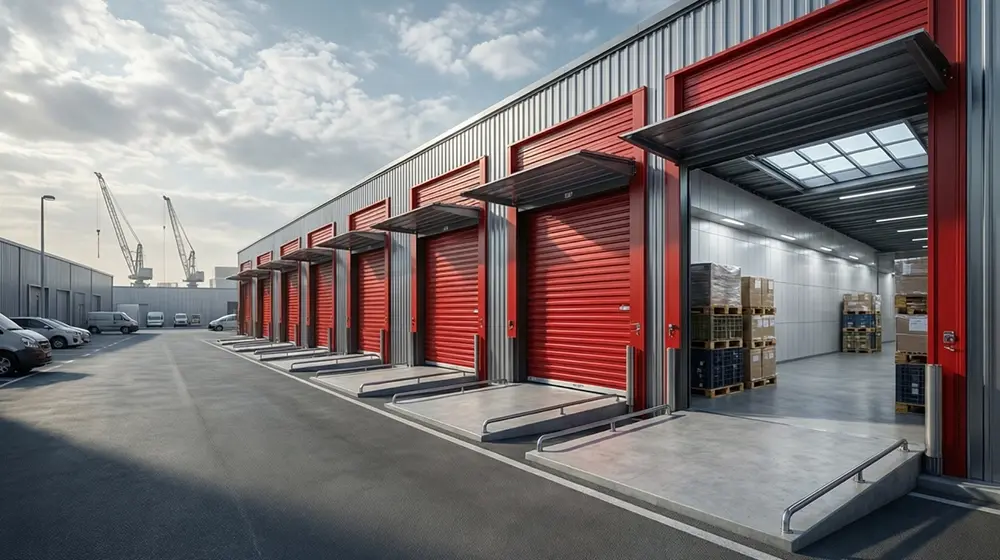
E-commerce scale signal with numeric values
- WAM reports the UAE e-commerce market value at AED 32.3 billion in 2024, with projections surpassing AED 50.6 billion by 2029, citing an EZDubai report.
Best fit use cases
- Stock storage: Fast-moving SKUs, carton throughput, reverse logistics, and peak season overflow.
- Renovation storage: Medium fit for south projects where contractor supply routes align.
Which areas fit move storage in Dubai for residents with frequent access?
Move storage in Dubai fits best in the central and east industrial belts, because residents value short access time, weekend availability, and low handling distance between home, elevator loading, and storage bay.
Top move storage area short list
- Al Quoz
- Al Qusais
- Ras Al Khor
- Umm Ramool corridor edges
- Al Warsan and International City edge
Move storage pain points and solutions
- Problem: Elevator booking conflicts and staggered move-out timing
Solution: Define a storage check-in window that matches building slot timing and truck access constraints.
- Problem: Missing cartons and mixed room delivery
Solution: Use a carton ID system and room map, then link photos to IDs at check-in.
Which areas fit renovation storage in Dubai for villas, apartments, and fit-out projects?
Renovation storage fits best in areas near contractor ecosystems and central residential catchments, because renovation schedules create phased material delivery, temporary furniture displacement, and controlled storage requirements for finishes and chemicals.
Renovation storage zones with a clear fit
- Al Quoz: Fit-out supply adjacency, central access.
- Ras Al Khor: Trade-driven material staging patterns.
- Al Qusais: East corridor access for apartment clusters.
- Dubai Investment Park: Contractor staging for south projects.
Renovation storage compliance reminders
- DDA circulars reference safe storage and handling of flammable and combustible materials, and Dubai Civil Defense approval for bulk storage in relevant contexts.
- The UAE government fire safety guidance frames fire safety obligations at a general level for buildings and households.
Paints, thinners, aerosols, and solvent-based adhesives require explicit storage controls, inventory limits, and insurer alignment.
Which areas fit stock storage in Dubai for SMEs, trading firms, and multi-branch operators?
Stock storage fits best in south logistics belts and trade-adjacent industrial zones, because inventory economics depend on inbound freight paths, outbound delivery radius, and space scalability under rent pressure.
Stock storage zones with high fit
- Jebel Ali and JAFZA
- Dubai South
- Dubai Investment Park
- Ras Al Khor
- Al Quoz for the central last mile
SME density signals that support business storage demand
- Dubai Chambers reports 258,318 active member companies and 70,500 new member companies joining in 2024, indicating a large operating base for inventory and document storage.
- UAE government portal states SMEs numbered 557,000 as of mid-2022 and references SME contribution to non-oil GDP, reinforcing structural SME prevalence. It is forecasted that there will be 1 million SMEs in the UAE by the year 2030.
How does Dubai humidity change storage unit requirements for furniture, documents, and electronics?
Dubai humidity changes storage requirements by increasing mold and corrosion exposure when storage microclimates exceed surface relative humidity thresholds, making climate control and moisture management decisive for high-value goods.

Thresholds that matter for stored goods
- Dubai humidity averages 59% and peaks 65% in January and February.
- Building Science Corporation associates 70% or higher surface RH with mold, corrosion, and decay problems.
Item class, risk type, and recommended storage controls
| Item class | Primary risk | Secondary risk | Controls that match the risk |
|---|---|---|---|
| Upholstery and textiles | Mold | Odor adsorption | Select climate-controlled storage, add airflow spacing, and log RH at check-in |
| Leather goods | Mold | Staining | Use breathable covers, avoid sealed plastic, and add desiccant inside cartons |
| Electronics | Corrosion | Condensation | Seal with anti-static bags, add desiccant, and avoid temperature swings |
| Paper archives | Mold | Ink bleed | Keep RH controlled, elevate off the floor, and use archival cartons |
| Wood furniture | Dimensional change | Finish haze | Stabilize RH to reduce moisture content swings, use padded covers |
What is the Dubai storage unit cost structure, and which data points anchor it?
Dubai storage unit cost structure correlates with industrial rent pressure, central access premiums, and handling services, making location a primary cost driver alongside climate control and access frequency.
Cost drivers with measurable proxies
- Rent proxy: JLL reports AED 40.3 per sq ft average in Q3 2024 for Dubai industrial space, and CBRE reported AED 43 per sq ft as of Q4 2023.
- Premium proxy: Market summaries cite centrally located districts such as Al Quoz achieving higher premium rates under tight supply conditions.
- Service proxy: Packing, pickup, shelving, and access hours add price layers, even when headline rent remains stable.
Practical interpretation for buyers
- Central areas provide price access, speed, and short drive time.
- South logistics areas price scalability, loading efficiency, and import alignment.
What documentation reduces disputes for residential storage and business storage in Dubai?
Documentation reduces disputes by converting storage into an auditable chain of custody, using inventory IDs, condition photos, access logs, and insurer-aligned declarations that match the stored item risk class.
Evidence pack checklist by storage scenario
| Scenario | Documents | Evidence artifacts | Dispute risk reduced |
| Move storage Dubai | ID copy, contract, inventory list | Timestamped photos, carton ID map, seal log | Missing carton disputes |
| Renovation storage Dubai | contract, item list, restricted goods list | Chemical inventory, MSDS links, access log | Safety disputes, insurer exclusions |
| Stock storage in Dubai | trade license, VAT info, SKU list | Inbound GRN, cycle count log, batch photos | Stock variance disputes |
What is a 10-step SOP for selecting storage units in Dubai without overspending?
A 10-step SOP selects storage units in Dubai by fixing purpose, mapping access radius, validating environmental controls, and documenting the chain of custody, producing a measurable decision rather than a marketing-led selection.
- Define storage purpose: Move storage, renovation storage, or stock storage.
- Quantify storage duration: 14 days, 90 days, 365 days.
- Map access frequency: 1 visit per month, 1 visit per week, daily.
- Select area cluster: Central, east, south logistics.
- Verify climate control spec: HVAC type, RH logging, insulation.
- Inspect pest and dust controls: Door seals, housekeeping, and racking clearance.
- Confirm loading constraints: Ramp angle, dock access, truck turning radius.
- Validate restricted goods policy: Flammables, aerosols, lithium batteries.
- Document inventory: Using unique IDs and photos.
- Lock access governance: Authorized list, logbook, CCTV coverage statements.
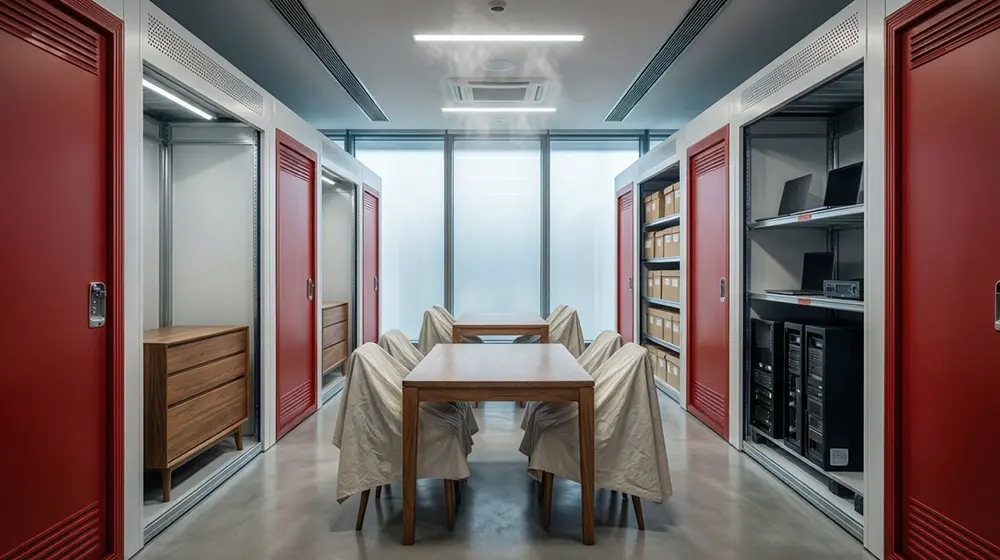
Final Take: Pick the Area Cluster That Matches Your Access, Humidity Risk, and Inventory Rules
Dubai storage decisions get easier when you stop searching by brand and start searching by area function. Central industrial belts (Al Quoz, Al Qusais, Ras Al Khor) win for frequent residential access and renovation staging, while the south logistics belt (DIP, Jebel Ali/JAFZA, Dubai South) wins for scalable stockholding tied to freight and distribution routes. Cost pressure tracks industrial rent intensity, but “cheap” can flip expensive if humidity, dust, or restricted-goods rules create damage or insurer disputes. With Dubai’s humidity averaging about 59% and peaking around 65% in winter months, climate control and moisture discipline become decisive for furniture, electronics, and paper. Use the 10-step SOP, document the chain-of-custody, and you convert storage from guesswork into a controlled, claim-ready system.
FAQs
What are the best areas for storage units in Dubai overall?
Al Quoz, Ras Al Khor, Al Qusais, DIP, Jebel Ali/JAFZA, and Dubai South consistently fit the three main use cases.
Which areas are best for move storage with frequent access?
Al Quoz and Al Qusais usually minimize drive time and handling distance for regular visits.
Which areas suit renovation storage best?
Al Quoz and Ras Al Khor often align with fit-out ecosystems and phased delivery patterns.
Where should businesses keep high-volume stock storage?
Jebel Ali/JAFZA and Dubai South typically suit import-heavy and distribution-led inventory models.
Do I really need climate-controlled storage in Dubai?
If you’re storing leather, upholstery, documents, or electronics, climate control reduces mold and corrosion risk.
What items are commonly restricted in storage units?
Many facilities limit flammables, aerosols, solvents, and some battery types. Confirm policies in writing.
What documents do businesses usually need for storage?
Trade license details, VAT info, inventory/SKU lists, and insurer-aligned declarations are commonly requested.
How can I reduce mold risk inside the unit?
Keep airflow gaps, elevate goods off the floor, avoid sealing damp items, and monitor humidity where possible.
How do I choose the right unit size without overspending?
Start from a room-by-room inventory list, then convert bulky items into stacked volume and aisle needs.
What evidence helps most if something goes missing or gets damaged?
A dated inventory with unique carton IDs, condition photos, seal logs, and controlled access records.
Rakan Al-Juraid is a logistics specialist with a focus on commercial storage systems and high-security asset management. With extensive experience in industrial warehousing, he specializes in inventory tracking technology and transit safety. Rakan’s expertise lies in streamlining the storage process for both businesses and homeowners through strategic planning. His writing offers data-driven advice on insurance for stored goods, fire-safe environments, and heavy-duty logistics. He is committed to ensuring that every square foot of storage is utilized with maximum security and efficiency. Rakan aims to provide professional-grade storage standards to every reader navigating the moving process.
Layali Al-Samer is a seasoned storage and organization expert with over 12 years of experience in the logistics industry. She holds a degree in Spatial Design, specializing in high-density residential storage and climate-control solutions. Layali focuses on inventory management for luxury goods and long-term preservation techniques for sensitive heirlooms. Her articles provide expert guidance on maximizing unit efficiency and protecting valuables from environmental damage. She is dedicated to helping readers declutter their lives through strategic and organized spatial planning. Layali’s goal is to ensure every possession is stored with the highest level of care and precision.